Cannabis-impaired driving should be a traffic ticket — not a crime: expert
Canada's laws mirror those for alcohol-impaired driving. Mark Kleiman says that's bad public policy
Advertisement
Read this article for free:
or
Already have an account? Log in here »
To continue reading, please subscribe:

Digital Subscription
One year of digital access for only $205*
- Enjoy unlimited reading on winnipegfreepress.com
- Read the E-Edition, our digital replica newspaper
- Access News Break, our award-winning app
- Play interactive puzzles
*First annual payment billed as $205.00 + GST for one year. This annual subscription will automatically renew at $233.00 + GST every 52 weeks (10% off the regular annual price of $259.35). Offer available to new and qualified returning subscribers only. Cancel any time.
To continue reading, please subscribe:
Add Free Press access to your Brandon Sun subscription for only an additional
$1 for the first 4 weeks*
- Enjoy unlimited reading on winnipegfreepress.com
- Read the E-Edition, our digital replica newspaper
- Access News Break, our award-winning app
- Play interactive puzzles
*Your next Brandon Sun subscription payment will increase by $1.00 and you will be charged $17.95 plus GST for four weeks. After four weeks, your payment will increase to $24.95 plus GST every four weeks.
Read unlimited articles for free today:
or
Already have an account? Log in here »
Hey there, time traveller!
This article was published 15/11/2018 (2883 days ago), so information in it may no longer be current.
Should driving while stoned be a crime, or just a ticketable offence?
For the vast majority of the public, the answer is a no-brainer: of course driving under the influence of marijuana should be a criminal offence, just like drunk driving.
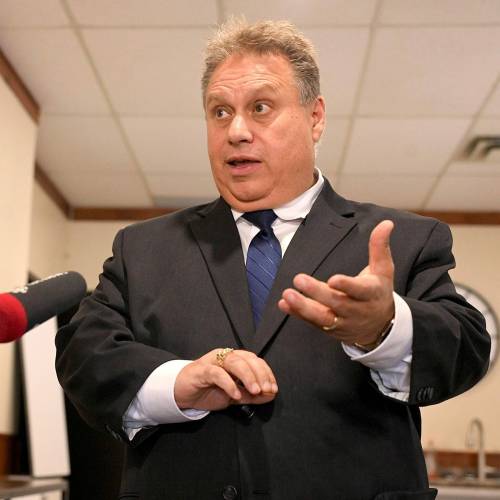
But U.S. drug policy expert Mark Kleiman believes otherwise. The NYU professor of public policy, who testified about cannabis legalization in Canada before both the House of Commons Standing Committee on Health and the Standing Senate Committee on Foreign Affairs and International Trade, is arguing that driving under the influence of marijuana alone ought to be treated as a traffic infraction.
Kleiman and his co-authors make that case in a new paper published in the Journal of Drug Policy Analysis.
Understanding their argument requires understanding how new cannabis-impaired driving laws — like those that took effect in Canada this year — came to mirror existing alcohol-impaired driving laws. It’s a policy choice that makes intuitive sense, but according to Kleiman that intuitiveness can be misleading.
“People don’t think about this stuff carefully. Alcohol and cannabis are both intoxicants,” Kleiman said in an interview.
“People look around and say, ‘Well look, we’ve got a policy about (alcohol) intoxicated driving, why don’t we just use it for this new intoxicant?’ That seems logical, until you look at the data, and then it doesn’t seem logical.”
When it comes to intoxicated driving, Canada’s legal definition of alcohol impairment is based on blood-alcohol content. Scientific research has clearly established that the proportion of alcohol in a driver’s blood accurately reflects the intoxicating effects of alcohol on that driver’s brain, providing a sound empirical basis for per se drunk driving laws.
(Per se is Latin for “by itself.” In other words, if a driver’s blood alcohol concentration is above a certain threshold, that fact by itself serves as legal evidence that the driver is too drunk to drive safely.)
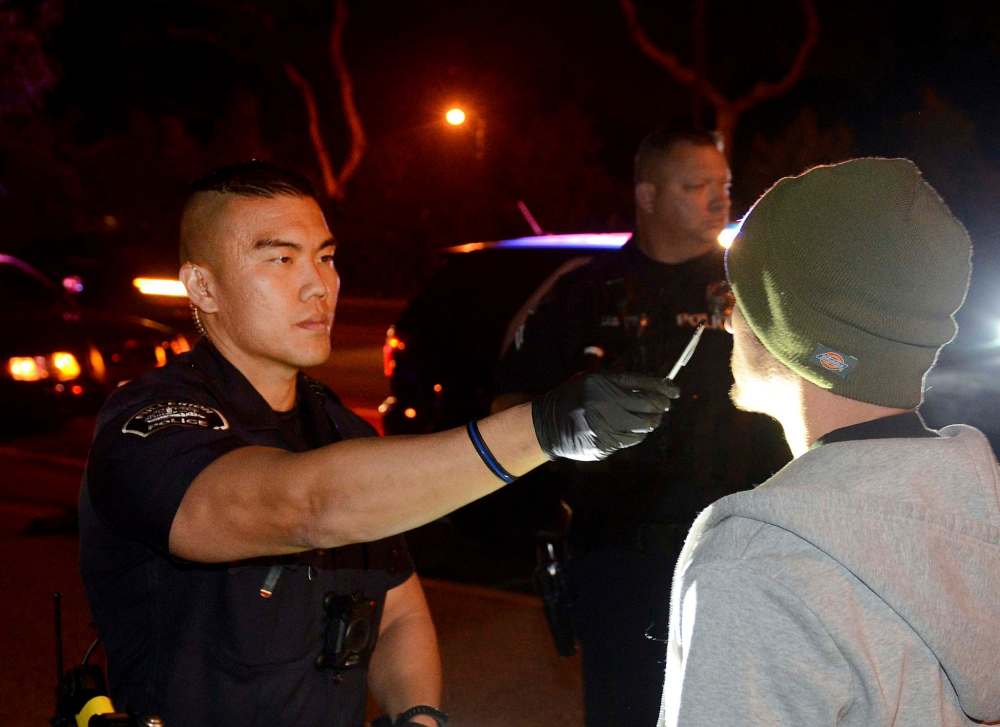
Canada’s new impaired driving laws apply that same per se standard to cannabis-impaired driving, treating certain levels of THC in the blood as inherent legal evidence of impairment. But as Kleiman and others have pointed out, that approach simply isn’t grounded in science, and risks punishing people who aren’t actually impaired.
“The chemistry is completely different,” explained Kleiman. “You can’t measure impairment with cannabis with a blood test.”
Even worse, cannabis users have no way to measure whether their blood-THC level is above the legal limit. (For alcohol users, cheap and readily-available breathalyzer testers are a quick solution to check one’s blood-alcohol levels before getting behind the wheel.)
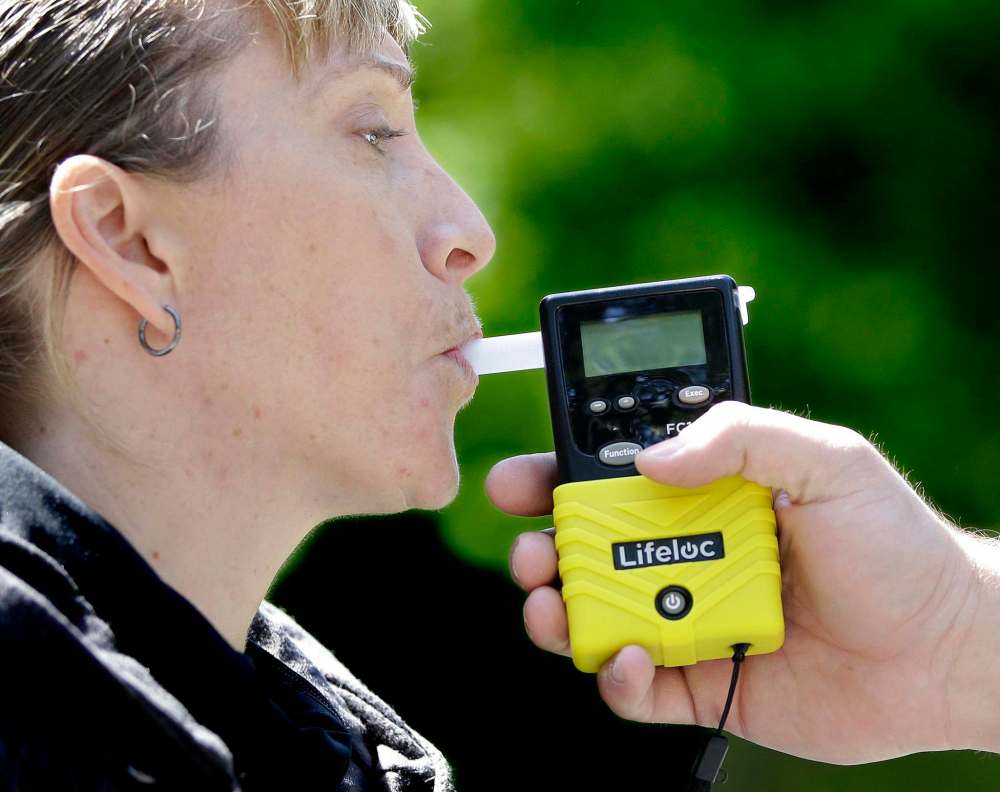
“A law that leaves people in doubt about whether they’re breaking it or not is an unjust law,” Kleiman said.
Kleiman and his colleagues aren’t arguing that driving while impaired by cannabis is safe.
Rather, they’re saying that the best available evidence shows the risks from cannabis-impaired driving are relatively lower than the risks from many other driving-related activities that aren’t treated as crimes. (That’s a conclusion supported by both population-level studies regarding impaired driving collisions and controlled experiments that examine how various activities affect driving ability, Kleiman said.)
“My argument for it is, let’s look at other things that are comparably risky and see how we punish them. And the answer in most cases is, not at all,” Kleiman said.
“It’s perfectly legal to drive drowsy. It’s perfectly legal to drive while you’re angry. It’s perfectly legal to drive with a noisy kid in the back seat. All of those things are more dangerous than driving stoned.”
For that reason and others, Kleiman’s paper concludes that “stoned driving alone (not involving alcohol or other drugs) should be treated as a traffic infraction rather than as a crime, unless aggravated by recklessness, agressiveness, or high speed.”
Of course, it’s one thing for academics to reach that conclusion in a paper, and quite another for politicians to actually pass progressive cannabis-impaired driving laws that reflect an evidence-based approach. Still, Kleiman feels the public would support the principle behind his idea.
“If you say to people, ‘Should the penalty for a risky driving-related activity parallel the actual risk of the activity,’ they’ll mostly say, ‘Well yeah.’ In that direction, this is completely intuitive,” he said.
But intuitive or not, relaxing cannabis-impaired driving laws could be politically risky for legislators. Appearing to be “soft on crime” can opens the door for effective attacks from opposing politicians.
“Not my problem,” quipped Kleiman.
“All I can do is tell people what the right thing to do is, and hope that in the long run, being stupid will be politically untenable… Nobody gave me the right to dictate policy. All I’m allowed to do is tell you what good policy is.”
solomon.israel@theleafnews.com
@sol_israel
History
Updated on Thursday, November 15, 2018 3:58 PM CST: Attributes claim regarding research on the relative risks of cannabis-impaired driving to Kleiman.