Choosing Manitoba’s microscopic MVP
Advertisement
Read this article for free:
or
Already have an account? Log in here »
To continue reading, please subscribe:

Digital Subscription
One year of digital access for only $205*
- Enjoy unlimited reading on winnipegfreepress.com
- Read the E-Edition, our digital replica newspaper
- Access News Break, our award-winning app
- Play interactive puzzles
*First annual payment billed as $205.00 + GST for one year. This annual subscription will automatically renew at $233.00 + GST every 52 weeks (10% off the regular annual price of $259.35). Offer available to new and qualified returning subscribers only. Cancel any time.
To continue reading, please subscribe:
Add Free Press access to your Brandon Sun subscription for only an additional
$1 for the first 4 weeks*
- Enjoy unlimited reading on winnipegfreepress.com
- Read the E-Edition, our digital replica newspaper
- Access News Break, our award-winning app
- Play interactive puzzles
*Your next Brandon Sun subscription payment will increase by $1.00 and you will be charged $17.95 plus GST for four weeks. After four weeks, your payment will increase to $24.95 plus GST every four weeks.
Read unlimited articles for free today:
or
Already have an account? Log in here »
Hey there, time traveller!
This article was published 04/08/2018 (2901 days ago), so information in it may no longer be current.
Call me a courageous fool with naturally curly hair if you must, but today I am going to stand up for the smallest Manitobans.
And by “smallest Manitobans,” I, of course, mean microbes, which are microscopic organisms too small to be seen with the naked eye. That means they are roughly the same size as U.S. President Donald Trump’s sense of decency and the list of important accomplishments by the Canadian Senate.
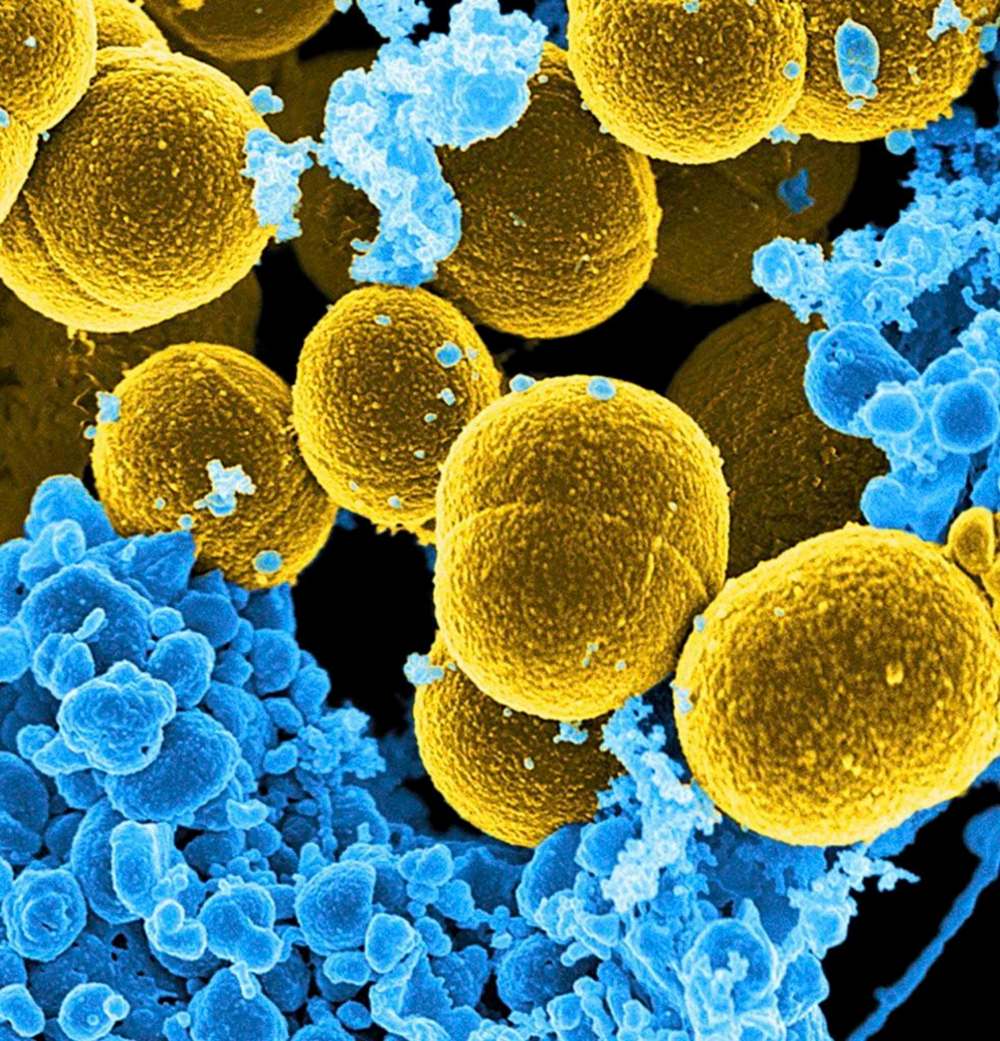
What I want to do today is launch a contest wherein you, the science-minded reader, can potentially win some manner of cheesy prize by simply emailing me your nominations for (pause for dramatic effect) Manitoba’s Provincial Microbe.
Q: Is that exciting, or what?
A: Yes, Doug, it is very exciting. Please tell us more.
Well, I was moved to hold this big contest for our smallest residents after stumbling on an online news report with the following exciting headline: “New Jersey May Declare An Official State Microbe.”
According to what I read, New Jersey is hoping to become only the second U.S. state to pay tribute to a microbe (Oregon was the first). Last month, the New Jersey Senate approved a bill that would honour Streptomyces griseus (S. griseus to its friends) as state microbe.
Q: Why do they want to do this?
A: Because this microbe, discovered in New Jersey in 1943, produces the compound streptomycin, the first antibiotic discovered on American soil, one that kills the bacteria that cause tuberculosis, cholera, typhoid and dysentery.
The point is, this is a pretty awesome tiny organism, but the legislation designating it the official state microbe is pending in the State Assembly.
Q: Why isn’t it approved yet?
A: Because, it turns out, it is really hard to get people to agree on naming an official microbe.
As we have already mentioned, Oregon is the only state to have passed a bill naming a state microbe. In 2013, Oregon chose Saccharomyces cerevisiae (brewer’s yeast) as the “Official Microbe of the State of Oregon” because of its significance in the state’s craft beer industry.
In 2009, Wisconsin was the first state to take a run at honouring a microbe — Lactococcus lactis, the essential bacterium for making cheese — but that effort failed because the bill was not acted on in the state Senate.
There was a big dust-up in Hawaii when Flavobacterium akiainvivens, which munches on decaying akia plants, was nominated as the state bacteria five years ago, but then another Hawaiian senator launched a campaign for Aliivibrio fischeri, the bacterium that helps the Hawaiian bobtail squid glow in the dark.
In the end, they couldn’t agree which microbe deserved to represent the Aloha State, so it was all dropped.
So, we can see that you are opening a big kettle of tiny germs when you attempt to name a particular microbe to represent the area in which you, a human being, currently reside, but that will not stop me, a crusading newspaper columnist, from doing just that.
What is important is that all of us — whether we cheer for the Winnipeg Jets, the Winnipeg Blue Bombers or the Winnipeg Goldeyes — can agree that we definitely need an official provincial microbe to set us apart from all the other provinces that do not recognize the importance of paying tribute to micro-organisms that may or may not be infectious.
After all, at the moment Manitoba pretty much has an Official Everything in the sense we have an official flower (the Prairie Crocus, famed for its furry petals), an official fish (the walleye, famed for being delicious when deep fried), an official bird (the Great Grey Owl, famed for being extremely big) and an official tree (the white spruce, famed for being a really nice Christmas tree).
We probably have a great many more official things in this province, but I think you get the thrust of my gist. Clearly, the time has come to designate an official microbe.
The only problem is I personally do not know any microbes that are famous residents of our beloved province, likely due to the fact I did so poorly in biology in high school.
After a few minutes of randomly Googling the word “microbe,” I did stumble on a story stating that a study published in the Canadian Journal of Microbiology had identified a new toxic metalloid-reducing bacteria in highly polluted abandoned gold-mine tailings in Manitoba’s Nopiming Provincial Park.
“These bacteria have the ability to convert toxic components that exist as a result of mining activities into less toxic forms and are prevalent in extreme environments,” Dr. Vladimir Yurkov, a University of Manitoba professor, was quoted as saying.

Without understanding what that actually means, I have to say this sounds like a pretty awesome candidate for our official Manitoba microbe.
But don’t take my word for it. What I want you to do is to send me emails containing two things: 1) Your suggestion for Manitoba’s official microbe; and 2) The reasons why you think this microbe, of all the microbes out there, would be suitable to carry this province’s flag on what we assume would be a very tiny battlefield.
So, there you go, Manitoba microscopic organism lovers, grab the nearest smart device and email me your official suggestions. I’ll pick the one I like the best and I’ll find you “some manner of swell prize,” such as tickets to an event and copies of my book, Bite-Sized Doug, of which there are a few left.
Remember: the fate of Manitoba’s official microbe is in your hands… so you might want to wash them thoroughly!
doug.speirs@freepress.mb.ca