Class dismissed
Queer Eye will talk about race, religion and gender, but won't acknowledge status
Advertisement
Read this article for free:
or
Already have an account? Log in here »
To continue reading, please subscribe:

Digital Subscription
One year of digital access for only $205*
- Enjoy unlimited reading on winnipegfreepress.com
- Read the E-Edition, our digital replica newspaper
- Access News Break, our award-winning app
- Play interactive puzzles
*First annual payment billed as $205.00 + GST for one year. This annual subscription will automatically renew at $233.00 + GST every 52 weeks (10% off the regular annual price of $259.35). Offer available to new and qualified returning subscribers only. Cancel any time.
To continue reading, please subscribe:
Add Free Press access to your Brandon Sun subscription for only an additional
$1 for the first 4 weeks*
- Enjoy unlimited reading on winnipegfreepress.com
- Read the E-Edition, our digital replica newspaper
- Access News Break, our award-winning app
- Play interactive puzzles
*Your next Brandon Sun subscription payment will increase by $1.00 and you will be charged $17.95 plus GST for four weeks. After four weeks, your payment will increase to $24.95 plus GST every four weeks.
Read unlimited articles for free today:
or
Already have an account? Log in here »
Hey there, time traveller!
This article was published 30/06/2018 (2935 days ago), so information in it may no longer be current.
Like many people I know, I breezed through the first season of Queer Eye. Or more accurately: I wept through it.
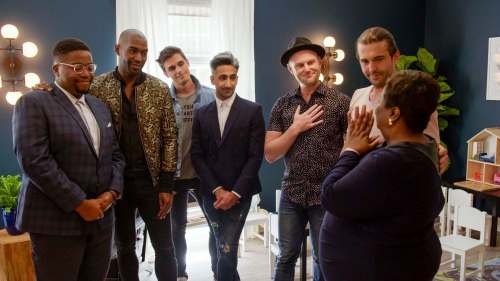
Unlike the first iteration of the show, Queer Eye for the Straight Guy, which dealt exclusively in esthetics, this redux seemed interested in asking big questions and exploring masculinity and fatherhood, queerness and heteronormativity. Billed as “more than a makeover,” Queer Eye dives deeper than makeover reality shows we’ve seen before.
Still, as I watched this season, I felt a discomfort I couldn’t quite locate, and in the second episode, I realized what it was. In Queer Eye, demonstrations of socio-economic class differences are everywhere, yet the show refuses to acknowledge class at all.
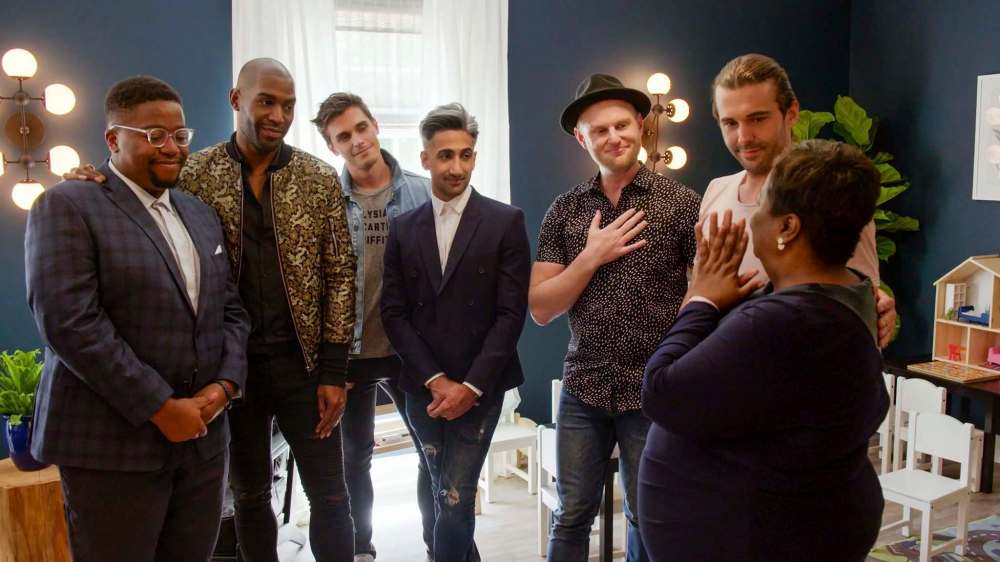
In that episode, we are introduced to William and Shannan, who met while they were in management training at Walmart. “Oh, it’s a Walmart romance,” Bobby says. Jonathan gushes, “It’s how I’ve dreamed of meeting my husband my whole life.”
After driving down a gravel road to the couple’s trailer home, the Fab Five enter. When Karamo points out, with disgust, the stains on the couple’s couch and asks where they got it, William answers, “At Goodwill, for (US)$30.” Karamo is aghast: “So you have a woman who is the one? Maybe you shouldn’t have her sitting on things like this.” After William tries to defend the couch’s comfort, Karamo begins jumping up and down on the springs. Bobby is equally appalled that the couple still has furniture from Shannan’s first marriage.
Here’s something to consider: perhaps a couch from Goodwill is what they can afford. Maybe they didn’t replace perfectly functional furniture because bedroom sets cost money. It’s possible that Shannan trims William’s hair in their bathroom because professional haircuts are expensive. For a show that touts self-love and confidence, it spends a fair amount of time ignoring financial obstacles and shaming hard-working people for their outdated or messy homes.
In short: Tan France’s French tuck advice doesn’t solve for living below the poverty line.
If Queer Eye is “more than a makeover,” doesn’t that mean someone at some point should acknowledge the socio-economic obstacles people face to changing their homes, appearance and lives? Walmart, the site of this couple’s meet cute, is notorious for low wages, poor labour conditions and actively working against unionization. In Georgia, where the show is filmed, one in five children is living in poverty. A recently released United Nations report concluded that with 40 million living in poverty, the United States is the most unequal developed country in the world.
You won’t hear about any of that on Queer Eye, where conversations on race, sexuality and religion are welcome, albeit controlled, but class remains verboten. This is, after all, a program that makes money from product placement. Beauty shots of advertisers fill the show — from facial products near the bathroom sink to the gelato the Fab Five eat while watching their newest prodigy on their giant flat-screen. We are reminded that our lives can be better, that we can be more confident and that we will be more beloved by our families if only we pick up these specific items.
The show’s blind eye to poverty is particularly galling given its commitment to showcasing the value of members of the still-marginalized LGBTTQ* community. Systemic oppression is intersectional. This is certainly true for sexuality/gender identity and socio-economic class.
In terms of wealth, Antoni, Bobby, Jonathan, Karamo and Tan represent a very small portion of the LGBTTQ* community.
“In a 2016 study, one in four LGBTQ people (in the United States) — approximately 2.2 million people — did not have enough money to feed themselves or their families during some period in the last year,” said Tyrone Hanley, one author of a May 2018 report released by the LGBTQ Poverty Collaborative Project.
Poverty rates are even higher for LGBTTQ* people of colour and worst for those with the most marginalized identities, such as black transgender people who, on average, make less than US$10,000 a year, according to Lourdes Ashley Hunter, executive director at the Trans Women of Color Collective.
Additionally, while LGBTTQ* youth make up an estimated five to eight per cent of the overall U.S. youth population, up to 40 per cent of homeless youth identify as LGBTTQ*. You could call the Fab Five “aspirational”; you could also call them out of touch.
In season 1, the Fab Five transformed the messy house and life of 45-year-old father of six Bobby Camp. Within the first five minutes of the episode, the audience learns that Camp works by day at an engineering firm and then, when the kids go to bed, he stocks shelves at a home improvement store. In addition to being the primary caregiver, his wife works as a preschool teacher.
Camp doesn’t need a better grooming routine. He needs to live in a culture where he doesn’t have to work two jobs to provide for his family.

Many show participants have a tremendous amount of stuff. Their homes overflow with clutter. This fact is never treated with anything more than eyerolls and eyebrow raises and the presumption all that is needed is some Marie Kondo therapy. But I know different. My Maw Maw lived through the Depression and grew up in a home with dirt floors in rural Louisiana. When she died, we found stashes of food and clothing and other items hidden all over her house. To minimize is a privilege. Many people don’t have the luxury of knowing there is money in their chequing account to replace what they threw away.
Queer Eye isn’t the first makeover reality show to interface with issues of class. Extreme Home Makeovers, which ran from 2003 to 2012, met them head-on — it sought out and renovated the homes of people who had suffered tremendous hardships. They were swimming in medical bills or living paycheque to paycheque. Though well-intentioned, that show proved to be clumsy about financial realities, too. Because of their expanded square footage or, in some cases, brand-new homes, show participants could not afford skyrocketing property taxes and utility bills. Their homes were foreclosed on, or owners were forced to sell.
Reality television is inherently unreal. We are witnessing a carefully constructed facade, one made to get views and make money. But for a show that markets itself with feel-good vibes, one that tries to expand conversations about race, religion and sexuality, the omission of class discourse is glaring. Economic disparity is real, and it is not the fault of an individual, but the culture they live within.
Queer Eye deserves credit for its efforts to expand conversations across certain kinds of difference. But viewers should recognize the show for what it is: a pretty reality show that ignores some very ugly realities.
— Washington Post