Courtyard gardens: a kind of paradise behind faded walls
Advertisement
Read this article for free:
or
Already have an account? Log in here »
To continue reading, please subscribe:

Digital Subscription
One year of digital access for only $205*
- Enjoy unlimited reading on winnipegfreepress.com
- Read the E-Edition, our digital replica newspaper
- Access News Break, our award-winning app
- Play interactive puzzles
*First annual payment billed as $205.00 + GST for one year. This annual subscription will automatically renew at $233.00 + GST every 52 weeks (10% off the regular annual price of $259.35). Offer available to new and qualified returning subscribers only. Cancel any time.
To continue reading, please subscribe:
Add Free Press access to your Brandon Sun subscription for only an additional
$1 for the first 4 weeks*
- Enjoy unlimited reading on winnipegfreepress.com
- Read the E-Edition, our digital replica newspaper
- Access News Break, our award-winning app
- Play interactive puzzles
*Your next Brandon Sun subscription payment will increase by $1.00 and you will be charged $17.95 plus GST for four weeks. After four weeks, your payment will increase to $24.95 plus GST every four weeks.
Read unlimited articles for free today:
or
Already have an account? Log in here »
Hey there, time traveller!
This article was published 11/12/2018 (2817 days ago), so information in it may no longer be current.
SAN MIGUEL DE ALLENDE, Mexico – Step off the dusty cobblestone streets and peek behind nondescript, weather-worn, faded, even grimy brick facades, and encounter the startlingly beautiful courtyard gardens of this central Mexican colonial town.
These oases of beauty and calm claim their roots in the traditional Moorish gardens of ancient Spain. Those, in turn, were inspired by Persian, Roman and Islamic gardens even earlier. The word “paradise” itself means “walled garden.”
Alfonso Alarcon, a landscape architect in San Miguel de Allende for nearly 30 years, says monasteries were among the first to design and plant courtyard gardens. Perhaps it was an attempt to replicate paradise.
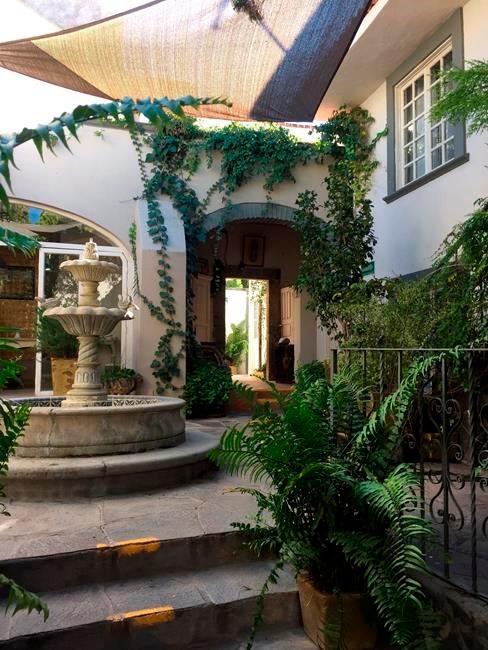
“Life was directed inside” initially for safety reasons, he explained. “No one saw you. It looks like nothing from the outside, and then you get into this beautiful patio.”
Traditionally, such gardens are built in a cross-shape with the corners, usually anchored by large trees, pointing north, south, east and west. A pond or fountain often serves as a central focal point. Fruit trees and fragrant plants provide further respite from the sun, humidity, even the noise and dirt from outside the walls.
In the 16th century, the conquering Spaniards left behind their outdoor sanctuaries, and they continue to be embraced in Mexico today.
Markus Luck has been designing gardens in San Miguel since 2006. “You want something that looks good year-round,” he explains. “Put in things that aren’t too big, don’t block too much light, aren’t too cluttered.”
In smaller spaces, the entire courtyard can even be filled with plants in pots.
Mexican walls are often painted bold reds and yellows and oranges, so trees and plants tend toward simple, wide, leafy greens, or crawling ivy and simple white blooms.
Because of its mild, Mediterranean climate, just about anything can grow — and quickly — in San Miguel. Popular choices for courtyard gardens include citrus trees, including oranges, limes and kumquats, olive trees, bougainvillea, ferns and lavender.
“I would see something in front of someone’s house and I’d knock on the door and ask for a cutting,” Luck said. “You’d see the ones over time that do well.”
Modern designers and property owners also are paying more attention to how much water their gardens will use and how much work will be required to maintain them.
San Miguel uses well water stored in ancient aquifers, so it’s chock full of salt and other minerals, Luck said.
Jeffry Weisman and Andrew Fisher first fell in love with the three jacaranda trees on the property they bought here in 2011.
“I grew up in L.A. with a jacaranda outside my window. It was minuscule compared to these that are 110 years old,” Weisman said. “Nothing like an ancient tree to give scale and sculptural quality to a garden.”
The main building on the couple’s property was originally built in the 18th century as a tannery, so it’s more open and less claustrophobic than most, Weisman explained. He said they designed the courtyard as a series of rooms, each with a theme and purpose, from the pool area to the dining terrace to the outdoor living room with fireplace.
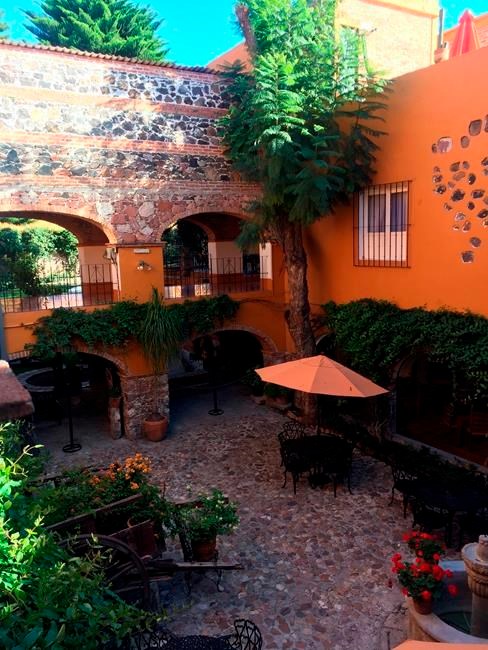
“For the planting, it was critical that everything be easy to grow and native,” he said.
“In our youth, we spent a lot of time trying to grow things that didn’t want to grow, and we’ve learned better.”
Alarcon said he still meets clients who want what they can’t — or shouldn’t — have.
“Gardens work as a dynamic unit. Everything should work with everything else,” he said, adding that he encourages property owners to think past their immediate enjoyment to the mid- or long-term.
“Gardens don’t remain the same. Even if you try to control it. Plants grow old, they die, they change.”
___
Alfonso Alarcon: www.terralandscapedesign.com
Markus Luck: www.sozolandscape.com
Jeffry Weisman: www.fisherweisman.com
Andrew Fisher: www.andrewfisherart.com