Egyptian novel explores Christians under controlling church
Advertisement
Read this article for free:
or
Already have an account? Log in here »
To continue reading, please subscribe:

Digital Subscription
One year of digital access for only $205*
- Enjoy unlimited reading on winnipegfreepress.com
- Read the E-Edition, our digital replica newspaper
- Access News Break, our award-winning app
- Play interactive puzzles
*First annual payment billed as $205.00 + GST for one year. This annual subscription will automatically renew at $233.00 + GST every 52 weeks (10% off the regular annual price of $259.35). Offer available to new and qualified returning subscribers only. Cancel any time.
To continue reading, please subscribe:
Add Free Press access to your Brandon Sun subscription for only an additional
$1 for the first 4 weeks*
- Enjoy unlimited reading on winnipegfreepress.com
- Read the E-Edition, our digital replica newspaper
- Access News Break, our award-winning app
- Play interactive puzzles
*Your next Brandon Sun subscription payment will increase by $1.00 and you will be charged $17.95 plus GST for four weeks. After four weeks, your payment will increase to $24.95 plus GST every four weeks.
Read unlimited articles for free today:
or
Already have an account? Log in here »
Hey there, time traveller!
This article was published 13/12/2018 (2789 days ago), so information in it may no longer be current.
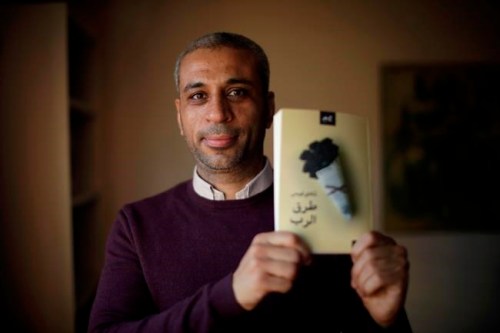
CAIRO – Shady Lewis Botros says his recently published novel — “Ways of the Lord” — can be broadly viewed as an attempt to answer one question: What it’s like to be a Christian in Egypt?
The answer, given in stories narrated by the book’s chief character, is complex and often disheartening. It’s giving your children neutral names that don’t identify them as Christians in hopes they’ll have a sporting chance of progress in the mainly Muslim nation. It means facing baseless but dangerous charges of spying for Israel at time of war. It means turning off the lights at home and gathering the family in one room to escape the attention of a Muslim mob on the street.
Beyond entrenched discrimination, the Arabic-language novel explores what the author says is the victimization of Egypt’s Christians by a “politically engineered harmony” between the state and their own church, seeking to control their lives.
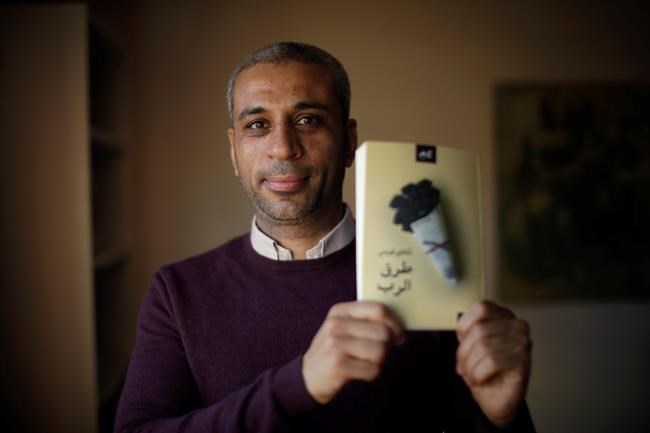
“Ways of the Lord” is a rare example of an Egyptian work of fiction whose primary characters are Christian. The result breaks stereotypes that many of the country’s Muslims hold about their minority compatriots. But it also turns the look inward, dispelling the secrecy surrounding the ancient Coptic Orthodox Church — the predominant denomination in Egypt — and addressing its controlling practices and its rivalries with smaller churches.
“Most Coptic literature is about the discrimination or oppression Christians endure with a dose of rights advocacy. That’s understandable but that is also about as far as it goes,” Botros told The Associated Press in a telephone interview from London, his home of 13 years. “This work introduces Egyptians to the reality of Copts as a people who are not always praying, singing hymns and waiting on every word from the church. The novel opens the world of Copts to both Copts and Muslims.”
The novel, the author’s first, takes on added relevance because the Coptic Church leadership has adhered closer than ever to the government. It’s an alliance that gives the community a measure of protection but has raised questions over its independence and has drawn the wrath of Islamic militants, who have over the past two years killed more than a 100 Christians in attacks.
The church’s unity is also being tested, partially over calls for it to modernize some of its rigid rules, like those governing marriage and divorce. The killing in July of the abbot of a monastery, for which two monks are on trial, has led to soul searching about the practices of monasticism, traditionally a cornerstone of the church’s identity.
The novel tells the story of a young Christian man in Cairo, Sherif, who has abandoned the church. He’s in a relationship with a German woman, but to marry her he must first get a church document. So he goes to his neighbourhood priest each week for interviews that turn into confessionals.
Sherif relates a series of tales to explain to the priest why he never comes to church. He tells of his family’s past rebellions, like a grandfather who left the Coptic Church because the priest would not baptize his newborn child before her death.
As a young man, he says, he hopped from one Christian denomination to another to explore his identity. His father is cynical about his spiritual search, telling his son, “Generally, they are all con artists.”
The confession sessions with the priest are one of two plot tracks running through the novel. The other follows Sherif’s political activism, which lands him in trouble with the police. His one hope to escape jail time is to marry his girlfriend and go to Germany, but in the end, the girlfriend returns home. He spends a year in jail for a white-collar crime he did not commit.
“Sherif was painted as a character in crisis and that’s not just on account of being a member of a minority, but rather as someone facing an existential crisis over his problems with the church and the state,” said literary critic Ahmed Shawqy Ali.
The novel ends with Sherif surrendering to the powers that crush his rebellion. Jobless after losing his government engineering job, he survives on a small income from doing little jobs for the church, while telling his stories to whoever will listen. “The ways of the Lord are strange and tough to understand,” Sheriff says of his return to the church’s embrace.
Botros said the book’s “fatalistic” ending “shows that, in a place like Egypt, religious minorities like Christians don’t have many choices.”
The church presents itself as the protector of Egypt’s Copts, and many in the community adhere to it fervently.
“The church is a peacemaker that is in harmony with everyone, from the ruling government and civil society groups to al-Azhar,” said a church spokesman, Boulis Halim, referring to the top Muslim institution in Egypt. “We cannot deny that there are shortcomings in some respects, especially the social field, but that will evolve going forward.”
But critics say the interests of individual Christians get lost under the church’s communal leadership.
Kamal Zakher, a Christian who is one of Egypt’s top experts on the Coptic Church, said the church has become a “hostage” to the government for safety, particularly since the rise of Islamic hard-liners starting in the 1970s.
It and the government leadership deal with each other directly, but “they have all forgotten that ordinary Christians deal on daily basis with bureaucrats who, like everyone else, have been influenced by that Islamic revival,” Zakher said.
Karoline Kamel, a researcher on church affairs from the Egyptian Initiative for Personal Rights, said the novel’s main character is not typical of Coptic youth, who in large part associate closely with the church. But she said the novel gets the theme of control right.
“The church’s protection is focused on itself as an institution, as walls and buildings regardless of what happens to Christians,” she said.
___
Associated Press writer Samy Magdy in Cairo contributed to this report.
The Free Press acknowledges the financial support it receives from members of the city’s faith community, which makes our coverage of religion possible.