Emails show FDA worry after romaine outbreaks
Advertisement
Read this article for free:
or
Already have an account? Log in here »
To continue reading, please subscribe:

Digital Subscription
One year of digital access for only $205*
- Enjoy unlimited reading on winnipegfreepress.com
- Read the E-Edition, our digital replica newspaper
- Access News Break, our award-winning app
- Play interactive puzzles
*First annual payment billed as $205.00 + GST for one year. This annual subscription will automatically renew at $233.00 + GST every 52 weeks (10% off the regular annual price of $259.35). Offer available to new and qualified returning subscribers only. Cancel any time.
To continue reading, please subscribe:
Add Free Press access to your Brandon Sun subscription for only an additional
$1 for the first 4 weeks*
- Enjoy unlimited reading on winnipegfreepress.com
- Read the E-Edition, our digital replica newspaper
- Access News Break, our award-winning app
- Play interactive puzzles
*Your next Brandon Sun subscription payment will increase by $1.00 and you will be charged $17.95 plus GST for four weeks. After four weeks, your payment will increase to $24.95 plus GST every four weeks.
Read unlimited articles for free today:
or
Already have an account? Log in here »
Hey there, time traveller!
This article was published 29/03/2019 (2701 days ago), so information in it may no longer be current.
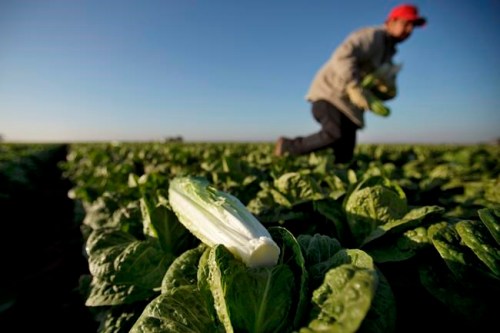
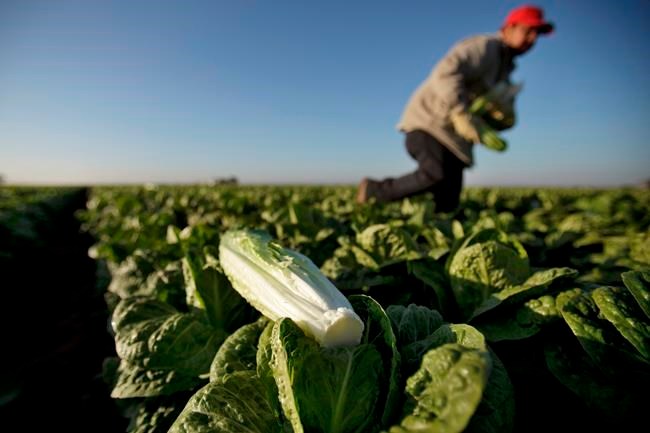
NEW YORK – After repeated food poisoning outbreaks tied to romaine lettuce, a U.S. food safety official shared his concerns in an internal email, saying the produce industry’s water testing “failed in an epic and tragic way.”
How the industry tests water to grow leafy greens is “unacceptable” and needs to change, James Gorny, a senior adviser for produce safety at the Food and Drug Administration, wrote to agency leaders.
The message last November, obtained by The Associated Press through a public records request, came days before the agency warned people to avoid romaine ahead of Thanksgiving. Just months earlier in April, another E. coli outbreak linked to romaine had sickened more than 200 and killed five. That was later linked to an irrigation canal near a massive cattle lot in Arizona; the fall outbreak was linked to a water reservoir in California. In both cases, regulators never confirmed how the water became contaminated.
Though the FDA has publicly called on the leafy greens industry to step up safety, the emails offer a stark view of the agency’s longstanding frustrations with continued outbreaks. They also show how the agency leveraged the crisis to pressure for voluntary changes, even as it tries to figure out its own water testing rules.
In a statement, the FDA said it has been working with growers and state agencies to improve safety since the outbreaks, including testing of romaine. The agency said new regulations that include farm inspections and sanitary rules for workers also should help stem outbreaks.
Industry groups said they’re expanding existing safety practices for their members. Joining the industry agreements is voluntary, however, and a farm linked to the fall outbreak was not a member.
Food poisoning outbreaks tied to leafy greens have been an ongoing concern for health officials. The failure of industry measures to stop outbreaks shows the lack of a clear solution, and even regulators aren’t sure how to fix the problem, said Timothy Lytton, a food safety expert at Georgia State University.
This month, the FDA delayed a regulation requiring produce growers to test water for E. coli — which is how the leafy greens industry has been monitoring its water. The presence of E. coli doesn’t necessarily make people sick, but can signal potentially harmful strains. The agency said it needs more time to consider whether it’s the most practical option.
“That’s essentially just stepping back and asking industry to take responsibility for public safety,” said Sarah Sorscher of the Center for Science in the Public Interest.
Gorny’s emails came during the fall outbreak tied to California growing regions. In a message in late November, he noted additional, recent illnesses with a strain similar to the earlier spring outbreak.
The FDA said it never tied those additional illnesses to a food. But at the time, Gorny called it a “near miss” that shows the problem wasn’t fixed.
Sorscher said the lack of a solution is concerning, but lettuce is still a healthy food and the “odds are very good that you won’t get sick.”
___
Follow Candice Choi on Twitter: @candicechoi
___
The Associated Press Health & Science Department receives support from the Howard Hughes Medical Institute’s Department of Science Education. The AP is solely responsible for all content.