Activist seeks a ‘better Christianity’

Advertisement
Read this article for free:
or
Already have an account? Log in here »
To continue reading, please subscribe:

Digital Subscription
One year of digital access for only $205*
- Enjoy unlimited reading on winnipegfreepress.com
- Read the E-Edition, our digital replica newspaper
- Access News Break, our award-winning app
- Play interactive puzzles
*First annual payment billed as $205.00 + GST for one year. This annual subscription will automatically renew at $233.00 + GST every 52 weeks (10% off the regular annual price of $259.35). Offer available to new and qualified returning subscribers only. Cancel any time.
To continue reading, please subscribe:
Add Free Press access to your Brandon Sun subscription for only an additional
$1 for the first 4 weeks*
- Enjoy unlimited reading on winnipegfreepress.com
- Read the E-Edition, our digital replica newspaper
- Access News Break, our award-winning app
- Play interactive puzzles
*Your next Brandon Sun subscription payment will increase by $1.00 and you will be charged $17.95 plus GST for four weeks. After four weeks, your payment will increase to $24.95 plus GST every four weeks.
Read unlimited articles for free today:
or
Already have an account? Log in here »
Hey there, time traveller!
This article was published 28/05/2011 (5563 days ago), so information in it may no longer be current.
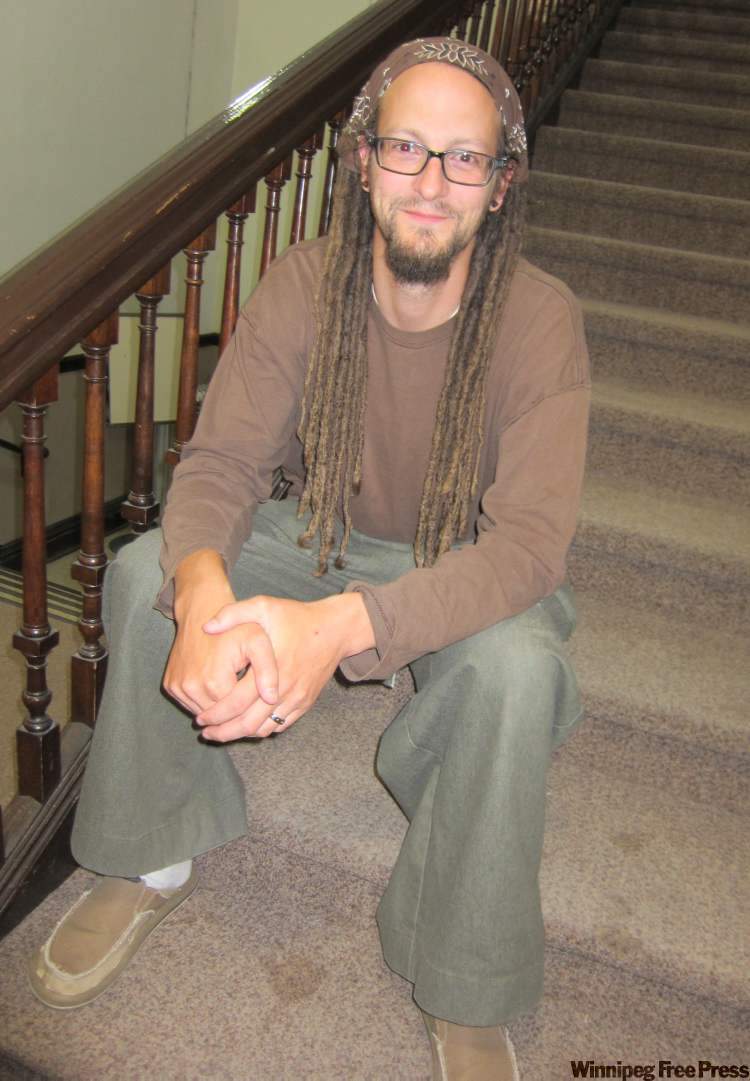
Ask Philadelphia-based activist Shane Claiborne about his wide-legged green pants and he’ll launch into a lengthy explanation that reveals more about his theological leanings than his sense of fashion and style.
“The simple answer is I like making clothes and I like hanging out with my mom,” says the 35-year-old Christian author, speaker and occasional garment sewer about his home-sewn drawstring pants that feature four patch pockets on the front legs.
Inspired by Gandhi, who spun the yarn for his own traditional Indian garments, Claiborne views sewing his own pants in an era of cheap, mass-produced, imported clothes as an expression of his radical Christian beliefs. He says the small act of taking time to sew a piece of clothing, usually with the help of his mother, helps him recognize the efforts of workers in foreign garment factories who produce the rest of his wardrobe.
“To me, the more we can humanize our own life and realize we are part of the web of human relationships, the better we are. There’s a symbolic aspect, but there’s a real vision,” explains the Tennessee-born Claiborne, who was in Manitoba last week for several speaking engagements.
In addition to a public ecumenical event, Claiborne was also the guest speaker at the annual meeting of the United Church of Canada’s Conference of Manitoba and Northwest Ontario in Kenora, which wraps up four days of meetings on Sunday.
He is scheduled to speak again in Winnipeg at the Youth for Christ national conference at the end of June.
Credited as one of the pioneers of New Monasticism, which is marked by intentional communities that share resources, a commitment to contemplation and service to needy folks and the broader community, Claiborne is also a co-founder of The Simple Way (www.thesimpleway.org), an intentional community in a poor, inner-city neighbourhood in Philadelphia.
Claiborne’s folksy and often funny anecdotes of his work and theological thinking, along with his distinctive pants, trademark brown bandana and long, brunette dreadlocks are the public image of The Simple Way, which is financed by his speaking engagements and proceeds from his books, as well as by donations from supporters. He travels extensively across the continent to speak about social justice, peacemaking and following Jesus Christ as radical Christians.
“I would say it’s a Christianity that’s taking Jesus seriously again and is using our faith not as a ticket out of this world, but engaging this world,” explains Claiborne, who was married three weeks ago to fellow Simple Way member Katie Jo Brotherton in a suit sewn by his mother.
Shaped by his college and seminary studies, short-term stints in India with Mother Teresa and a peace team in Iraq, and a year-long internship at an American evangelical mega-church, Claiborne says he understands people now are looking for a new kind of Christianity that goes beyond the traditional church.
“One of my Catholic friends taught me that the best critique is to practise something better,” explains the best-selling author of The Irresistible Revolution and Jesus for President.

“To me, the answer to bad Christianity is not no Christianity, but better Christianity.”
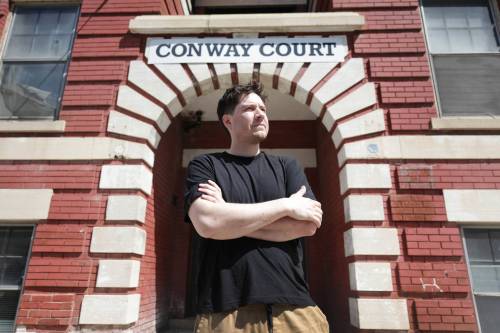
Claiborne’s lifestyle, writings, celebrity status and even his clothes may resonate with young people, but community living is not as romantic or idyllic as it may seem, cautions Jamie Arpin-Ricci, pastor of Little Flowers Community in the West End. After living in intentional communities for 17 years, both as a single person and now with his wife Kim, Arpin-Ricci says it takes years and lots of hard work to see the results.
“What we identify most with New Monasticism is the value of sharing life with the community in whatever neighbourhood you live in,” says Arpin-Ricci, 34, whose upcoming book, The Cost of Community, features a blurb by Claiborne.
“I’m really more interested in Winnipeg and my neighbourhood.”
brenda@suderman.com
The Free Press is committed to covering faith in Manitoba through our Religion in the News project. This reporting continues because readers like you step forward to fund it.
Donate now to support our reporting on religion.
Your donation is eligible for a charitable tax receipt.
BECOME A FAITH JOURNALISM SUPPORTER
Brenda Suderman has been a columnist in the Saturday paper since 2000, first writing about family entertainment, and about faith and religion since 2006.
Our newsroom depends on a growing audience of readers to power our journalism. If you are not a paid reader, please consider becoming a subscriber.
Our newsroom depends on its audience of readers to power our journalism. Thank you for your support.
The Free Press is committed to covering faith in Manitoba through our Religion in the News project. This reporting continues because readers like you step forward to fund it.
Donate now to support our reporting on religion.
Your donation is eligible for a charitable tax receipt.
BECOME A FAITH JOURNALISM SUPPORTER
Brenda Suderman has been a columnist in the Saturday paper since 2000, first writing about family entertainment, and about faith and religion since 2006.
Our newsroom depends on a growing audience of readers to power our journalism. If you are not a paid reader, please consider becoming a subscriber.
Our newsroom depends on its audience of readers to power our journalism. Thank you for your support.
Advertisement Advertise With Us
Advertisement Advertise With Us
The Free Press acknowledges the financial support it receives from members of the city’s faith community, which makes our coverage of religion possible.