Religion marks a divergent path throughout U.S., Canadian history
Advertisement
Read this article for free:
or
Already have an account? Log in here »
To continue reading, please subscribe:

Digital Subscription
One year of digital access for only $205*
- Enjoy unlimited reading on winnipegfreepress.com
- Read the E-Edition, our digital replica newspaper
- Access News Break, our award-winning app
- Play interactive puzzles
*First annual payment billed as $205.00 + GST for one year. This annual subscription will automatically renew at $233.00 + GST every 52 weeks (10% off the regular annual price of $259.35). Offer available to new and qualified returning subscribers only. Cancel any time.
To continue reading, please subscribe:
Add Free Press access to your Brandon Sun subscription for only an additional
$1 for the first 4 weeks*
- Enjoy unlimited reading on winnipegfreepress.com
- Read the E-Edition, our digital replica newspaper
- Access News Break, our award-winning app
- Play interactive puzzles
*Your next Brandon Sun subscription payment will increase by $1.00 and you will be charged $17.95 plus GST for four weeks. After four weeks, your payment will increase to $24.95 plus GST every four weeks.
Read unlimited articles for free today:
or
Already have an account? Log in here »
Hey there, time traveller!
This article was published 08/05/2013 (4880 days ago), so information in it may no longer be current.
WASHINGTON – Canada and the United States are not just two of the world’s closest neighbours in terms of commerce, trade and culture, but the former British colonies also shared many of the same fundamental beliefs and ideals as they forged their respective nations.
How, then, did religion come to play such a significant and enduring role in public policy in the United States compared to its neighbour to the north?
Just over 67 per cent of those who participated in the 2011 National Household Survey — Statistics Canada’s voluntary replacement for the cancelled mandatory long-form census — reported being “affiliated with a Christian religion,” the agency reported Wednesday.
But among new Canadian immigrants, the number of Christians has dropped to 47.5 per cent from 78 per cent in 1971, while nearly one-quarter of the Canadian population reported having no religious affiliation at all, compared with 16 per cent in 2001.
In the U.S., meanwhile, the vast majority of Americans still consider themselves religious — many of them devoutly so.
A recent Gallup survey found that throughout the U.S. in 2012, 40 per cent of Americans considered themselves to be “very religious.” Twenty-nine per cent described themselves as moderately religious, while 31 per cent said they were not religious.
Because Canadians tend to be more socially liberal than their southern neighbours, organized religion pays a greater price for those perceptions in Canada than in the U.S., experts say.
South of the border, by way of contrast, abortion — to name just one pet cause of the religious right — remains a hot-button issue as a host of state legislatures pass increasingly restrictive anti-abortion laws. Any prospect of that debate being reopened in Canada has been snuffed out by Prime Minister Stephen Harper.
There are myriad reasons for the divergent religious makeup of the U.S. and Canada, academics say.
They run the gamut from demographic and immigration trends to the religious beliefs of the founding fathers of both nations and each country’s response to the profound social and cultural shifts of the 1960s.
African-Americans, making up 12 per cent of the U.S. population, are avid churchgoers. A 2009 Pew Research study found they surpass other Americans on a host of faith fronts, including praying more often and attending church more frequently.
Hispanics, the fastest growing demographic in the country and now more numerous than African-Americans at 15 per cent of the population, are also more religious than most Americans, although they’re growing less so.
And unlike Canada, there remains a large swath of the United States — the South — that is staunchly religious as well as politically powerful. Only pockets of similarly devout believers are scattered throughout Canada, making it harder for them to shape public policy.
The Gallup study found that eight out of 10 of the most religious states in the union are in the South, with Alabama and Mississippi in the Top 3. Utah, with its substantial Mormon population, is No. 2.
Southerners evidently still agree with the founding fathers of the United States, who not only enshrined religious freedom in the Constitution, but also, critically, protected the public exercising of religion.
“Religion has always had a significant role in American public policy, right from Day 1,” said Thomas Farr, former director of the U.S. State Department’s religious freedom office.
The U.S. Constitution’s First Amendment was “the first major sign of the religious nature of our founders and the nature of the country,” said Farr, who’s now the director of the Religious Freedom Project at the Berkley Center for Religion, Peace, and World Affairs in Washington.
“We wanted to protect the exercise of religion; not just religious beliefs, but the actual exercise of religion. Why? It was because they wanted it in public policy. Exercise is an active thing. They intended it to be more than just freedom of religion, they wanted people to be actively religious. That’s why they wanted it protected and accommodated.”
That wasn’t the case in Canada, where the fathers of Confederation had to gingerly negotiate the often bitter religious animosities between the “two solitudes” — Protestant English Canada and Catholic French Canada. There was little appetite to allow religion to play a major role in determining public policy, no matter the personal religiosity of the Canadian founders.
“There was never the same impulse in Canada, understandably,” Farr said.
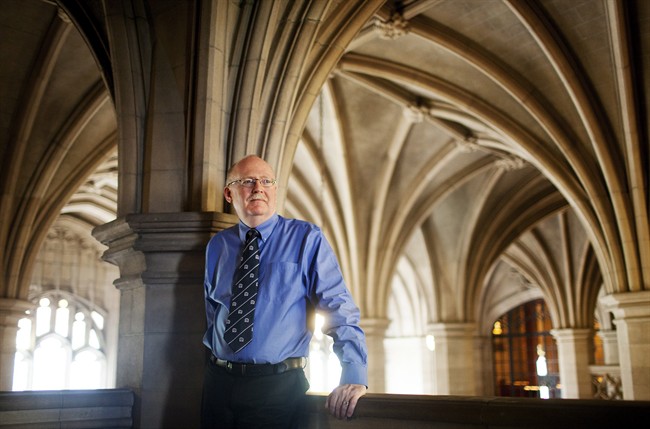
Stuart Macdonald, a professor of church and society at Knox College at the University of Toronto, agreed.
“In Canada, you had to make peace between Catholics and Protestants,” he said.
But Macdonald disputes the notion that Canada and the U.S. have always been vastly different in terms of religion and its impact on public policy, arguing the contrast is relatively recent and only truly took hold in the 1970s.
He points to a surprising figure as someone who galvanized the religious right at a time when Canada began to become secular — former U.S. president Jimmy Carter.
“In Canada, we were very close to the U.S. in terms of religion well into the early 1960s, and even after that our trends were very similar, so this is an awfully recent phenomenon,” he said.
After the sexual and civil rights revolutions of the 1960s, citizens of both countries changed in terms of their religiosity, Macdonald said — but then came Carter, whose election in 1976 marked a milestone for evangelical Christians.
“There was this major culture shift, but then there was a rebound of religion in the United States around the time of the Carter presidency,” he said.
“He ran as an evangelical Christian and he put religion right back in the spotlight in the U.S., whereas in Canada, Trudeau remained quiet about religion, even though he was personally religious.”
The swiftness of the change in religious attitudes in Canada is paid short shrift, Macdonald adds, and doesn’t necessarily suggest that the new normal will be a permanent state of affairs.
“In 1967, centennial year celebrations began with an all-Christian worship service, which we can’t even imagine now,” Macdonald said. “The Jewish representative wasn’t even allowed to read anything. And that wasn’t a very long time ago.”
And does religion truly play less of a role in public policy in Canada than it does in the United States?
Don Hutchinson of the Evangelical Fellowship of Canada isn’t so sure.
There’s a long tradition in Canada of co-operation between the church and state in areas like education, health care and social welfare, he points out.

Hutchinson, the director of the organization’s Centre for Faith and Public Life, says Canada’s religious groups are more careful — indeed, more Canadian — about the language they use while attempting to influence public policy.
“In the U.S., there’s still an openness to quoting the Bible as a stand-alone, reliable source as the position being taken on some issues,” he said.
“In our culture, we have come to the conclusion that the language of public policy development is a language that we have to learn how to communicate …. In Canada, religious organizations have effectively engaged in public policy by identifying the principles we have found in our religious beliefs, assessing them and proposing sound public policy based on these beliefs by using a common language.”
It’s not that Canadian religious organizations are more clever than those in the U.S., he added with a laugh.
“We have different cultures, so we are politically attuned to communicating in our unique, polite Canadian environment.”
The Free Press acknowledges the financial support it receives from members of the city’s faith community, which makes our coverage of religion possible.