Anglicans, Mennonites enter into dialogue

Advertisement
Read this article for free:
or
Already have an account? Log in here »
To continue reading, please subscribe:

Digital Subscription
One year of digital access for only $205*
- Enjoy unlimited reading on winnipegfreepress.com
- Read the E-Edition, our digital replica newspaper
- Access News Break, our award-winning app
- Play interactive puzzles
*First annual payment billed as $205.00 + GST for one year. This annual subscription will automatically renew at $233.00 + GST every 52 weeks (10% off the regular annual price of $259.35). Offer available to new and qualified returning subscribers only. Cancel any time.
To continue reading, please subscribe:
Add Free Press access to your Brandon Sun subscription for only an additional
$1 for the first 4 weeks*
- Enjoy unlimited reading on winnipegfreepress.com
- Read the E-Edition, our digital replica newspaper
- Access News Break, our award-winning app
- Play interactive puzzles
*Your next Brandon Sun subscription payment will increase by $1.00 and you will be charged $17.95 plus GST for four weeks. After four weeks, your payment will increase to $24.95 plus GST every four weeks.
Read unlimited articles for free today:
or
Already have an account? Log in here »
Hey there, time traveller!
This article was published 16/04/2016 (3777 days ago), so information in it may no longer be current.
Question: What’s the fastest-growing Mennonite church in Winnipeg?
Answer: Saint Margaret’s Anglican Church on Ethelbert Street.
That old joke came back to me last week when I learned the General Synod of the Anglican Church of Canada and Mennonite Church Canada will be voting this summer to enter into a five-year bilateral dialogue.
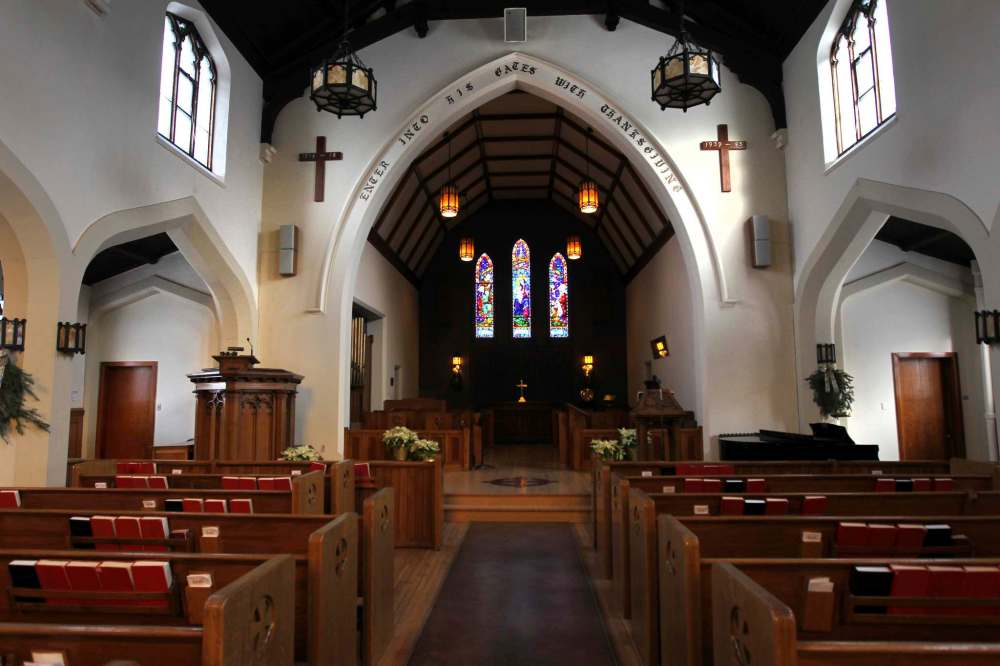
If passed, it would be the first time the Anglican Church of Canada has engaged in a bilateral dialogue with a denomination from the Anabaptist tradition.
In an interview with the Anglican Journal, Archdeacon Bruce Myers, formerly the Anglican Church of Canada’s co-ordinator for ecumenical and interfaith relations, specifically references Winnipeg as an inspiration for the dialogue.
“There are all sorts of people who happily migrate” between Saint Margaret’s and Saint Benedict’s Table, another Anglican congregation in the city, he says, adding this “creates all sorts of interesting questions for ecumenism.”
Through the dialogue, the two church groups could learn a lot of from each other, Myers says.
“The Anglican Church of Canada, is increasingly… becoming a church on the margins, a church away from the centres of power, when historically we were a church of empire, establishment and privilege,” he says, noting Mennonites have made “a conscious decision to be very separate from the principalities and powers and to take a stance that is often in opposition to empire.”
I’m not sure Mennonites are as separate or as opposed to empire as they might like to be, so Anglicans might be disappointed on that score, but it is true a growing number of Mennonites and others from non-liturgical churches are being attracted to the liturgical style of worship of Anglican churches.
Harold Dick is one of them. The Winnipeg lawyer grew up in a Mennonite Brethren church in rural Alberta and has been going to the Sunday service at Saint Margaret’s since 1981.
“It’s the liturgy. It’s the sense of mystery, the idea that God is not something we are expected to fully understand,” he explains.
He also likes the idea that “the service isn’t about you, but about God… It’s about celebrating what God has done, not just about what you need to do to make your life better.”
And he appreciates the connection to a long-standing tradition.
“People have been worshipping this way for a long time. It’s something that has gone on for a long time before me and will continue whether I am a part of it or not,” he says.
“I feel that my attention has shifted from my own life to this thing that is beyond me.”
Thomas Reimer, the parish administrator at Saint Margaret’s, and Bonnie Dowling, a priest/curate at the church, also grew up in Mennonite churches in southern Manitoba before becoming Anglicans.
Reimer was also attracted by the liturgy, the sense that “something bigger than myself is going on, a tradition that stretches back hundreds of years.” Dowling agrees, adding she also likes how “the services are deeply rooted in scripture.”
I asked: how has the presence of so many former Mennonites impacted Saint Margaret’s?
The church was already predisposed toward asking difficult questions, but the presence of so many Mennonites “has heightened the social conscience of the church,” Reimer says.
Dowling says it has led to more “robust” discussions about issues, such as just war and pacifism.
Andrew Dyck, associate professor of ministry studies at Canadian Mennonite University, understands why some Mennonites are attracted to Anglicanism.

“Mennonites place a high value on scripture, so how it is read so much in Anglican churches would be appealing,” he says.
As for the liturgy, it “provides a richness around the mystery of God, something that is neglected in Mennonite and evangelical worship,” he adds.
In Anglican worship, people can find a combination of “piety, intellect and mystery” that can be appealing, along with the liturgical patterns such as standing, singing, speaking and kneeling, Dyck says.
Whether or not the formal dialogue goes ahead this summer, Mennonites and Anglicans in Winnipeg may already be developing a new form of dialogue and worship that could be a model for the country.
jdl562000@yahoo.com
The Free Press is committed to covering faith in Manitoba through our Religion in the News project. This reporting continues because readers like you step forward to fund it.
Donate now to support our reporting on religion.
Your donation is eligible for a charitable tax receipt.
BECOME A FAITH JOURNALISM SUPPORTER
Our newsroom depends on a growing audience of readers to power our journalism. If you are not a paid reader, please consider becoming a subscriber.
Our newsroom depends on its audience of readers to power our journalism. Thank you for your support.
The Free Press is committed to covering faith in Manitoba through our Religion in the News project. This reporting continues because readers like you step forward to fund it.
Donate now to support our reporting on religion.
Your donation is eligible for a charitable tax receipt.
BECOME A FAITH JOURNALISM SUPPORTER
Our newsroom depends on a growing audience of readers to power our journalism. If you are not a paid reader, please consider becoming a subscriber.
Our newsroom depends on its audience of readers to power our journalism. Thank you for your support.
Advertisement Advertise With Us
Advertisement Advertise With Us
The Free Press acknowledges the financial support it receives from members of the city’s faith community, which makes our coverage of religion possible.