Atheist minister was sure she’d be fired
Toronto cleric glad to have legal battle out of the way

Advertisement
Read this article for free:
or
Already have an account? Log in here »
To continue reading, please subscribe:

Digital Subscription
One year of digital access for only $205*
- Enjoy unlimited reading on winnipegfreepress.com
- Read the E-Edition, our digital replica newspaper
- Access News Break, our award-winning app
- Play interactive puzzles
*First annual payment billed as $205.00 + GST for one year. This annual subscription will automatically renew at $233.00 + GST every 52 weeks (10% off the regular annual price of $259.35). Offer available to new and qualified returning subscribers only. Cancel any time.
To continue reading, please subscribe:
Add Free Press access to your Brandon Sun subscription for only an additional
$1 for the first 4 weeks*
- Enjoy unlimited reading on winnipegfreepress.com
- Read the E-Edition, our digital replica newspaper
- Access News Break, our award-winning app
- Play interactive puzzles
*Your next Brandon Sun subscription payment will increase by $1.00 and you will be charged $17.95 plus GST for four weeks. After four weeks, your payment will increase to $24.95 plus GST every four weeks.
Read unlimited articles for free today:
or
Already have an account? Log in here »
Hey there, time traveller!
This article was published 02/02/2019 (2781 days ago), so information in it may no longer be current.
When the United Church of Canada announced in early November it wouldn’t fire atheist minister Gretta Vosper, a lot of people were taken aback — including Vosper herself.
“I was very surprised,” says Vosper, minister at Toronto’s West Hill United Church.
“I was totally convinced… I would end up outside of the church. Every indication suggested that that what was going to happen.”
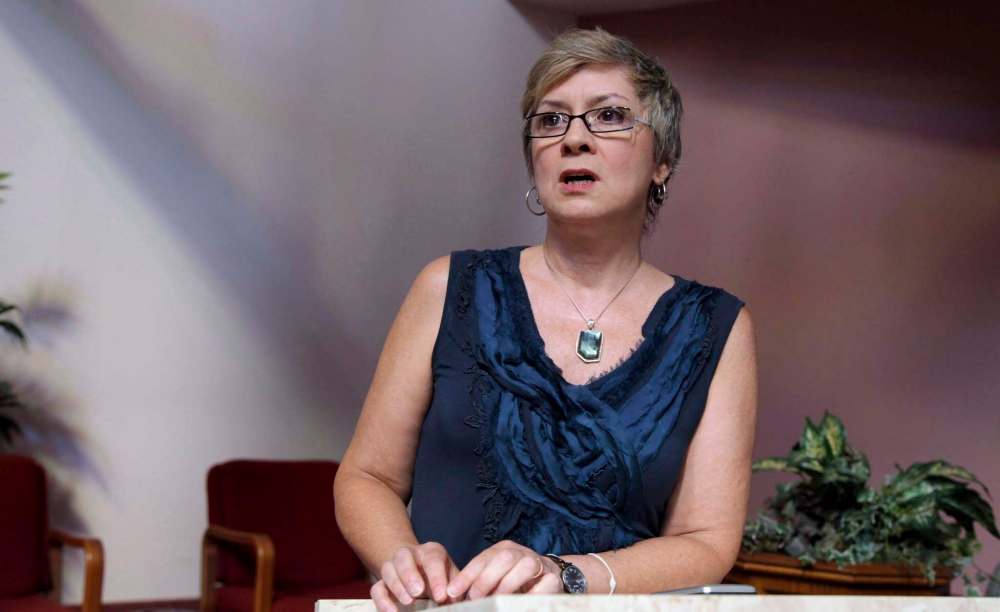
As I wrote in December, Vosper was headed for a formal hearing before the General Council of the United Church of Canada to decide her future in the denomination.
But on Nov. 7, the Toronto Conference — to which West Hill belongs — offered her a confidential settlement that included dropping the charge she was “not suitable” to continue as a United Church minister.
In a brief joint statement, the Toronto Conference, Vosper and West Hill Church said the parties had “settled all outstanding issues between them.”
I asked the United Church’s media spokeswoman if the denomination wished to say anything about the decision, but she declined, pointing me to an open letter written by Right Rev. Richard Bott, moderator of the United Church of Canada.
In the letter, Bott acknowledged the divided reaction, noting “there are a variety of feelings” about Vosper’s continued ministry.
Quoting a previous moderator, he went on to say the heart of the issue is a tension in the liberal and progressive church between two core values “which are central to our identity.”
The first “is our faith in God. The second is our commitment to being an open and inclusive church.”
The decision about Vosper reveals “the dance between these core values,” he wrote, and “how they interact with and inform each other.”
When I reached out to Vosper, it was apparent she’s glad to have this issue behind her so she can get on with serving her congregation.
While she can’t discuss the settlement due to a nondisclosure agreement, she says there are no restrictions on her ministry.
“There’s nothing in that that influences what I am able to do,” she says. “I am able to function in ministry with all the rights and privileges that clergy have.”
As for the settlement itself, she doesn’t know why the church decided to settle. One reason, she thinks, is because they realized she wasn’t about to give up — despite the cost.
“It may have been simply the church (was) betting on my backing down because of the financial burden,” she says of her legal bills, amounting to more than $200,000 to date.
A fundraising group called the Friends of Gretta Vosper has raised about $80,000 of that total, but she and her husband have paid the rest.
She made it clear to the denomination “we were going to go the full length,” she says, even if “there was an outcome that was not in our favour.”
She has heard of at least one individual who has responded “with vehemence” against the settlement. But she also knows of others who are in favour but won’t speak up for “fear of censure” from the denomination.
What about her own response to the charges — does she see herself as unsuitable for ministry in the United Church?
“Everything I teach is consistent with the theological training I received,” the 60-year-old says of her studies at Queen’s Theological College in the late 1980s.
“I was taught the Bible was a human construction, and there is much wisdom in many texts, both ancient and contemporary.”
During her studies, she was told “we don’t privilege (the Bible) anymore (and) suggest it has an authority beyond all other wisdom in the world.”
“If the Bible is not the authoritative word of God for all time,” she says, “why does it take such a central position in the United Church?”

Looking ahead, she maintains she doesn’t want to cause undue trouble for the denomination.
“There is this very big perception I am constantly sending out press releases and trying to get media attention,” she says, noting that all the interviews she’s given since the settlement have come from requests from reporters.
I ask her a final question: with all this having happened, why does she stay in the United Church?
First off, she loves her congregation. Second, “I still feel that this is my denomination. This is my heritage and to refuse to allow me to participate and continue in ministry felt like a betrayal.”
jdl562000@yahoo.com
The Free Press is committed to covering faith in Manitoba through our Religion in the News project. This reporting continues because readers like you step forward to fund it.
Donate now to support our reporting on religion.
Your donation is eligible for a charitable tax receipt.
BECOME A FAITH JOURNALISM SUPPORTER
Our newsroom depends on a growing audience of readers to power our journalism. If you are not a paid reader, please consider becoming a subscriber.
Our newsroom depends on its audience of readers to power our journalism. Thank you for your support.
The Free Press is committed to covering faith in Manitoba through our Religion in the News project. This reporting continues because readers like you step forward to fund it.
Donate now to support our reporting on religion.
Your donation is eligible for a charitable tax receipt.
BECOME A FAITH JOURNALISM SUPPORTER
Our newsroom depends on a growing audience of readers to power our journalism. If you are not a paid reader, please consider becoming a subscriber.
Our newsroom depends on its audience of readers to power our journalism. Thank you for your support.
Advertisement Advertise With Us
Advertisement Advertise With Us
The Free Press acknowledges the financial support it receives from members of the city’s faith community, which makes our coverage of religion possible.