Expert warns of growing far-right movement in Canada

Advertisement
Read this article for free:
or
Already have an account? Log in here »
To continue reading, please subscribe:

Digital Subscription
One year of digital access for only $205*
- Enjoy unlimited reading on winnipegfreepress.com
- Read the E-Edition, our digital replica newspaper
- Access News Break, our award-winning app
- Play interactive puzzles
*First annual payment billed as $205.00 + GST for one year. This annual subscription will automatically renew at $233.00 + GST every 52 weeks (10% off the regular annual price of $259.35). Offer available to new and qualified returning subscribers only. Cancel any time.
To continue reading, please subscribe:
Add Free Press access to your Brandon Sun subscription for only an additional
$1 for the first 4 weeks*
- Enjoy unlimited reading on winnipegfreepress.com
- Read the E-Edition, our digital replica newspaper
- Access News Break, our award-winning app
- Play interactive puzzles
*Your next Brandon Sun subscription payment will increase by $1.00 and you will be charged $17.95 plus GST for four weeks. After four weeks, your payment will increase to $24.95 plus GST every four weeks.
Read unlimited articles for free today:
or
Already have an account? Log in here »
Hey there, time traveller!
This article was published 15/03/2019 (2758 days ago), so information in it may no longer be current.
Before Barbara Perry could begin her speech, the hotel fire alarm went off.
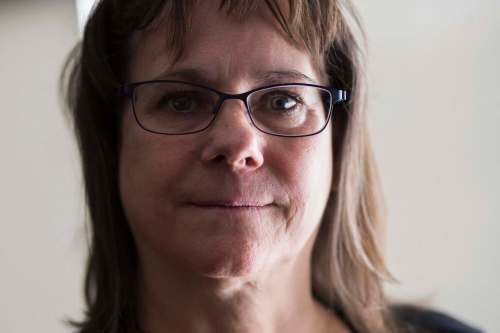
It was an apt metaphor for her presentation Thursday morning. The director of the Centre on Hate, Bias and Extremism at the University of Ontario Institute of Technology was in Winnipeg to raise the alarm about the growth of the far right in Canada.
Hours later, dozens of people were shot and killed at two mosques in New Zealand in an attack apparently motivated by anti-immigrant and anti-Muslim anger.

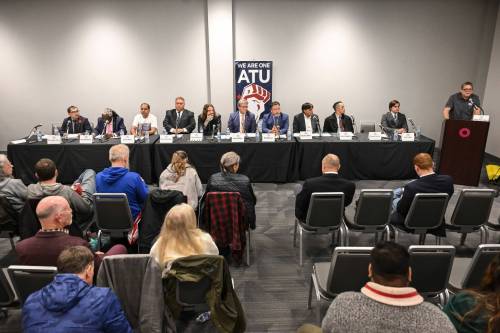
“Few people in Canada know about the resurgence of the far right,” Perry told about 100 people gathered Thursday for Striving for Human Dignity: Race, Gender, Class & Religion, a conference organized by the Islamic Social Services Association.
Using information from her 2015 report about the rise of the far right in Canada, together with more recent observations, she said there has been a 25 to 30 per cent rise in the number of far-right groups in this country. All told, Perry said, there are nearly 300 far-right groups in Canada, with most found in Quebec, Ontario and Alberta. There are an estimated eight to 10 in Manitoba.
Governments, law enforcement and media have downplayed the threat posed by these groups, Perry said, preferring to highlight the danger posed by Islamic extremists.
She noted Justin Bourque, who killed three RCMP officers in Moncton, N.B., in 2014, was often described as a “cop killer,” without noting he was involved in sharing far-right propaganda. Yet Michael Zehaf-Bibeau, who killed Cpl. Nathan Cirillo and attacked Parliament in Ottawa, was frequently associated with Islam.
“The first one terrorized a city but wasn’t a terrorist, but the other was a Canadian-bred Muslim terrorist,” Perry said.
She went on to note police-reported hate crimes are on the rise in Canada, up 47 per cent in 2017. Most of the victims of the crimes were members of the Muslim and Jewish communities.
“It would be called a crisis if it was any other kind of crime,” Perry said.
One of the reasons for the lack of attention to the rise of the far right in Canada is they don’t look extreme, she said.
More groups are presenting “a facade of legitimacy” to deflect negative attention and attract new followers.
They are “representing themselves as educated and urbane, as opposed to more traditional skinhead or neo-Nazi look,” Perry said. They also have “sanitized” their ideology, “removing explicitly racist language, using coded words.”
The far right has also started to use music to share their ideology and recruit new members. While there is still a lot of “white power” heavy metal music videos on YouTube, far-right groups are increasingly using folk and country and western music to share their messages, Perry said.
“It’s pretty music that can lull you to sleep,” so you don’t recognize what they are really saying, she said.
All of this represents “conscious efforts to broaden the audience, bring in a different demographic,” Perry said, noting groups are increasingly targeting older Canadians. A growing number of members of these groups are “middle-aged men, employed and well-educated,” she said, noting this is “an important change in the demographic” for far-right groups.
Perry said she finds the number of present and former law enforcement and military personnel involved in these groups “very disturbing.”
“We are seeing more evidence of that,” she said, especially in a group called the III%ers, or 3%ers, which is heavily armed and whose members “show themselves with weapons and engaged in paramilitary training.”
To counter the rise of far-right groups, Perry suggested a “strong and visible” response from police forces, more attention by the media and holding politicians accountable when there is a “political climate in which hate emerges.”
Individuals and local groups can also respond by creating awareness, and through education and “anti-racism activities.”
Churches can play a role by talking to their members about the rise of hate groups, and by showing “allyship” for minority religions, Perry said.
This would include “building coalitions across faith groups and standing with minority religions,” she said.

“I don’t think the general public is aware of the danger associated with these groups,” she said, adding it is not just a big-city problem.
“It’s also happening in rural areas,” Perry said, although it is “a little more hidden.”
faith@freepress.mb.ca
The Free Press is committed to covering faith in Manitoba through our Religion in the News project. This reporting continues because readers like you step forward to fund it.
Donate now to support our reporting on religion.
Your donation is eligible for a charitable tax receipt.
BECOME A FAITH JOURNALISM SUPPORTER
Our newsroom depends on a growing audience of readers to power our journalism. If you are not a paid reader, please consider becoming a subscriber.
Our newsroom depends on its audience of readers to power our journalism. Thank you for your support.
The Free Press is committed to covering faith in Manitoba through our Religion in the News project. This reporting continues because readers like you step forward to fund it.
Donate now to support our reporting on religion.
Your donation is eligible for a charitable tax receipt.
BECOME A FAITH JOURNALISM SUPPORTER
Our newsroom depends on a growing audience of readers to power our journalism. If you are not a paid reader, please consider becoming a subscriber.
Our newsroom depends on its audience of readers to power our journalism. Thank you for your support.
Related Articles
New Zealand mosque shooter broadcast slaughter on Facebook

Advertisement Advertise With Us
Advertisement Advertise With Us
The Free Press acknowledges the financial support it receives from members of the city’s faith community, which makes our coverage of religion possible.