Out of the spotlight
Politicians not giving religion much attention during election campaign

Advertisement
Read this article for free:
or
Already have an account? Log in here »
To continue reading, please subscribe:

Digital Subscription
One year of digital access for only $205*
- Enjoy unlimited reading on winnipegfreepress.com
- Read the E-Edition, our digital replica newspaper
- Access News Break, our award-winning app
- Play interactive puzzles
*First annual payment billed as $205.00 + GST for one year. This annual subscription will automatically renew at $233.00 + GST every 52 weeks (10% off the regular annual price of $259.35). Offer available to new and qualified returning subscribers only. Cancel any time.
To continue reading, please subscribe:
Add Free Press access to your Brandon Sun subscription for only an additional
$1 for the first 4 weeks*
- Enjoy unlimited reading on winnipegfreepress.com
- Read the E-Edition, our digital replica newspaper
- Access News Break, our award-winning app
- Play interactive puzzles
*Your next Brandon Sun subscription payment will increase by $1.00 and you will be charged $17.95 plus GST for four weeks. After four weeks, your payment will increase to $24.95 plus GST every four weeks.
Read unlimited articles for free today:
or
Already have an account? Log in here »
Hey there, time traveller!
This article was published 12/10/2019 (2540 days ago), so information in it may no longer be current.
Religion isn’t being talked about in the election. Yet it’s in many places, if you look for it.
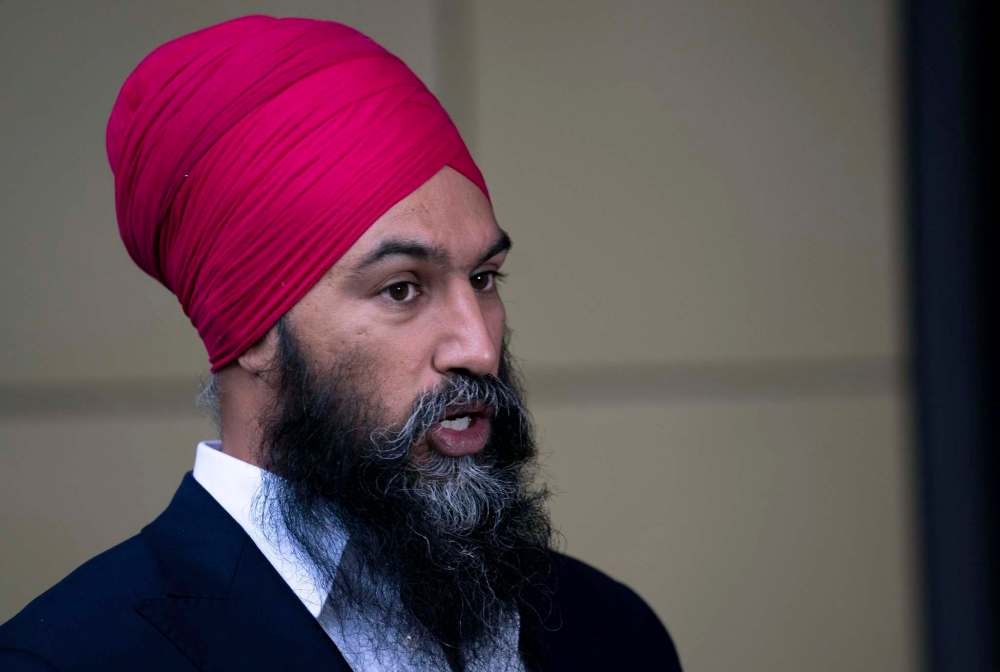
The most obvious is Jagmeet Singh’s turban. It’s a sign of his religious devotion, and of his commitment to gender equality, humility and the supremacy of God.
It keeps coming up when Andrew Scheer is questioned about abortion, and how his Roman Catholic beliefs might influence what his party would do on that issue if it was elected to form government.
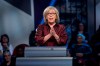
Justin Trudeau is also Catholic, although he doesn’t talk about it and has renounced that church’s commitment to being anti-abortion. Elizabeth May is Anglican; she cited Jesus as her personal hero.
Of course, the other place religion keeps appearing is Bill 21 in Quebec, the law that bans civil servants in the province from wearing religious symbols at work. Leaders of the four main parties have spoken against it, but none have committed to challenging the law.
Other issues with religious overtones include climate change, reconciliation with Indigenous people and poverty at home and abroad — all issues religious groups seem to agree on.
Despite this, religion hasn’t been mentioned much in the current campaign — unlike in the United States, where it comes up often. I asked several people who study religion in Canada why they think this is.
For Jerald Sabin, a professor of politics and international studies at Bishop’s University in Sherbrooke, Que., one reason parties avoid it is because religion can be seen as controversial, and they don’t want to “chase people away.”
The Liberals, he notes, have no need to bring it up since they’ve already signalled their lack of interest in religious conservatives by requiring all candidates to be pro-choice and supporting LGBTTQ+ rights.
“It’s similar for other parties on the left,” he adds.
And since Conservatives have been successful at reaching out to conservative religious groups, they have no need to bring up their issues, either.
Kevin Flatt, a professor of history at Redeemer University College in Ancaster, Ont., thinks the media is partly responsible for the lack of discussion about religion.
“One of the main factors shaping news coverage is the attitudes and inclinations of journalists, who, as a group, tend to be fairly irreligious and rather uncomfortable with overt displays of religion in the political arena, especially conservative Christianity,” he says.
“On average, journalists are one of the most politically and socially liberal groups in Canada, and one of the least religious, which shapes what they collectively see as important and worthy of attention, and whether religious elements in politics are framed negatively or positively,” he adds.
In turn, this “shapes the views of the electorate and the messaging of politicians” by “suppressing overt discussion of issues linked to religion” and keeping out “any conservative religious views that might have political implications,” he says.
Add in the fact there are fewer religiously active Canadians today, and the result is “we don’t see religion functioning as a kind of politically potent identity group the way it did a century ago,” Flatt says.
John Stackhouse is a professor of religious studies at Crandall University in Moncton, N.B. One reason religion isn’t discussed during elections, he says, is because the different faith groups fail to come together on key issues.
“There isn’t a single evangelical or Catholic policy position on global climate change or Indigenous issues or child poverty or overstretched education and health regimes — so there’s literally no point mentioning them or appealing to them as blocs, since they aren’t blocs,” he says.
As a result, he says, there is nothing to be gained by appealing to religious communities, since they can’t be expected to line up with one party or another on issues.
At the same time, “there is much to be lost by appealing to one or another of them,” he adds, noting how jumpy some people get “whenever the Conservatives come within a mile of appealing to traditional Christians.”
The result, he says, is “Canadian politicians steer clear of religion.”
All of this is unlike in the U.S., where talk about religion can dominate the political discussion — and be misused and abused by both politicians and people of faith. And in that light, maybe the lack of attention to religion in Canada isn’t such a bad thing, after all.
faith@freepress.mb.ca
The Free Press is committed to covering faith in Manitoba through our Religion in the News project. This reporting continues because readers like you step forward to fund it.
Donate now to support our reporting on religion.
Your donation is eligible for a charitable tax receipt.
BECOME A FAITH JOURNALISM SUPPORTER
Our newsroom depends on a growing audience of readers to power our journalism. If you are not a paid reader, please consider becoming a subscriber.
Our newsroom depends on its audience of readers to power our journalism. Thank you for your support.
The Free Press is committed to covering faith in Manitoba through our Religion in the News project. This reporting continues because readers like you step forward to fund it.
Donate now to support our reporting on religion.
Your donation is eligible for a charitable tax receipt.
BECOME A FAITH JOURNALISM SUPPORTER
Our newsroom depends on a growing audience of readers to power our journalism. If you are not a paid reader, please consider becoming a subscriber.
Our newsroom depends on its audience of readers to power our journalism. Thank you for your support.
Related Articles
Liberals win 4th mandate as NDP vote collapses and Singh announces he will resign




Advertisement Advertise With Us
Advertisement Advertise With Us
The Free Press acknowledges the financial support it receives from members of the city’s faith community, which makes our coverage of religion possible.