PM, faith leaders weigh definition of essential services

Advertisement
Read this article for free:
or
Already have an account? Log in here »
To continue reading, please subscribe:

Digital Subscription
One year of digital access for only $205*
- Enjoy unlimited reading on winnipegfreepress.com
- Read the E-Edition, our digital replica newspaper
- Access News Break, our award-winning app
- Play interactive puzzles
*First annual payment billed as $205.00 + GST for one year. This annual subscription will automatically renew at $233.00 + GST every 52 weeks (10% off the regular annual price of $259.35). Offer available to new and qualified returning subscribers only. Cancel any time.
To continue reading, please subscribe:
Add Free Press access to your Brandon Sun subscription for only an additional
$1 for the first 4 weeks*
- Enjoy unlimited reading on winnipegfreepress.com
- Read the E-Edition, our digital replica newspaper
- Access News Break, our award-winning app
- Play interactive puzzles
*Your next Brandon Sun subscription payment will increase by $1.00 and you will be charged $17.95 plus GST for four weeks. After four weeks, your payment will increase to $24.95 plus GST every four weeks.
Read unlimited articles for free today:
or
Already have an account? Log in here »
Hey there, time traveller!
This article was published 03/12/2020 (2142 days ago), so information in it may no longer be current.
Should places of worship be considered essential services amidst the COVID-19 pandemic?
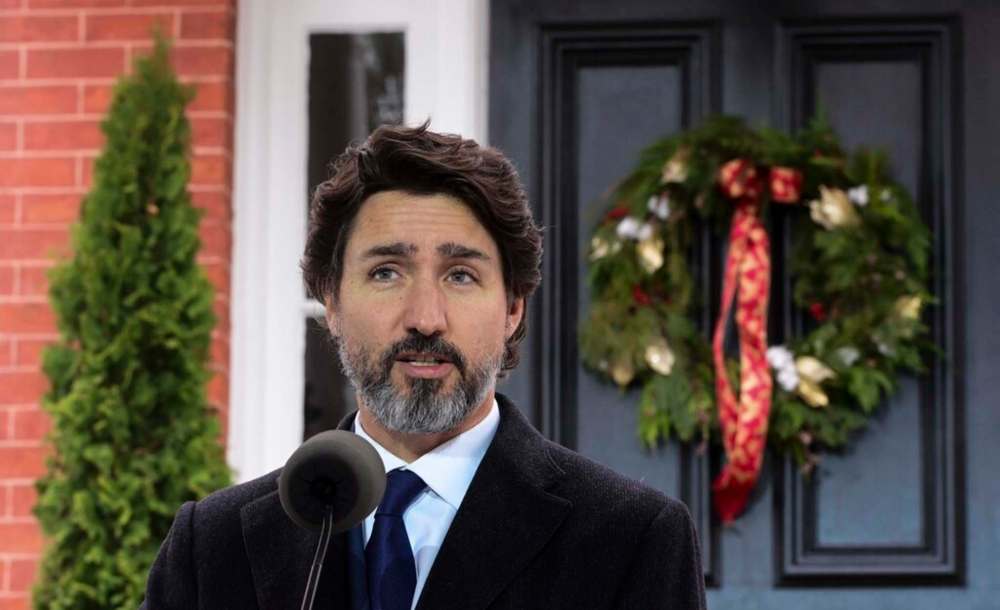
The question was posed Thursday to Prime Minister Justin Trudeau during an hour-long online conversation with Canadian faith leaders.
The virtual gathering was organized at the request of the Prime Minister’s Office by the Canadian Council of Churches, Canadian Interfaith Conversation, and Canadian Multifaith Federation.
More than 350 faith leaders participated, including about 10 from Manitoba.
The question about whether faith groups are an essential service came from Pandit Roopnauth Sharma of the Hindu Federation of Canada and a member of the CMF.
Noting faith communities are involved in supporting people “from the cradle to the grave” in many different ways, from spiritual support to meeting practical needs, he said: “I find it very difficult to accept we are not considered an essential service.”
Sharma added the CMF is launching an initiative to “change this situation,” with the hope government would give it “serious consideration.”
In response, Trudeau said: “Very little is more essential than the fundamental well-being of an individual within a community.”
He promised to take a careful look at the proposal, adding: “We have seen how many things feel essential haven’t qualified as essential in the past.”
There always “have to be lines drawn,” the prime minister said. “(But) the way faith leaders and faith communities have been able to pull together in this difficult time and be there for people despite very difficult restrictions… for me, demonstrates just how essential it is what you offer to people, and how essential it is for people to receive them.”
The challenge, he said, is “how we translate that into practice.”
Other concerns and ideas from the Christian, Indigenous, Muslim, Buddhist, Jewish and Ba’hai, and other communities on the meeting included the impact of the pandemic on rural congregations and racial communities, and the increasing isolation and loneliness of older Canadians.
“We know the pandemic hasn’t hit everyone equally,” said Trudeau, acknowledging it is a challenge to help those who “consistently fall between the cracks.”
That’s where faith communities have been so important, he said, “to see everyone and to reach everyone.”
Other issues raised included whether to increase the tax benefit on charitable donations during the pandemic to encourage more giving to charity, the idea of a guaranteed livable income, and how to address structural inequalities that adversely affect poor and marginalized people in Canada.
No questions were raised about lifting restrictions on religious gatherings.
The prime minister praised the faith community in Canada for how it was reaching out to help during the pandemic, noting faith groups are “always ready to step up for the most vulnerable.”
During this time when many Canadians are experiencing a “a crisis of hope,” the faith community is providing “encouragement and comfort,” he said.
Trudeau added he was grateful as faith groups work to keep congregants safe through the wearing of face masks, physical distancing, and other COVID-19 recommendations.
These messages are important, he said, especially as people are increasingly “tired and frustrated by what life is throwing at them right now.”
They need to be encouraged by faith leaders “to stay the course,” the prime minister said, and to think about the “bigger picture, the long term, to think of good towards others, and make those sacrifices in order to get through this in the best possible way.”

On a personal note, Trudeau said he “doesn’t talk about it much,” but for him “faith has always been an important part of what has helped me focus and motivate me. I feel called to service.”
Faith “has always been a part of who I am as a person and a leader,” he said.
He thanked the group “for keeping me, and all those who serve their country, in your prayers.”
faith@freepress.mb.ca
The Free Press is committed to covering faith in Manitoba through our Religion in the News project. This reporting continues because readers like you step forward to fund it.
Donate now to support our reporting on religion.
Your donation is eligible for a charitable tax receipt.
BECOME A FAITH JOURNALISM SUPPORTER
Our newsroom depends on a growing audience of readers to power our journalism. If you are not a paid reader, please consider becoming a subscriber.
Our newsroom depends on its audience of readers to power our journalism. Thank you for your support.
PM addresses his personal faith
By his own admission, Prime Minister Justin Trudeau doesn’t talk about his faith much.
But as he told over 350 faith community leaders at an online conversation on December 3, for him “faith has always been an important part of what has helped me focus and motivate me. I feel called to service.”
The Prime Minister made the comment at an event titled “The Contribution of Faith Communities in a Pandemic.” It was organized at the request of the Prime Minister’s office by the Canadian Council of Churches, the Canadian Interfaith Conversation and the Canadian Multifaith Federation.
Faith, he went on to say, “has always been a part of who I am as a person and a leader.”
He told the leaders that “those of us who find solace in our faith,” who “know there are larger forces at play and caring for us here” during the pandemic “need to remember how to support” those who are not part of faith communities and don’t have a “deep faith” to help through these dark times.
That is something “we all need to reflect on” since there are many who are feeling a deep sense of loss and have no faith to turn to, he said.
Faith groups should reach out to them and “help them with their isolation and anxiety and their need for reassurance,” he said.
That kind reflection is something the Prime Minister said he is “very willing to continue with you all.”
He also thanked faith leaders “for keeping me, and all those who serve their country, in your prayers.”
– John Longhurst
The Free Press is committed to covering faith in Manitoba through our Religion in the News project. This reporting continues because readers like you step forward to fund it.
Donate now to support our reporting on religion.
Your donation is eligible for a charitable tax receipt.
BECOME A FAITH JOURNALISM SUPPORTER
Our newsroom depends on a growing audience of readers to power our journalism. If you are not a paid reader, please consider becoming a subscriber.
Our newsroom depends on its audience of readers to power our journalism. Thank you for your support.
Advertisement Advertise With Us
Advertisement Advertise With Us
History
Updated on Thursday, December 3, 2020 9:52 PM CST: Adds factbox
Updated on Friday, December 4, 2020 9:20 AM CST: Adds remarks from Trudeau regarding faith to main body of article
The Free Press acknowledges the financial support it receives from members of the city’s faith community, which makes our coverage of religion possible.