Language and identity
Gender-neutral pronoun edits prompt change in denominational magazine's style policy

Advertisement
Read this article for free:
or
Already have an account? Log in here »
To continue reading, please subscribe:

Digital Subscription
One year of digital access for only $205*
- Enjoy unlimited reading on winnipegfreepress.com
- Read the E-Edition, our digital replica newspaper
- Access News Break, our award-winning app
- Play interactive puzzles
*First annual payment billed as $205.00 + GST for one year. This annual subscription will automatically renew at $233.00 + GST every 52 weeks (10% off the regular annual price of $259.35). Offer available to new and qualified returning subscribers only. Cancel any time.
To continue reading, please subscribe:
Add Free Press access to your Brandon Sun subscription for only an additional
$1 for the first 4 weeks*
- Enjoy unlimited reading on winnipegfreepress.com
- Read the E-Edition, our digital replica newspaper
- Access News Break, our award-winning app
- Play interactive puzzles
*Your next Brandon Sun subscription payment will increase by $1.00 and you will be charged $17.95 plus GST for four weeks. After four weeks, your payment will increase to $24.95 plus GST every four weeks.
Read unlimited articles for free today:
or
Already have an account? Log in here »
Hey there, time traveller!
This article was published 11/09/2021 (1822 days ago), so information in it may no longer be current.
Sometimes the church — and the world — is changed with the use of a pronoun, says a Winnipeg pastor, author and LGBTTQ+ activist.
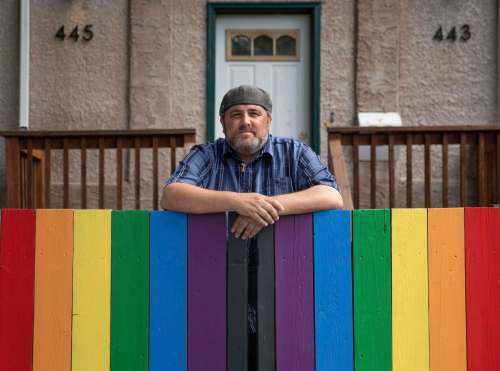
“There is space to use language as a bridge to connect with people without compromising our moral position,” says Jamie Arpin-Ricci, pastor of Little Flowers Community, a Christian congregation in the West End.
“For me, the underlying conviction of Christian hospitality puts the emphasis on the Christian to make space for the other.”
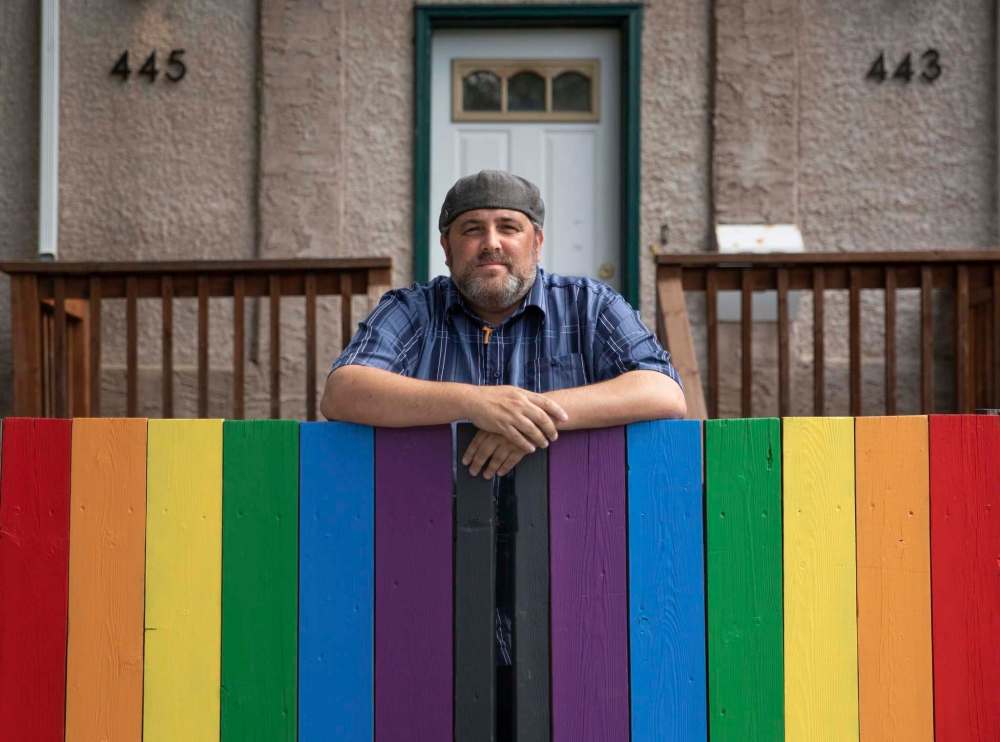
The author of Vulnerable Faith says incorporating they/them pronouns in religious settings and denominational publications is a step toward making space for people who identify as transgender or non-binary.
And ignoring those pronouns — or removing them — does the opposite, argues the father of two, who identifies as bisexual.
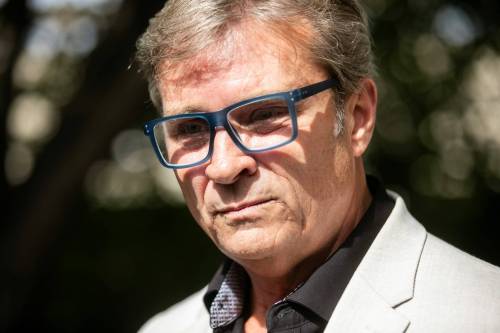
That was also the argument Manitoba doctoral student Jacqueline Giesbrecht made when she protested removal of they/them pronouns in an article she wrote for her denominational magazine about physical accessibility and inclusion.
In the 750-word piece headlined “Accessibility as an act of love,” published in the Aug. 16 issue of Canadian Mennonite, she quotes from the book Care Work by disability activist Leah Lakshmi Piepzna-Samarasinha, who identifies as queer and uses both they/them and she/her pronouns.
When her article was published, Giesbrecht noticed all the pronouns referring to Piepzna-Samarasinha had been removed and sentences were rewritten to avoid the use of any pronouns.
“I’m totally OK with being edited as long as it makes sense and doesn’t change the meaning,” she says of the piece published in Canadian Mennonite, a bi-weekly independent magazine partially funded by Mennonite Church Canada and its five regional churches.
“It may not change the meaning of a specific sentences, but (the edit) changes the meaning of the overall article.”
Giesbrecht says the edit did not respect the writer’s identity and detracted from the main point of the article, which advocated including people with disabilities into full participation in the church community.
“It wasn’t about queerness, but they are queer and racialized,” says the Winkler native and graduate of Winnipeg’s Canadian Mennonite University.
The pronouns they/them have been used for centuries in English, and plenty of other languages have multiple or non-binary pronouns, says Piepzna-Samarasinha.
“Media and people should just use the pronouns that people use for themselves,” she wrote in an email message.
“Also, language is alive and keeps evolving, which is much better than it being dead and buried.”
Giesbrecht asked the publication to change their online version to include the original they/them pronouns and also turned to social media to explain what happened. After Giesbrecht’s Facebook post, Canadian Mennonite posted a brief explanation that stated they had changed their editorial policy to include non-binary pronouns.
“We are determined to portray members of the LGBTTQ+ community with understanding and respect. We apologize for the harm caused by our former word choices, in this and other articles,” the statement read.
Publisher Tobi Thiessen says her publication, based in Waterloo, Ont., follows the Canadian Press style guide, which advises using “they” as a singular pronoun sparingly to avoid confusion. The style guide also suggests explaining the person’s preferred pronouns and using the person’s name when attributing thoughts or quotes.
“We did not understand the editing for clarity we were doing would be hurtful to the author or to transgender people, or the audience she was trying to reach,” she says.
In addition to changing their policy around pronouns, Thiessen says the experience with Giesbrecht underlines the need to clearly communicate with other first-time writers about style and space restrictions and how the editing process works.
“We are very grateful for the engagement and we want to learn and move along with society in our editorial policy,” says Thiessen, who received one letter to the editor and several emails on the topic, as well as several comments on the publication’s online platform supporting their policy change.
Now studying religion and disability at Queen’s University in Kingston, Ont., Giesbrecht says her work has led her to see inclusion of marginalized people at the heart of Christian faith.
“I think it becomes very important for Christians to listen to those voices because that is where God is,” says the former St. Amant support worker and student of American Sign Language.
Giesbrecht understands some people find it awkward to use they/them to refer to one person, and she’s pleased Canadian Mennonite took the step to be inclusive and live with some awkwardness.
“Sometimes you have to restructure things to make the singular clear from the plural,” she says of how to be comfortable with gender neutral pronouns.

“It’s a new thing for some people.”
When LGBTTQ+ people do not see themselves portrayed accurately, the cost can be high, says Arpin-Ricci, citing studies that show thoughts of suicide and suicide attempts are much higher among non-binary and transgender people in contexts where their pronouns are not used appropriately.
Even if the average reader doesn’t notice the editing changes, the people affected will see it, he says.
“Where most people wouldn’t notice it if it doesn’t impact them personally, for those of us who experience identity erasure it stands out like a beacon.”
brenda.suderman@freepress.mb.ca
The Free Press is committed to covering faith in Manitoba through our Religion in the News project. This reporting continues because readers like you step forward to fund it.
Donate now to support our reporting on religion.
Your donation is eligible for a charitable tax receipt.
BECOME A FAITH JOURNALISM SUPPORTER
Brenda Suderman has been a columnist in the Saturday paper since 2000, first writing about family entertainment, and about faith and religion since 2006.
Our newsroom depends on a growing audience of readers to power our journalism. If you are not a paid reader, please consider becoming a subscriber.
Our newsroom depends on its audience of readers to power our journalism. Thank you for your support.
The Free Press is committed to covering faith in Manitoba through our Religion in the News project. This reporting continues because readers like you step forward to fund it.
Donate now to support our reporting on religion.
Your donation is eligible for a charitable tax receipt.
BECOME A FAITH JOURNALISM SUPPORTER
Brenda Suderman has been a columnist in the Saturday paper since 2000, first writing about family entertainment, and about faith and religion since 2006.
Our newsroom depends on a growing audience of readers to power our journalism. If you are not a paid reader, please consider becoming a subscriber.
Our newsroom depends on its audience of readers to power our journalism. Thank you for your support.
Advertisement Advertise With Us
Advertisement Advertise With Us
The Free Press acknowledges the financial support it receives from members of the city’s faith community, which makes our coverage of religion possible.