‘Move forward in a spirit of forgiveness’
Sagkeeng resident hopes Pope’s apology is turning point

Advertisement
Read this article for free:
or
Already have an account? Log in here »
To continue reading, please subscribe:
Digital Subscription
One year of digital access for only $1.44 a week*
- Enjoy unlimited reading on winnipegfreepress.com
- Read the E-Edition, our digital replica newspaper
- Access News Break, our award-winning app
- Play interactive puzzles
*Billed as $5.77 plus GST every four weeks. After 52 weeks, price increases to the regular rate of $19.95 plus GST every four weeks. Offer available to new and qualified returning subscribers only. Cancel any time.
To continue reading, please subscribe:
Add Free Press access to your Brandon Sun subscription for only an additional
$1 for the first 4 weeks*
- Enjoy unlimited reading on winnipegfreepress.com
- Read the E-Edition, our digital replica newspaper
- Access News Break, our award-winning app
- Play interactive puzzles
*Your next Brandon Sun subscription payment will increase by $1.00 and you will be charged $17.95 plus GST for four weeks. After four weeks, your payment will increase to $24.95 plus GST every four weeks.
Read unlimited articles for free today:
or
Already have an account? Log in here »
Hey there, time traveller!
This article was published 26/07/2022 (1547 days ago), so information in it may no longer be current.
Brenda Morrisseau hopes many Indigenous people can begin to heal and move forward with their lives, now that Pope Francis has apologized for the Roman Catholic Church’s role in residential schools.
“I hope we can all start to put it in the past now,” she said. “I hope we can move forward in a spirit of forgiveness and reconciliation.”
Morrisseau, 57, of Sagkeeng First Nation, has held a positive view of the Roman Catholic faith for a long time.
“The priests and nuns I know are all nice people,” she said of those who have served the community over the past 20 or so years.
“I have nothing bad to say about them. We can’t take out the past on them. They weren’t there.”
She knows other Indigenous people don’t feel that way.
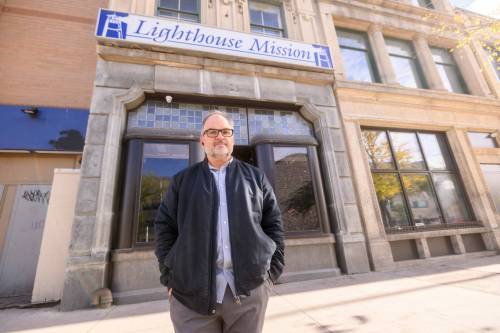
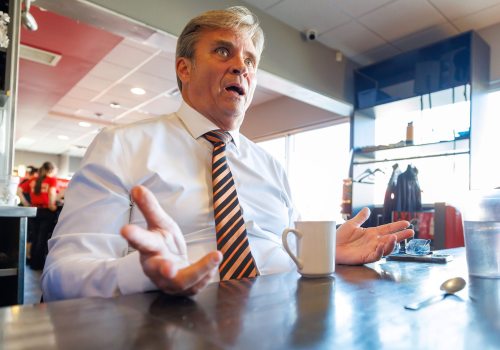
JOHN LONGHURST / WINNIPEG FREE PRESS Brenda Morrisseau, who has experienced inter-generational trauma as a result of residential schools, understands why so many are angry.
“There’s a lot of anger towards the church,” she said. “I see it in the community, and on social media.”
Morrisseau, who has experienced inter-generational trauma as a result of residential schools, understands why so many are angry.
“So many people suffered in residential schools,” she said. “So many of the stories are sad.”
That includes her parents, both of whom went to residential school in Sagkeeng/Fort Alexander, along with some of her eight siblings.
“They never talked about it,” she said of her parents. “The school robbed my mother of her confidence. She lost her voice. She was smart and strong, but she remained quiet for the rest of her life.”
Despite her experiences at the school, her mother “never lost her faith,” she said.
NATHAN DENETTE / THE CANADIAN PRESS FILES Pope Francis delivers his apology to Indigenous people for the church’s role in residential schools during a ceremony in Maskwacis on Monday.
Her father turned to alcohol. “He said it wasn’t really a school, he never learned anything useful,” she said. “They just put him to work.”
As for her siblings, none of them are connected to the church now. “That makes me cry,” she said.
Morrisseau, who does community development and comprehensive community planning for Indigenous communities in Manitoba, doesn’t downplay the terrible things that happened in the schools.
“I know it’s true,” she said of the abuse many experienced.
“They took away our language and culture and tried to make us white. But that is not who God made us to be.”
But anger towards the church isn’t the answer, she said.
“Being angry all the time won’t get us anywhere.”
-Brenda Morrisseau
“Being angry all the time won’t get us anywhere,” said Morrisseau, who combines Christianity with traditional Indigenous teachings and practices.
“It scares me to see it, to see what it is doing to people.”
What also worries her is “if they are passing it on to their children, creating another generation of angry people.”
Morrisseau was glad to hear Pope Francis acknowledge the Roman Catholic Church’s role in the residential schools. She hopes it helps people start to let go of their anger.
“I’m hoping it will start the healing,” she said. “Reconciliation isn’t about blame. It’s about forgiveness and healing.”
Morrisseau is one of about 40 residential school survivors, or their children and grandchildren from Manitoba, who travelled to Edmonton on a bus sponsored by the Archdiocese of Saint Boniface.
Other participants on the trip come from Berens River, Bloodvein, Hollow Water, Little Grand Rapids, Manigotogan, Pauingassi and Poplar River.
faith@freepress.mb.ca
The Free Press is committed to covering faith in Manitoba through our Religion in the News project. This reporting continues because readers like you step forward to fund it.
Donate now to support our reporting on religion.
Your donation is eligible for a charitable tax receipt.
BECOME A FAITH JOURNALISM SUPPORTER
Our newsroom depends on a growing audience of readers to power our journalism. If you are not a paid reader, please consider becoming a subscriber.
Our newsroom depends on its audience of readers to power our journalism. Thank you for your support.
The Free Press is committed to covering faith in Manitoba through our Religion in the News project. This reporting continues because readers like you step forward to fund it.
Donate now to support our reporting on religion.
Your donation is eligible for a charitable tax receipt.
BECOME A FAITH JOURNALISM SUPPORTER
Our newsroom depends on a growing audience of readers to power our journalism. If you are not a paid reader, please consider becoming a subscriber.
Our newsroom depends on its audience of readers to power our journalism. Thank you for your support.
Related Articles
Papal apology closes door on residential school denialists


Advertisement Advertise With Us
Advertisement Advertise With Us
History
Updated on Tuesday, July 26, 2022 9:22 PM CDT: Changes deck to remove reference to Brenda Morrisseau being a survivor
The Free Press acknowledges the financial support it receives from members of the city’s faith community, which makes our coverage of religion possible.