Living among the needy
It can be a deeply Biblical expression of solidarity with forgotten people in society
Advertisement
Read this article for free:
or
Already have an account? Log in here »
To continue reading, please subscribe:

Digital Subscription
One year of digital access for only $205*
- Enjoy unlimited reading on winnipegfreepress.com
- Read the E-Edition, our digital replica newspaper
- Access News Break, our award-winning app
- Play interactive puzzles
*First annual payment billed as $205.00 + GST for one year. This annual subscription will automatically renew at $233.00 + GST every 52 weeks (10% off the regular annual price of $259.35). Offer available to new and qualified returning subscribers only. Cancel any time.
To continue reading, please subscribe:
Add Free Press access to your Brandon Sun subscription for only an additional
$1 for the first 4 weeks*
- Enjoy unlimited reading on winnipegfreepress.com
- Read the E-Edition, our digital replica newspaper
- Access News Break, our award-winning app
- Play interactive puzzles
*Your next Brandon Sun subscription payment will increase by $1.00 and you will be charged $17.95 plus GST for four weeks. After four weeks, your payment will increase to $24.95 plus GST every four weeks.
Read unlimited articles for free today:
or
Already have an account? Log in here »
Hey there, time traveller!
This article was published 20/08/2022 (1503 days ago), so information in it may no longer be current.
Imagine answering the phone late at night and groggily hearing a police officer asking to be let into your apartment building. Or imagine listening to a one-sided shouting match that turns out to be a drug addict screaming her thoughts to the world. Those were some of my experiences in an apartment where I once lived.
My years in that apartment sometimes seemed to last forever, although it was a relatively short time compared with the decades people spend in similar situations. Yet it gave me the chance gain insights into what life is like for people at the lower end of the economic spectrum; since then, for example, I have had greater sympathy for people who prefer to live on the street rather than in shelters or substandard housing.
Despite its many drawbacks, my apartment gave me an opportunity to experience a side of life that many church people see only briefly or not at all. Although I had often served at soup kitchens here in Canada and had seen dire poverty overseas, living in that apartment gave me an insider’s look at the challenges that many people face.
I chose that apartment for financial reasons, but some people voluntarily choose to live among the poor rather than in wealthier and more comfortable neighbourhoods. Mother Teresa’s Sisters of Charity are some of the most famous examples, but Winnipeg has its own history of people choosing to give up their comfort and even their safety to live among people in need.
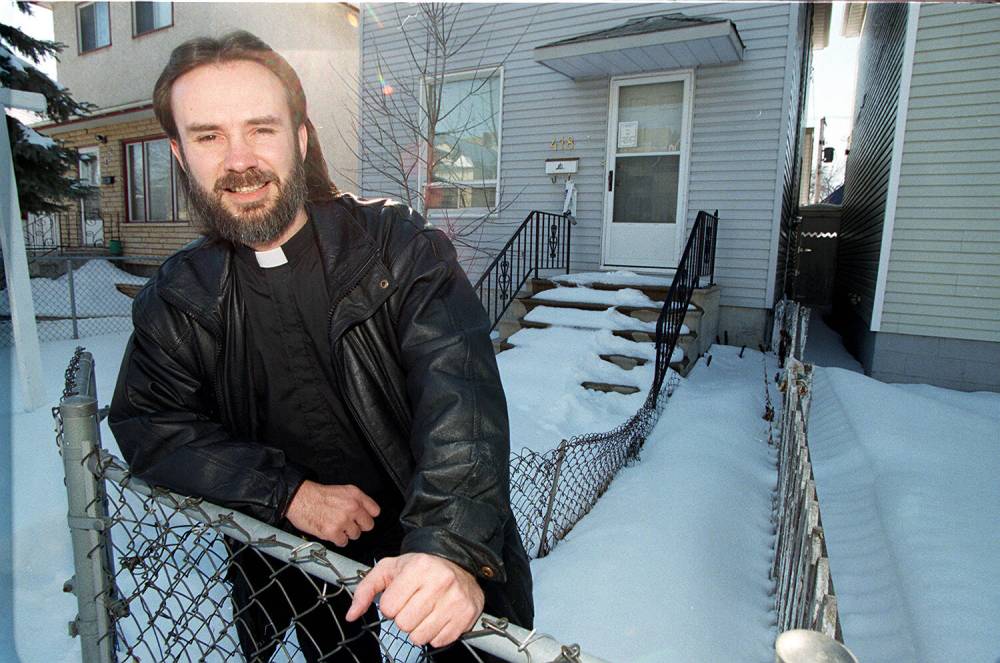
Harry Lehotsky was one of the people who saw the potential of having a presence in downscale communities rather than living among the wealthy. His Lazarus Housing project helped to reinvigorate parts of the West End while also creating a new awareness of the issues that these communities face. The people living in these houses could see what the surrounding neighbourhoods were really like when they sent their children to local schools, shopped at local stores, and got to know the people around them.
The West End Commons project had many similar goals, as I discovered in working on an oral history project documenting the initiative. With dwindling attendance leaving the St. Matthews Anglican Church emptier and emptier, members of the church decided to turn part of the building into affordable housing. Besides providing homes for low-income residents, the project gave people the chance to form a new community and to interact with others around them.
The House Blend project on Furby Street was another attempt at living among people in need. As Jordan Duerrstein notes in the December 2017 issue of Mennonite Historian, House Blend was one of several “entrepreneurial missional communities” in the Mennonite Brethren world, an attempt to do something new and different to reach underserved people.
Not all projects of this kind endure very long. Changing demographics in the community or altered priorities can often be major factors in the success or failure of a project. For example, Elmwood was once a centre of Mennonite activity in the northeast of Winnipeg; however, increased wealth and the establishment of new neighbourhoods later changed much of that.
The Global Anabaptist Mennonite Encyclopedia Online (GAMEO) describes some of the movement of Winnipeg’s Mennonites in its article on the Elmwood Mennonite Brethren Church. The congregation on Henderson Highway was originally an offshoot of the North End Mennonite Brethren Church. With that church, the faculty and students at the Mennonite Brethren Bible College (MBBC), church offices, and the Mennonite Brethren Collegiate Institute (MBCI) nearby, Mennonites had a strong presence in Elmwood, living their Christan faith among their neighbours.
Over time, people eventually became interested in other areas of the city and moved away from Elmwood. My own grandparents, after coming from the former Soviet Union and moving to various places around North America, lived on Martin Avenue in Elmwood before they, too moved away.
By the time I attended high school at MBCI, it was hard to connect much with the surrounding community as very few of my classmates or teachers, as far as I knew, lived near the school. The closure of Concord College (formerly the Mennonite Brethren Bible College) as part of the formation of the Canadian Mennonite University took even more Mennonites out of the area.
Not everyone has left for other parts of the city. The Riverwood Church and Sam’s Place are two initiatives that could make a long-term difference, as they already have for many people. To the extent that they really connect with the community, they could provide a stable presence in the area, one that helps give the support people need in difficult times and a steadying presence in good times.
I remember an initiative when I was in Grade 11 to send some MBCI students over the Redwood Bridge to help out with classes at an elementary school in the North End. While I was placed in a classroom where half of my volunteer time was in my least favourite area, physical education, it was a taste of what students could do if they were willing to connect with the community. With additional guidance, it could have been a valuable learning experience.
Living among the needy or downtrodden is not always pleasant, as I discovered in the low-rent apartment where I lived, and this kind of life is not for everyone. However, it can be a deeply Biblical expression of solidarity with the forgotten people in society, being their light, as Jesus urged his followers to be in Matthew 5:14-16. Each person can make a difference.
Susan Huebert is a Winnipeg writer.
The Free Press is committed to covering faith in Manitoba through our Religion in the News project. This reporting continues because readers like you step forward to fund it.
Donate now to support our reporting on religion.
Your donation is eligible for a charitable tax receipt.
BECOME A FAITH JOURNALISM SUPPORTER
History
Updated on Monday, August 22, 2022 2:53 PM CDT: image cutline
The Free Press acknowledges the financial support it receives from members of the city’s faith community, which makes our coverage of religion possible.