Seattle considers historic law barring caste discrimination
Advertisement
Read this article for free:
or
Already have an account? Log in here »
To continue reading, please subscribe:

Digital Subscription
One year of digital access for only $205*
- Enjoy unlimited reading on winnipegfreepress.com
- Read the E-Edition, our digital replica newspaper
- Access News Break, our award-winning app
- Play interactive puzzles
*First annual payment billed as $205.00 + GST for one year. This annual subscription will automatically renew at $233.00 + GST every 52 weeks (10% off the regular annual price of $259.35). Offer available to new and qualified returning subscribers only. Cancel any time.
To continue reading, please subscribe:
Add Free Press access to your Brandon Sun subscription for only an additional
$1 for the first 4 weeks*
- Enjoy unlimited reading on winnipegfreepress.com
- Read the E-Edition, our digital replica newspaper
- Access News Break, our award-winning app
- Play interactive puzzles
*Your next Brandon Sun subscription payment will increase by $1.00 and you will be charged $17.95 plus GST for four weeks. After four weeks, your payment will increase to $24.95 plus GST every four weeks.
Read unlimited articles for free today:
or
Already have an account? Log in here »
Hey there, time traveller!
This article was published 20/02/2023 (1318 days ago), so information in it may no longer be current.
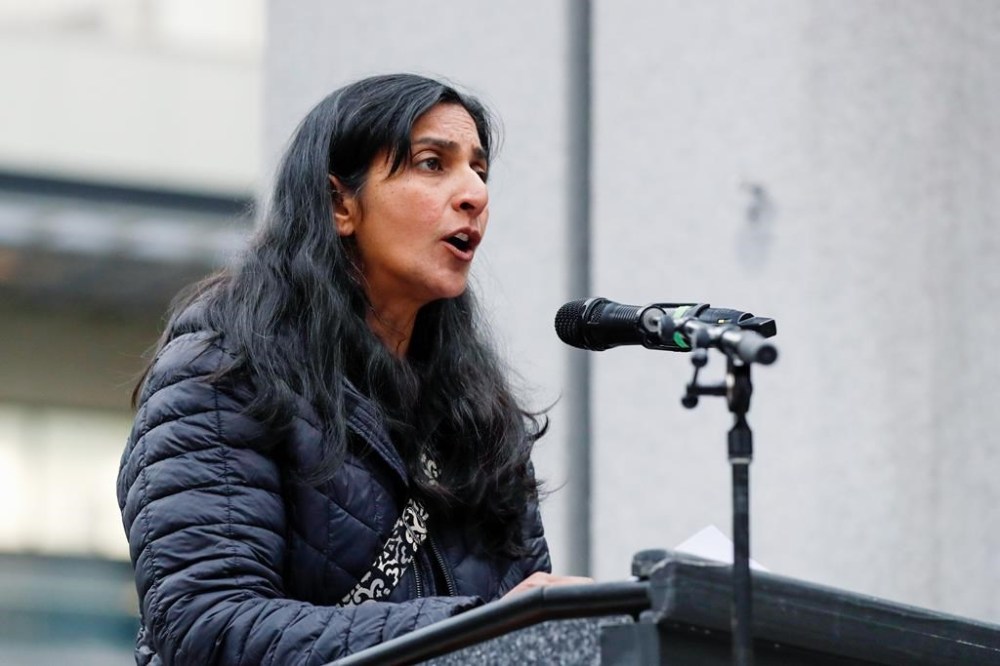
Among Kshama Sawant’s earliest memories of the caste system was hearing her grandfather — a man she “otherwise loved very much” — utter a slur to summon their lower-caste maid.
The Seattle City Council member, raised in an upper-caste Hindu Brahmin household in India, was 6 when she questioned her grandfather about it. He responded that his granddaughter “talked too much.”
Now 50, and an elected official in a city far from India, Sawant has proposed an ordinance to add caste to Seattle’s anti-discrimination laws. If the council approves it Tuesday, Seattle will become the first U.S. city to specifically outlaw caste discrimination.
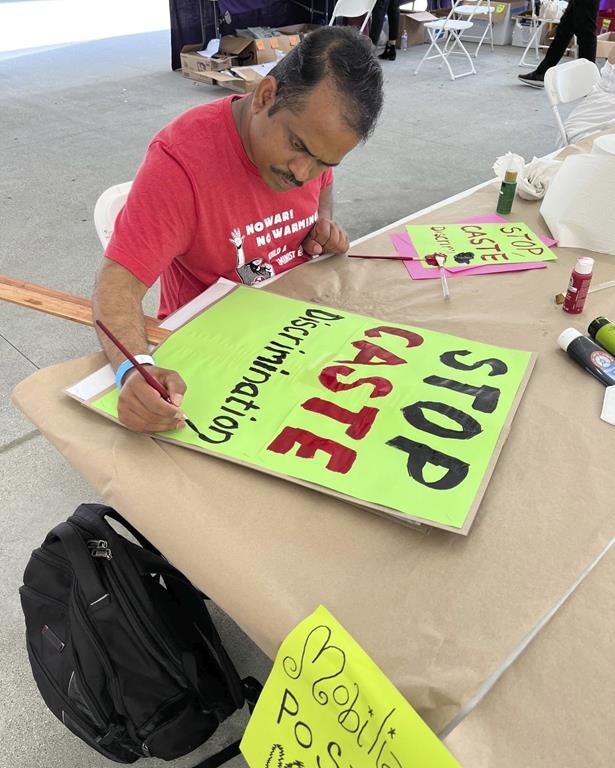
In India, the caste system’s origins can be traced back 3,000 years as a social hierarchy based on birth. While the definition of caste has evolved, under Muslim and British rule, the suffering of those at the bottom of the caste pyramid – known as Dalits — has continued.
In 1948, India banned caste discrimination, and enshrined that policy in the constitution in 1950. Yet the undercurrents of caste continue across Indian society; caste-based violence is rampant.
The U.S. caste debate has divided the South Asian community. Dalit activists say caste discrimination is prevalent in diaspora communities, surfacing in social relations, housing, education and the tech sector.
The United States is the second most popular destination for Indians living abroad, according to the Migration Policy Institute, which estimates the U.S. diaspora grew from about 206,000 in 1980 to about 2.7 million in 2021. The group South Asian Americans Leading Together says nearly 5.4 million South Asians live in the U.S. — up from 3.5 million counted in the 2010 census. Most trace their roots to Bangladesh, Bhutan, India, Nepal, Pakistan and Sri Lanka.
There has been strong pushback to anti-discrimination laws and policies that target caste from some groups. They say it will hurt a community that already faces discrimination.
But over the past decade, Dalit activism has garnered support from parts of the diaspora. One recent trend: More Dalits are telling their stories, energizing this movement.
Prem Pariyar, a Dalit Hindu from Nepal, gets emotional as he recalls escaping caste violence in his native village. His family was attacked for taking water from a community tap, said Pariyar, now a social worker in California who serves on Alameda County’s Human Relations Commission. He moved to the U.S. but says he couldn’t escape discrimination.
“I’m fighting so Dalits can be recognized as human beings,” he said.
Pariyar helped caste becoming a protected category in the California State University system in January 2022. In 2019, Brandeis University near Boston became the first college to include caste in its nondiscrimination policy. Other universities have adopted similar measures.
Among the striking findings in a survey of 1,500 South Asians in the U.S. by Equality Labs: 67% of Dalits who responded reported being treated unfairly at their workplace because of their caste and 40% of Dalit students who were surveyed reported facing discrimination in educational institutions compared to 3% of upper-caste respondents. Also, 40% of Dalit respondents said they felt unwelcome at their place of worship due to caste.
Caste needs to be a legally protected category because Dalits and others harmed by it do not currently have legal redress, said Thenmozhi Soundararajan, founder of Equality Labs in Oakland, California. Her parents fled caste oppression in India in the 1970s.
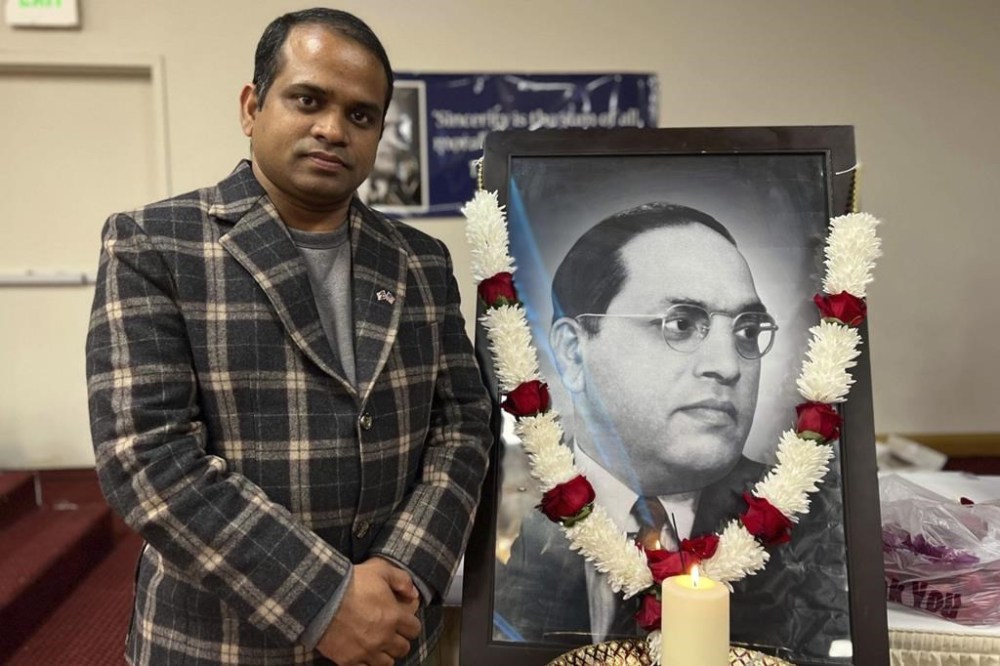
“We South Asians have so many difficult historical traumas,” she said. “When we come to this country, we shove all that under the rug and try to be a model minority. The shadow of caste is still there.”
In her book “The Trauma of Caste,” Soundararajan writes of being devastated upon learning that her family members were considered “untouchables” in India.
The Dalit American community is not monolithic. Aldrin Deepak, an India-born Dalit living near San Francisco, said he has never faced caste discrimination during 35 years in the U.S. He has decorated local Hindu temple deities and hosted community members for Diwali celebrations.
“Making an issue where there is none is only creating more fractures in our community,” he said.
Nikunj Trivedi, the Coalition of Hindus of North America president, views the narrative around caste as “completely twisted.”
“The understanding of Hinduism is poor in this country,” Trivedi said. “Many people believe caste equals Hinduism, which is simply not true. There is diversity of thought, belief and practice within Hinduism.”
Trivedi said Seattle’s proposed policy is dangerous because it is based on anecdotal reports, not reliable data. He suggests it would be difficult to verify someone’s caste.
Suhag Shukla, the Hindu American Foundation executive director, called Seattle’s proposed ordinance unconstitutional because it targets an ethnic minority and “sends that message that we are an inherently bigoted community that must be monitored.” Shukla says caste is already covered under existing anti-discrimination laws.
Nikhil Mandalaparthy, deputy executive director of Hindus for Human Rights, disagrees. His Washington, D.C.-based group supports the proposed ordinance. A United Nations report in 2016 said at least 250 million people worldwide still face caste discrimination, which surfaces in various religions.
“We want South Asians to have similar access to opportunities and not face discrimination,” he said. “Sometimes that means airing the dirty laundry of the community in public.”
Council member Sawant said current anti-discrimination laws are insufficient and her legislation doesn’t single out one community. More than 150,000 South Asians live in Washington state, with many employed in the tech sector where Dalit activists say caste-based discrimination has gone unaddressed.
D.B. Sagar faced caste oppression growing up in the 1990s in Nepal. He fled to the U.S. in 2007. Sagar says he still bears physical and emotional scars from it. His family was Dalit and felt shunned by Hinduism and Buddhism.
“We were not allowed to participate in village festivals or enter temples,” he said. “You could change your religion, but you still cannot escape your caste identity.”
Sagar, who started the International Commission for Dalit Rights, said he was shocked to encounter similar attitudes in social settings among the U.S. diaspora and wants caste discrimination addressed under the U.S. Civil Rights Act.

His organization is looking into about 150 complaints of housing discrimination from Dalit Americans, he said.
Arizona resident Shahira Bangar is Dalit and a practicing Sikh. Her parents fled caste oppression in Punjab, India. She felt left out when her friends played upper-caste “Jat pride” music and hurt when a friend’s mother used her caste identity as a slur.
“I felt this deep sadness of not being accepted by my own community,” Bangar said. “I felt betrayed.”
___
Associated Press religion coverage receives support through the AP’s collaboration with The Conversation US, with funding from Lilly Endowment Inc. The AP is solely responsible for this content.
The Free Press acknowledges the financial support it receives from members of the city’s faith community, which makes our coverage of religion possible.