Cubans seek solutions and solace in Santería amid crises
Advertisement
Read this article for free:
or
Already have an account? Log in here »
To continue reading, please subscribe:

Digital Subscription
One year of digital access for only $205*
- Enjoy unlimited reading on winnipegfreepress.com
- Read the E-Edition, our digital replica newspaper
- Access News Break, our award-winning app
- Play interactive puzzles
*First annual payment billed as $205.00 + GST for one year. This annual subscription will automatically renew at $233.00 + GST every 52 weeks (10% off the regular annual price of $259.35). Offer available to new and qualified returning subscribers only. Cancel any time.
To continue reading, please subscribe:
Add Free Press access to your Brandon Sun subscription for only an additional
$1 for the first 4 weeks*
- Enjoy unlimited reading on winnipegfreepress.com
- Read the E-Edition, our digital replica newspaper
- Access News Break, our award-winning app
- Play interactive puzzles
*Your next Brandon Sun subscription payment will increase by $1.00 and you will be charged $17.95 plus GST for four weeks. After four weeks, your payment will increase to $24.95 plus GST every four weeks.
Read unlimited articles for free today:
or
Already have an account? Log in here »
Hey there, time traveller!
This article was published 09/04/2023 (1260 days ago), so information in it may no longer be current.
HAVANA (AP) — From a two-room concrete home on the fringes of Cuba’s capital, the rumble of wooden drums spills out onto the streets.
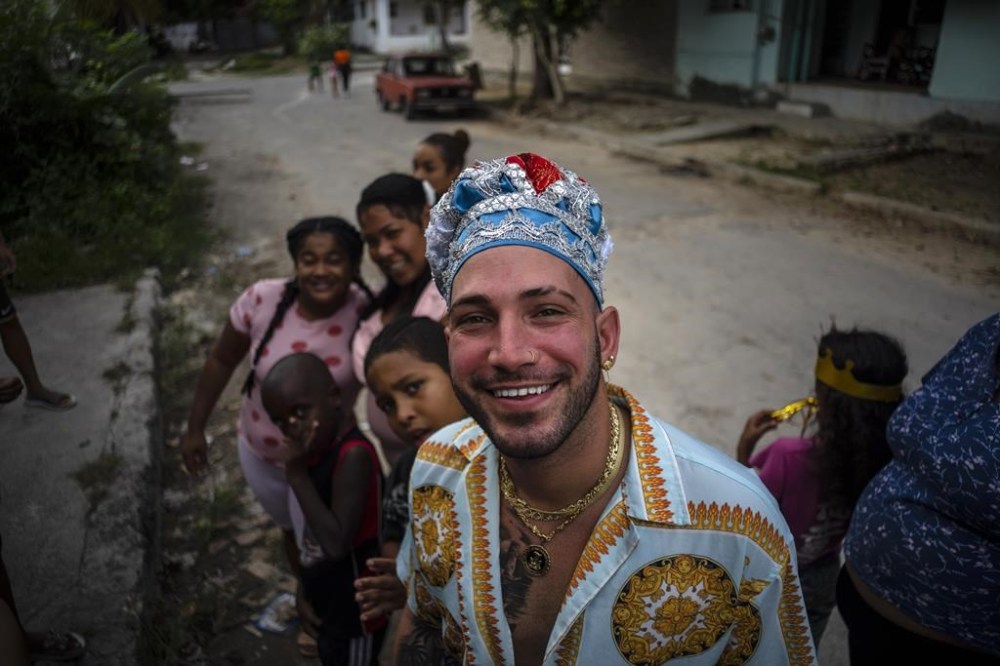
Neighbors gather at the door and kids climb a fence to peer inside. They watch as dozens of Cubans wearing white and African beads make offerings at a bright blue altar consuming half a room, asking for luck, protection and good health.
While nearly 70% of Latin America’s 670 million people consider themselves Catholic, in Cuba, Santería is the name of the game.
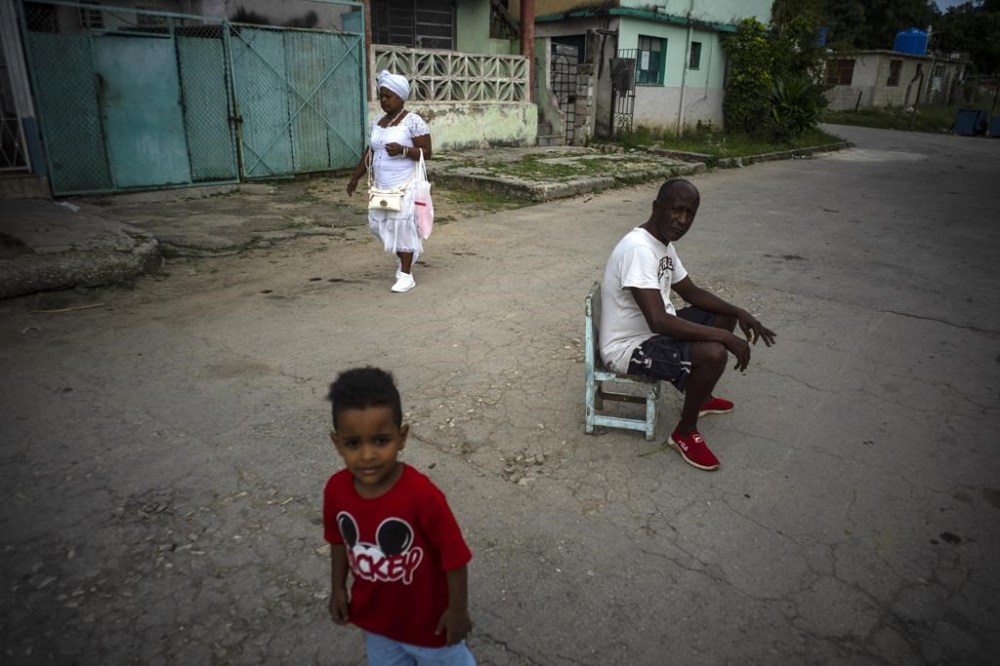
A fusion of African religions and Catholicism, Santería was one of the few religious practices to quietly endure through decades of prohibitions and stigma by the communist government.
Now, as that stigma gradually fades and the country enters a moment of compounding economic, political and migratory crises, the religion is growing in popularity and expanding to new demographics.
“Every day the religion grows a little more,” Mandy Arrazcaeta, 30, said among the throngs of people in his home dancing and making offerings at the altar to a plastic doll depicting the Yoruba deity Yemayá. “Right now, Santería in the country is a sort of bastion.”
Santería was born as a form of quiet resistance among the island’s Black communities. The religion dates back centuries to when Spanish colonists brought in hundreds of thousands of enslaved Africans.
While the Spanish tried to force Catholicism on these enslaved people, the Africans brought their own religions, mostly from West Africa, which they would camouflage by attaching their deities — orishas — to Catholic saints.
Cuba’s patron saint, Our Lady of Charity, for example, blended with the golden deity, Oshun.
“It would mix and mix … through this Catholic virgin, they would speak to their African saints,” explained Roberto Zurbano, a Cuban cultural critic. “That’s how the religion was able to survive.”
While there are hundreds of orishas in Santería, practitioners known as santeros usually worship only a handful, connecting with them through rituals and offerings.
On one Friday night, Arrazcaeta, family and friends splay out offerings of coconut and red Cuban pesos emblazoned with the face of Che Guevara, sacrificing two chickens over bowls filled with rocks and seashells. In exchange, they ask for good health, strength during hardship, and even luck in love.
“It’s something that’s very Cuban, something spontaneous that we do. Because we know the struggles we face in this country,” Arrazcaeta said.
Millions worldwide are estimated to practice Santería, though definitive numbers – especially in Cuba – are hard to pin down due to the religion’s informal nature. The U.S. Commission on International Religious Freedom estimates 70% in Cuba practice some version of Santeria or similar African-based religions.
What is clear in the altars dotting homes across the island and the many Cubans in Havana cloaked in white – worn by santeros their first year after converting to represent rebirth – is that Santería has captured the Cuban consciousness.
Following the Cuban revolution in the 1950s, Fidel Castro dismantled religious structures and expelled the priests who criticized his government. Religion, famously described by communist philosopher Karl Marx as “the opium of the people,” was strictly prohibited.
Catholicism, highly dependent on meeting in churches and on hierarchy, withered.
Meanwhile, Santería practitioners pulled from the same tools they used to survive in earlier centuries.
“People did believe, but you couldn’t say anything because it was politically prohibited by Marxism. All that did was strengthen Afro-religious faiths in very closed circles,” Zurbano said. “They would keep it a secret, keep their religiosity to themselves.”
Zurbano’s family would quietly perform rituals inside their home and divide ceremonies that once would last a week into smaller two-day chunks to avoid alerting authorities. Some adherents secretly wore religious garb under street clothes.
Katrin Hansing, an anthropologist in Cuba for City University New York, said Santería endured because of its flexibility, and because of its perceived utility in assuring good health in exchange for offerings.
In the 1990s when Cuba’s main ally, the Soviet Union, collapsed and the island spiraled into economic crisis, many Cubans found solace in Santería.
The Cuban government has accepted it, but the officially authorized ceremonies remain practically deserted, as islanders prefer celebrations in more informal settings such as Arrazcaeta’s home.
“It’s incredibly resilient as a religious system,” Hansing said. “It’s so decentralized and it allows the individual believer or practitioner to make it what they need it to be.”
Santería is once again seeing a surge, and expanding past historically impoverished Black communities.
Arrazcaeta, a white Cuban and member of the LGBTQ+ community, found refuge in the religion when he was 12. Once an Evangelical Christian, he said he felt rejected by members of that religion for being gay.
“I never fit in that religion,” Arrazcaeta said. “I liked that Santeria doesn’t obligate anyone to fit into a model.”
As a teenager, he began putting glasses of water around the house, as offerings to orishas. His mother, Maritza de la Rosa Perdomo, would throw the water out, saying there was no place for religion in her home.
That changed three years ago, when Arrazcaeta joined a wave of Cubans in embarking on a journey to the U.S., traversing the perilous jungles of the Darien Gap.
When Arrazcaeta went missing for seven days in the jungle, the first thing Perdomo did was put out an offering.
“I began to beg for my son, I said I needed to hear from him, to know that he was alive. I was begging with my whole heart,” Perdomo said.

When she received a call from him shortly after, she decided to join the religion alongside her children.
“A religion that used to be, you know, dominantly practiced by descendants of Africans or people of African descent has now become a multiracial religion in Cuba,” Hansing said. “Santería has grown enormously.”
But for each practitioner, Santería means something different.
For Arrazcaeta, who nowadays travels between Cuba and work in Florida as an Uber driver, Santería is a spiritual experience. For Perdomo, it’s a way of seeking good health. For both, it’s a way to stay connected with the other an ocean away.
“Today, the entire country is dressed in white,” Perdomo said.
The Free Press acknowledges the financial support it receives from members of the city’s faith community, which makes our coverage of religion possible.