Parish nurses valuable for congregations, take pressure off health system

Advertisement
Read this article for free:
or
Already have an account? Log in here »
To continue reading, please subscribe:
Digital Subscription
One year of digital access for only $1.44 a week*
- Enjoy unlimited reading on winnipegfreepress.com
- Read the E-Edition, our digital replica newspaper
- Access News Break, our award-winning app
- Play interactive puzzles
*Billed as $5.77 plus GST every four weeks. After 52 weeks, price increases to the regular rate of $19.95 plus GST every four weeks. Offer available to new and qualified returning subscribers only. Cancel any time.
To continue reading, please subscribe:
Add Free Press access to your Brandon Sun subscription for only an additional
$1 for the first 4 weeks*
- Enjoy unlimited reading on winnipegfreepress.com
- Read the E-Edition, our digital replica newspaper
- Access News Break, our award-winning app
- Play interactive puzzles
*Your next Brandon Sun subscription payment will increase by $1.00 and you will be charged $17.95 plus GST for four weeks. After four weeks, your payment will increase to $24.95 plus GST every four weeks.
Read unlimited articles for free today:
or
Already have an account? Log in here »
Hey there, time traveller!
This article was published 11/04/2023 (1288 days ago), so information in it may no longer be current.
When Saint Margaret’s Anglican Church was looking for a new pastoral care co-ordinator, they knew exactly what they wanted — someone with a nursing background.
“The reality is a large portion of our congregation is growing older,” rector Bonnie Dowling said. “We thought it would be an asset to have someone on staff who has nursing skills and knowledge of the health-care system.”
The church hired Holly Goossen, a registered nurse, in 2021. Goossen, who works half time as a community health-care nurse at Misericordia Hospital, works 10 hours per week at the church, attending to the needs of parishioners.

RUTH BONNEVILLE / WINNIPEG FREE PRESS
Holly Goossen, who works half-time as a community health-care nurse at Misericordia Hospital, works 10 hours per week at the church, attending to the needs of parishioners.
Goossen doesn’t provide direct nursing care in her role. Instead, she uses her training and experience to be alert to signs that people might need medical interventions. She then offers to assist in getting them the attention they need.
“My role is to help people connect with the medical care they need and to navigate the system,” she said.
It’s “just the church being the church by attending to the needs of its members,” she added.
For Dowling, Goossen is an asset to the church as it seeks to serve its members and a support for Manitoba’s overstretched health-care system.
“I know how taxed people in the health-care system are,” she said, noting that by looking out for the medical needs of members, maybe the church can keep them from requiring emergency care.
This could relieve a bit of pressure on the system by offering holistic care, she said — attending to physical needs of members, along with their spiritual needs.
Goossen’s nursing training enables her to look for things other pastoral staff might not notice, “signs of illness we could miss,” she said.
Of special concern for Dowling are seniors who might not have any children or family nearby to help when they fall ill — the so-called “elder orphans.” In that case, the church can play an important role by checking in on them to make sure they are OK.
What Goossen is doing is called parish nursing, a practice that originated in Europe before coming to Canada in the early 1990s. It finds congregations employing nurses or utilizing retired health-care professionals to attend to the needs of members.
Parish nursing doesn’t replace traditional health care; instead, it seeks to support it by keeping people, especially seniors, healthy and well and out of the system as long as possible.
From 2003 to 2018, Christine Wollman served as a parish nurse for the Silver Heights Seventh Day Adventist Church in Winnipeg.
In that role she didn’t provide direct care, offer diagnoses or do any prescribing. Instead, she was available to offer advice and provide resources and referrals.
“Seventh Day Adventists are very big on healthy living,” said Wollman, a registered nurse.
For her, offering this kind of care “is what the church is called to do… it’s about the total health and well-being of every individual, the whole person.”
In addition to serving members of the congregation, Wollman also offered her services to people outside the church. “The goal is to strengthen the health of the whole community,” she said, adding this kind of service “is very much needed today, especially with COVID.”
Wollman also connected with the College of Registered Nurses of Manitoba.
“I wanted them to know what I was doing,” she said, adding the college was supportive of her work.

RUTH BONNEVILLE / WINNIPEG FREE PRESS
Goossen’s nursing training enables her to “look for things other pastoral staff might not notice, signs of illness we could miss,” she said.
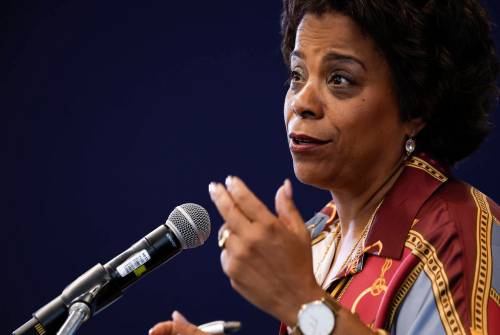
Cara Brown is an assistant professor in the department of occupational therapy, college of rehabilitation sciences at the University of Manitoba. For her, parish nursing could play a role in alleviating the revolving door that results when patients are discharged from hospital too quickly — only to end up back there when things go wrong.
One reason many people end up back in hospital is because they don’t have enough community support. “The health-care system makes the assumption patients have someone at home to look out for them,” she said.
This can be a false assumption, especially for seniors who may not have children or other family members living nearby.
“As people get older, their support networks get smaller,” she said.
Congregations with parish nurses could fill that gap, she said, noting that the province currently “doesn’t invest enough in community care.”
During visits, a parish nurse could check on patient’s recovery after leaving hospital — things such as mobility needs, ensuring they are taking their medications correctly, eating well and other issues.
“These are things a nurse would know to look out for,” she said.
Right now, “there is nothing to catch you (after discharge from the hospital) unless all the stars align,” she said. “Anything a faith community can do to watch out for others can help produce good health outcomes.”

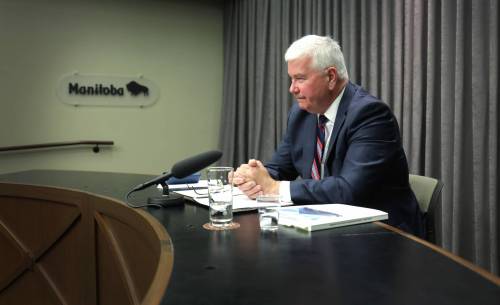
College of Registered Nurses of Manitoba CEO and registrar Deb Elias said parish nursing can play a role in alleviating pressure on the system.
The key for her is ensuring congregations that offer it make sure they adhere to professional standards of practice, including privacy and confidentiality.
The college has a process for recognizing parish nurses, she said, noting it is willing to offer support and resources to any congregation that wants to go that route.
Health Minister Audrey Gordon and the Winnipeg Regional Health Authority did not respond to requests for comment.
faith@freepress.mb.ca
The Free Press is committed to covering faith in Manitoba through our Religion in the News project. This reporting continues because readers like you step forward to fund it.
Donate now to support our reporting on religion.
Your donation is eligible for a charitable tax receipt.
BECOME A FAITH JOURNALISM SUPPORTER
Our newsroom depends on a growing audience of readers to power our journalism. If you are not a paid reader, please consider becoming a subscriber.
Our newsroom depends on its audience of readers to power our journalism. Thank you for your support.
Advertisement Advertise With Us
Advertisement Advertise With Us
The Free Press acknowledges the financial support it receives from members of the city’s faith community, which makes our coverage of religion possible.