Native American group to digitize 20,000 archival pages linked to Quaker-run Indian boarding schools

Advertisement

Advertise with us

NEW YORK (AP) — A coalition advocating for Native American people traumatized by an oppressive system of boarding schools for Native youths plans to digitize 20,000 archival pages related to schools in that system that were operated by the Quakers.

Read this article for free:


or

Already have an account? Log in here »

To continue reading, please subscribe:

Subscribe and receive a limited-edition Free Press branded hat or tote.

Digital Subscription

One year of digital access for only $205*

  • Enjoy unlimited reading on winnipegfreepress.com
  • Read the E-Edition, our digital replica newspaper
  • Access News Break, our award-winning app
  • Play interactive puzzles

*First annual payment billed as $205.00 + GST for one year. This annual subscription will automatically renew at $233.00 + GST every 52 weeks (10% off the regular annual price of $259.35). Offer available to new and qualified returning subscribers only. Cancel any time.

To continue reading, please subscribe:

Add Free Press access to your Brandon Sun subscription for only an additional

$1 for the first 4 weeks*

  • Enjoy unlimited reading on winnipegfreepress.com
  • Read the E-Edition, our digital replica newspaper
  • Access News Break, our award-winning app
  • Play interactive puzzles
Start now

*Your next Brandon Sun subscription payment will increase by $1.00 and you will be charged $17.95 plus GST for four weeks. After four weeks, your payment will increase to $24.95 plus GST every four weeks.

Hey there, time traveller!
This article was published 23/08/2023 (1137 days ago), so information in it may no longer be current.

NEW YORK (AP) — A coalition advocating for Native American people traumatized by an oppressive system of boarding schools for Native youths plans to digitize 20,000 archival pages related to schools in that system that were operated by the Quakers.

The Quakers and other faith groups — including Episcopalians, Methodists and Catholics — have in recent years either begun or increased efforts to research and atone for their prior roles in the boarding school system that Native children were forced to attend, and that cut them off from their families, tribes and traditions.

For decades, documents related to Quaker-operated Indian boarding schools have been largely unstudied, as they exist in remote and dispersed collections with limited access, said leaders of the National Native American Boarding School Healing Coalition. Now, the coalition, also known as NABS, will make them available to scholars and nonspecialists by housing digital records on a public database.
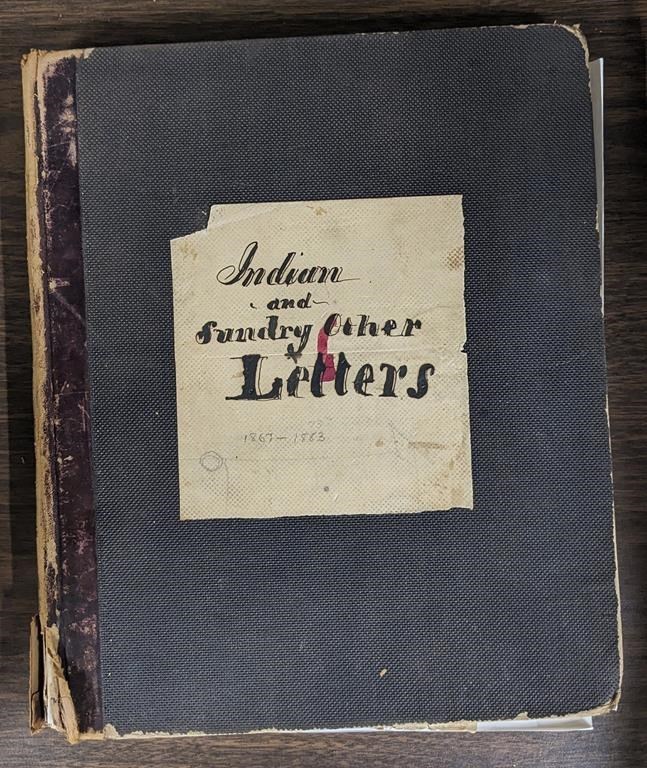
In this 2023 photo provided by the Friends Historical Library of Swarthmore College is John Saunders' letter book and Philadelphia Yearly Meeting Records for the Joint Committee on Indian Affairs and its predecessors, at Swarthmore College, Pa. (Friends Historical Library of Swarthmore College via AP)

The records will provide a better understanding of the conditions that children experienced at these schools, and help the compilation of statistics, including how many children went missing and died, said Stephen Curley, director of digital archives for NABS.

“There are hundreds of schools that were operated historically with the sole aim to sever ties between child and family and between child and cultural heritage … so a lot of instances of abuse were administered to these children,” said Curley, a Navajo whose own family was affected by the boarding schools. The records, he said, will be crucial to confirming the anecdotal retelling of their harrowing experiences.

“Not to diminish people speaking up and telling their truths,” Curley said, “but when it comes to providing testimony and having that inform what policy should look like, looking at the records is going to play an integral role to codify what happened next.”

The initiative is funded by a grant of more than $124,000 from the National Historic Publications and Records Commission. It was awarded to NABS to work with Friends Historical Library of Swarthmore College and Quaker & Special Collections at Haverford College, both near Philadelphia.

“This is a profound moment because as we have been calling on churches to increase the accessibility of these records for years now, it’s groups like these at these Quaker institutions who have responded to that call,” said Samuel Torres, deputy CEO of NABS, and a member of the Mexica-Nahua Indigenous people.

Partnership leaders said NABS, Swarthmore and Haverford will scan 20,000 pages of enrollment papers, photographs, financial information, correspondence and administrative records this fall.

The records from Swarthmore and Haverford range from 1852 to 1945, according to project organizers. They include at least nine Quaker-operated Indian boarding schools in Indiana, Kansas, Nebraska, New York, Ohio, Oklahoma and Pennsylvania.

After the scanning, project leaders will hold an information session with tribal communities to discuss the findings. The project will include the production of a video with shared oral histories from boarding school survivors and their families.

“One of the reasons that I think the oral history component is so important is a lot of the records that we’re going to be dealing with in this project are particularly from an institutional perspective, from the people who ran the boarding schools … rather than from the children who were forced to attend those schools,” said Sarah Horowitz, curator of rare books and manuscripts and head of Quaker & Special Collections at Haverford.
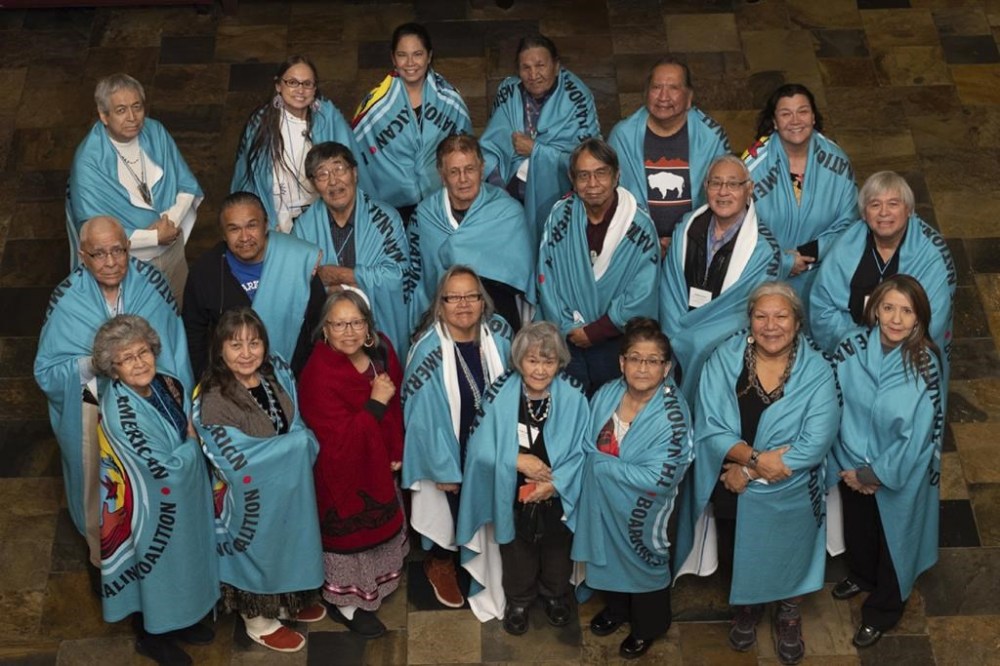
In this November 2019, photo provided by the National Native American Boarding School Healing Coalition, Indian boarding school survivors pose for a group portrait at the coalition's Healing Summit at the Tulalip Resort Casino in Tulalip, Wash. The coalition, which advocates for Native American people impacted by an oppressive system of boarding schools for Native youths, plans to digitize 20,000 archival pages related to schools in that system that were operated by the Quakers. (National Native American Boarding School Healing Coalition via AP)

“So it’s really important to get to those documents,” she said. “But it also means that those documents are not necessarily telling you, if you read them at face value, the stories of the communities… people may need to read against the grain … to really get at the stories of the children.”

The digitized records will be made publicly available in spring 2024 on a database called the National Indian Boarding School Digital Archive, which NABS will launch later this year.

“Part of the impact of colonialism is that many written records describing the lives of Indigenous people are stored in archives like ours that are far away from descendant communities,” said Celia Caust-Ellenbogen, associate curator for Friends Historical Library of Swarthmore College. She hopes that the partnership opens the way to further discussion of the role those religious institutions had in the operation of the schools.

“Those records can be really important for truth-telling processes and acknowledging and supporting the repair of past harms,” she said. “By making these archival records available, by digitizing these records, we can help restore access to communities that were impacted.”

__

Associated Press religion coverage receives support through the AP’s collaboration with The Conversation US, with funding from Lilly Endowment Inc. The AP is solely responsible for this content.

Report Error Submit a Tip

The Free Press acknowledges the financial support it receives from members of the city’s faith community, which makes our coverage of religion possible.
More Stories

Volunteer pop-up library axed from Manitoba Youth Centre

Matthew Frank 4 minute read Preview

Volunteer pop-up library axed from Manitoba Youth Centre

Matthew Frank 4 minute read Updated: 11:25 AM CDT

Manitoba Corrections has cancelled a pop-up library program at the Manitoba Youth Centre, leaving inmates without librarian services and fewer options to borrow certain books.

The Prison Libraries Committee, part of the non-profit Manitoba Library Association, operated and funded the volunteer program since 2024 before it was shut down by the province last month. The group previously partnered with the province to offer the service because the facility has no dedicated library of its own.

“It is concerning that community members who are incarcerated, especially youth, are losing out on meaningful programming, access to information and rehabilitation efforts, which are offered at no cost to (Manitoba) Corrections. We urge Manitoba Justice to promote more library services and programming, not less,” said a Sept. 24 letter from the non-profit addressed to the justice minister.

Ashley Huot, chair of the Prison Libraries Committee, said she was puzzled when she received an email last month from Manitoba Corrections stating that the pop-up library was no longer needed.

Read
Updated: 11:25 AM CDT

Morning-show veteran swaps microphone for macchiatos at new Corydon café

David Sanderson 9 minute read Preview

Morning-show veteran swaps microphone for macchiatos at new Corydon café

David Sanderson 9 minute read 2:00 AM CDT

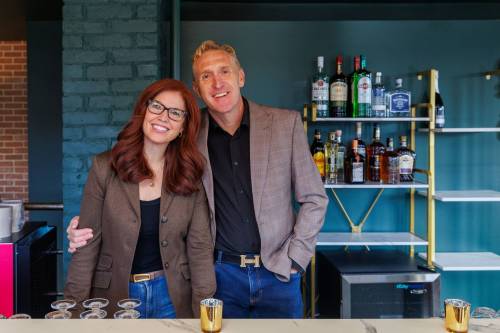
Good news if you were used to having your morning coffee with Terri Gale, who earlier this summer signed off from CTV Your Morning, after 15 years on the job.

Gale, the three-hour program’s longtime weather expert, and her husband Rob Gale, the ex-head soccer coach of Valour FC and co-founder of the Northern Super League’s new Winnipeg franchise, are the owners of Golden Hour Café and Bar at 775 Corydon Ave.

Gale (formerly Apostle) nods when she is asked who would know more about caffeinated beverages than a person who, for the last decade and a half, set her alarm to go off in the wee small hours.

“I do love coffee and take mine black. Except because I hate burning my tongue — not a good thing when you speak for a living — I got into the habit of throwing a couple of ice cubes in my cup, to be on the safe side,” Gale says, seated on the second level of their attractive, 2,100-square-foot premises, which officially opened in mid-September.

Read
2:00 AM CDT

A day on the campaign trail: Winnipeg's mayor, seeking a second term, does double duty

Malak Abas 12 minute read Preview

A day on the campaign trail: Winnipeg's mayor, seeking a second term, does double duty

Malak Abas 12 minute read Updated: Yesterday at 5:56 PM CDT

In the weeks leading up to the civic election, Scott Gillingham has been performing a juggling act: he’s running to be Winnipeg’s 45th mayor, while still serving as its 44th.

“If someone asks me about the campaign, I’m going to answer them. But I think for most people, I’m the mayor of Winnipeg, even if I’m showing up as a candidate,” Gillingham, 58, says. “I try to do all I can to maintain that distinction.”

The Free Press joined Gillingham on a recent rainy September Saturday on the campaign trail, where he served in both roles during an event-laden day. City council’s final meeting before the Oct. 28 election was days earlier.

In Winnipeg, it’s rare for an incumbent to be defeated. But Gillingham knows his win in 2022 wasn’t exactly a landslide — he won with 27.5 per cent of the vote — and he’s been thinking about his second term ever since.

Read
Updated: Yesterday at 5:56 PM CDT

May be whiff of truth to ex’s odour ardour

Maureen Scurfield 5 minute read 2:01 AM CDT

DEAR MISS LONELYHEARTS: I ran into an old boyfriend I used to curl on a team with, and we went for drinks. We’ve been almost eight years apart, and I couldn’t remember why we broke up, as we always had such a great time together.

It wasn’t until the second date — this time on a weekend — that it came back to me, with a jolt. Pee-yew! I remembered he doesn’t use deodorant on weekends. Why? He enjoys his own body odour. I recalled that a bit too late, and it was just as awful as ever! I went home early.

Tonight, he called and I refused him another date. I said, “Think back. You remember why we broke up?” Then he said, “Oh yeah, you hated my no-deodorant weekend policy. Well, guess what? Some women don’t mind!” I said I really doubted that, and that ended the conversation. Miss L., wouldn’t any women find stinky underarms offensive?

— Sensitive Nose, Fort Richmond

Manitoban Kent Monkman debuts beaver sculpture in Toronto’s ambitious new waterfront park

Alex Nino Gheciu, The Canadian Press 2 minute read Preview

Manitoban Kent Monkman debuts beaver sculpture in Toronto’s ambitious new waterfront park

Alex Nino Gheciu, The Canadian Press 2 minute read Updated: 9:17 AM CDT

TORONTO - Kent Monkman’s first-ever public art installation is dam good.

The celebrated Cree artist’s new permanent sculpture, dubbed “The Colony,” debuts Wednesday in Toronto’s east end.

The 15-foot-high bronze structure features beavers dancing, feasting and celebrating, evoking Indigenous ceremonies.

It highlights the vital role of beavers in the natural, Indigenous and colonial histories of Turtle Island, says a release.

Read
Updated: 9:17 AM CDT

Letters, Oct. 3

7 minute read 2:01 AM CDT

A morning in the life …

My very first lesson does not start when I walk into that lecture hall, oh no — it starts long before. It begins when I walk to my car, check the estimated arrival time to the University of Manitoba and hope that Winnipeg traffic agrees with it.

A drive that appears completely manageable changes almost immediately when I’m greeted by a tsunami of orange pylons and a line of cars that appears to go on forever. Traffic moves by the inch, lanes magically disappear and the detour I took yesterday now has a detour of its own. These factors make me do a calculation that I have become all too familiar with. How late can I arrive and still find parking, run to my class across campus and get to class with enough time left to make it worth it?

I have grown used to people saying, “Why not just leave earlier?” I do. But when I’m already leaving for my 8:30 a.m. class at 7 a.m., there’s only so much I can do. This drive that some would think is relaxing is one that feels like an assignment that I didn’t know I had to complete and is due at 8:30 a.m.