Mayor opens lines of communication with multifaith, cultural circle

Advertisement
Read this article for free:
or
Already have an account? Log in here »
To continue reading, please subscribe:

Digital Subscription
One year of digital access for only $205*
- Enjoy unlimited reading on winnipegfreepress.com
- Read the E-Edition, our digital replica newspaper
- Access News Break, our award-winning app
- Play interactive puzzles
*First annual payment billed as $205.00 + GST for one year. This annual subscription will automatically renew at $233.00 + GST every 52 weeks (10% off the regular annual price of $259.35). Offer available to new and qualified returning subscribers only. Cancel any time.
To continue reading, please subscribe:
Add Free Press access to your Brandon Sun subscription for only an additional
$1 for the first 4 weeks*
- Enjoy unlimited reading on winnipegfreepress.com
- Read the E-Edition, our digital replica newspaper
- Access News Break, our award-winning app
- Play interactive puzzles
*Your next Brandon Sun subscription payment will increase by $1.00 and you will be charged $17.95 plus GST for four weeks. After four weeks, your payment will increase to $24.95 plus GST every four weeks.
Read unlimited articles for free today:
or
Already have an account? Log in here »
Hey there, time traveller!
This article was published 02/10/2023 (1090 days ago), so information in it may no longer be current.
After being elected mayor just over a year ago, Scott Gillingham promised to build bridges with the city’s faith communities to find ways to work together to build a stronger Winnipeg.
Now he has made good on that promise through his new 15-member multifaith and cultural liaison circle. The members, who were selected by the mayor, have met twice so far. They plan to meet four times a year.
Gillingham was a Pentecostal pastor for 22 years before being elected to Winnipeg’s city council in 2014.
The purpose of the circle, Gillingham said, is for him to hear about the work Winnipeg’s faith and cultural communities are already doing to address various social issues and to foster collaboration and connection with the city.
“Winnipeg has strong and established faith and cultural communities who are doing great work to make the city stronger,” he said. “But they have no connection to city hall.”
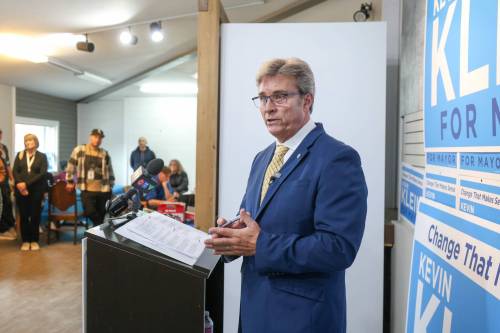
RUTH BONNEVILLE / WINNIPEG FREE PRESS FILES Mayor Scott Gillingham said the purpose of the circle is for him to hear about the work Winnipeg’s faith and cultural communities are already doing to address various social issues and to foster collaboration and connection with the city.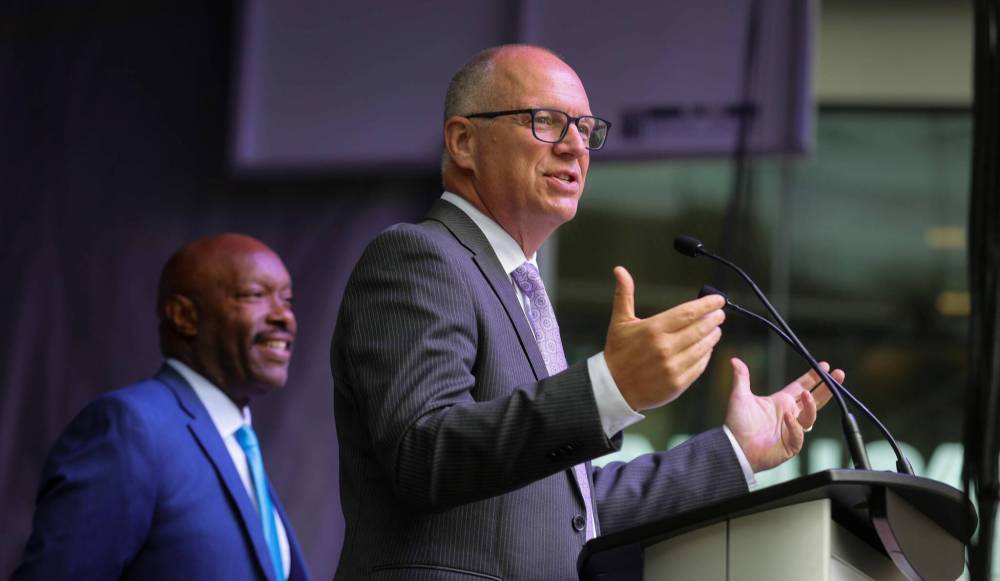
Through the circle, which is not an official city committee, Gillingham hopes to have open lines of communication and look for ways to pursue solutions together.
Noting it is easy for people who work for the city to overlook the many ways faith groups are involved in issues such as homelessness, food insecurity and poverty, Gillingham said he hopes the circle will build bridges to city departments that have the same goals.
It can also be a way for him to help groups cut through red tape if needed, when trying to start programs, he said.
One of the major issues for Gillingham is homelessness.
“It’s such a huge challenge. We need everyone working together,” he said, noting faith groups are often on the front lines in dealing with Winnipeg’s homeless population.
Gillingham will also use the circle to stay abreast of incidents of antisemitism and Islamophobia, and any other discrimination against minorities.
As for the circle itself, Gillingham said he isn’t aware of any other city in Canada engaging faith communities in this way.
James Christie is the convener of the circle. For him, it’s not just a way for the mayor to hear about issues of concern to faith communities, but also for faith communities to hear from the mayor.
“We want to be a listening ear for the mayor, and from the mayor,” he said.
“We want to be a listening ear for the mayor, and from the mayor.” –James Christie
The goal, he said, “is not to provide advice to the mayor,” but rather to keep him informed about happenings in the faith communities such as major festivals, celebrations and achievements.
It will also let Gillingham know about the resources the city’s faith groups can offer, he said. This might include doing an inventory of places of worship to learn what they can provide in case of an emergency — how many have commercial-grade kitchens, showers or room to shelter people in the event of a disaster.
The circle has no administrative or governance authority, he noted, adding it reports only to the mayor.
At the same time, it “doesn’t represent the faith communities,” he said, noting three of its members are Indigenous. Instead, it is made up of individuals from those communities who are invested in Winnipeg.
By creating the circle, the mayor is showing “he values faith communities, how they contribute to the health of the community, and what they contribute to the city in tangible and intangible ways,” Christie said.
Sandy Shahal is a member of the circle. A member of the Sikh community, she believes the group can be of benefit to the city by acting as a bridge between the government and diverse communities.
“It can serve as a symbol of the city’s commitment to inclusivity and diversity and share resources,” she said.
“It can serve as a symbol of the city’s commitment to inclusivity and diversity and share resources.”–Sandy Shahal
For Norman Meade, an Anglican minister and Indigenous elder, the circle can promote “faith, hope and love as guiding principles” in a multifaith and multicultural society.
He is also glad the circle includes Indigenous people, who can bring their perspectives and teachings to the discussions.
Sister Lesley Sacouman, a member of the Sister of the Holy Names religious order, sees the effort as “a call and a challenge to move beyond connection to communion.”
She noted that, at the heart of each faith group or tradition, is the “universal and binding summons to love one another, no exceptions, as ourselves.”
Jamie Arpin Ricci, pastor of the Little Flowers Church in Winnipeg’s West End, sees it as a way to “foster a sense of interfaith dialogue that is rooted in relationships to grassroots communities here in the city.”
He also hopes it can explore the intersection of faith and culture, sexuality and gender.
“Given recent events, these intersections are critical to address,” he said.
faith@freepress.mb.ca
The Free Press is committed to covering faith in Manitoba through our Religion in the News project. This reporting continues because readers like you step forward to fund it.
Donate now to support our reporting on religion.
Your donation is eligible for a charitable tax receipt.
BECOME A FAITH JOURNALISM SUPPORTER
Our newsroom depends on a growing audience of readers to power our journalism. If you are not a paid reader, please consider becoming a subscriber.
Our newsroom depends on its audience of readers to power our journalism. Thank you for your support.
The Free Press is committed to covering faith in Manitoba through our Religion in the News project. This reporting continues because readers like you step forward to fund it.
Donate now to support our reporting on religion.
Your donation is eligible for a charitable tax receipt.
BECOME A FAITH JOURNALISM SUPPORTER
Our newsroom depends on a growing audience of readers to power our journalism. If you are not a paid reader, please consider becoming a subscriber.
Our newsroom depends on its audience of readers to power our journalism. Thank you for your support.
Related Articles
Mayor praises multifaith circle’s service, caring
Advertisement Advertise With Us
Advertisement Advertise With Us
The Free Press acknowledges the financial support it receives from members of the city’s faith community, which makes our coverage of religion possible.