What are sacred forests?
Advertisement
Read this article for free:
or
Already have an account? Log in here »
To continue reading, please subscribe:

Digital Subscription
One year of digital access for only $205*
- Enjoy unlimited reading on winnipegfreepress.com
- Read the E-Edition, our digital replica newspaper
- Access News Break, our award-winning app
- Play interactive puzzles
*First annual payment billed as $205.00 + GST for one year. This annual subscription will automatically renew at $233.00 + GST every 52 weeks (10% off the regular annual price of $259.35). Offer available to new and qualified returning subscribers only. Cancel any time.
To continue reading, please subscribe:
Add Free Press access to your Brandon Sun subscription for only an additional
$1 for the first 4 weeks*
- Enjoy unlimited reading on winnipegfreepress.com
- Read the E-Edition, our digital replica newspaper
- Access News Break, our award-winning app
- Play interactive puzzles
*Your next Brandon Sun subscription payment will increase by $1.00 and you will be charged $17.95 plus GST for four weeks. After four weeks, your payment will increase to $24.95 plus GST every four weeks.
Read unlimited articles for free today:
or
Already have an account? Log in here »
Hey there, time traveller!
This article was published 17/01/2024 (959 days ago), so information in it may no longer be current.
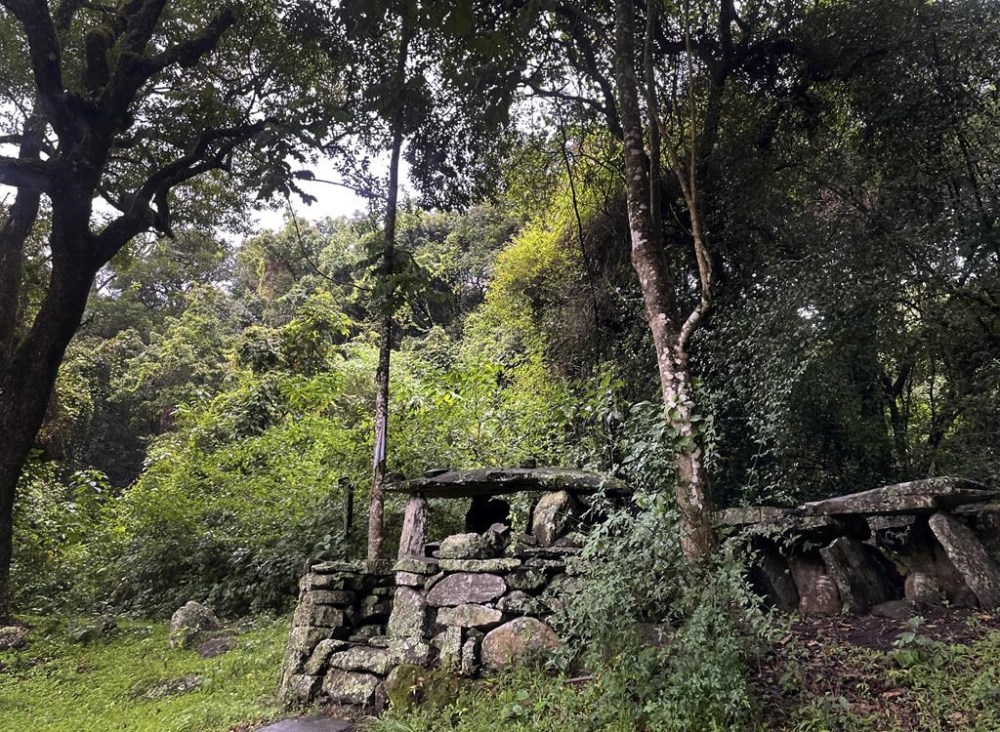
KOTAGIRI, India (AP) — Sacred forests and groves are primeval woodlands that different faith communities around the world have safeguarded for centuries as abodes of the spiritual or the divine.
Thousands of sacred forests have survived. They’re the church forests in Ethiopia’s highlands, hillside groves considered holy by Catholics in Italy, woodlands revered by Shinto practitioners in Japan and Indigenous people in Siberia, Australia, the Americas and India.
Sacred forests are also treasure troves of biodiversity and are often the last bastion for species of flora and fauna that have become rare or even extinct elsewhere in those regions.
Climate change, pollution and urbanization pose threats to these sacred spaces. Tended for generations by faithful caretakers, environmentalists and governments are now making a push to protect these areas as well.
Why are forests sacred?
In many parts of the world, small groves or larger forests have been preserved because the local people consider these spaces their connection to the divine.
Sacred forests share a number of commonalities. They are often in hilly areas where deities are said to reside. The trees, rivers, plants, animals, even the stones that inhabit the holy space are viewed as sacred as well. These woodlands may be sites that are linked to specific events, and sites that surround places of worship or ancestral shrines.
What can you do or not do in a sacred forest?
Many sacred forests have restrictions prohibiting activities and limiting access only to specific communities. Hunting, gathering, wood cutting, cultivation and other activities may be strictly prohibited in these spaces. In many sacred forests even breaking a twig or plucking a leaf or flower is unacceptable.
Selvi Nanji is a member of the Kurumba tribe that cares for Banagudi Shola, a sacred forest in Kotagiri in the Nilgiris Hills of southern India. She said the worship spaces and temples in that woodland are often restricted to male members who perform the rituals and care for the shrines. Nanji, who now lives in Sweden, wrote a book titled “Devasolai,” which means “sacred forest” in Kurumba.
In Banagudi forest, entering with footwear is prohibited near holy shrines. However, in some forests, people are permitted to collect fallen timber or fruit as well as honey, medicinal plants, and wood for cremation.
How are Indigenous rituals and practices different?
In India, the Kurumbas, whose total population Nanji estimates as 2,000, are officially classified as Hindu. About 80% of India is Hindu. However, Nanji said Indigenous religious practices and rituals are different from those of Hindu traditions.
“Hindu rituals typically involve offering coconuts and bananas to the deities,” she said. “But, in Indigenous traditions, we perform rituals with what is available in the forest. Resin from trees is used.”
Plants are used to dress the deities instead of fabric, which is typically used in Hindu temples. In Banagudi Shola, sacred rituals are performed annually by the tribe’s men to coincide with agricultural seasons. An animal, typically a goat, is sacrificed during the ritual, Nanji said. The Kurumba medicine people collect herbs, roots and tree bark from the forest, she said.
Are there different types of sacred forests?
Yes. An example is Muttunad Mund near Kotagiri, a grassland that is sacred to the Toda tribe. Aradkuttan, an elder in the community, said this location is akin to the tribe’s headquarters. The location is marked by a conical temple dedicated to the deity Moonbu, constructed with stone, cane and a special type of grass from the sacred grasslands. The annual temple ritual is a one-month affair featuring song, dance, rituals and buffalo, which are sacred to the tribe. Celebrants eat a special meal during the festival — white rice mixed with buffalo buttermilk and butter.
M. Alwas, who heads the Nilgiris Adivasi Welfare Association in Kotagiri, a nonprofit that aims to help tribes in the region, said one of the main challenges is getting the younger generation involved.
“Each community has its own traditional knowledge,” said Alwas, who belongs to the Toda tribe. “They have stories of why a forest or river or tree is important.”
As interest in preserving faith traditions wanes, Alwas fears those stories and practices could be lost and with them, the value of these sacred spaces.
While some worry tourism would “commercialize” the forests, others like Nanji believe that ecotourism could be beneficial if done right. She said it might help outsiders understand the importance of sacred groves and boost job opportunities in the region.
“Spotlighting local food can also give traditional agriculture a much-needed shot in the arm,” Nanji said.
___
Associated Press religion coverage receives support through the AP’s collaboration with The Conversation US, with funding from Lilly Endowment Inc. The AP is solely responsible for this content.
The Free Press acknowledges the financial support it receives from members of the city’s faith community, which makes our coverage of religion possible.