Great Basin tribes want Bahsahwahbee massacre site in Nevada named national monument
Advertisement
Read this article for free:
or
Already have an account? Log in here »
To continue reading, please subscribe:

Digital Subscription
One year of digital access for only $205*
- Enjoy unlimited reading on winnipegfreepress.com
- Read the E-Edition, our digital replica newspaper
- Access News Break, our award-winning app
- Play interactive puzzles
*First annual payment billed as $205.00 + GST for one year. This annual subscription will automatically renew at $233.00 + GST every 52 weeks (10% off the regular annual price of $259.35). Offer available to new and qualified returning subscribers only. Cancel any time.
To continue reading, please subscribe:
Add Free Press access to your Brandon Sun subscription for only an additional
$1 for the first 4 weeks*
- Enjoy unlimited reading on winnipegfreepress.com
- Read the E-Edition, our digital replica newspaper
- Access News Break, our award-winning app
- Play interactive puzzles
*Your next Brandon Sun subscription payment will increase by $1.00 and you will be charged $17.95 plus GST for four weeks. After four weeks, your payment will increase to $24.95 plus GST every four weeks.
Read unlimited articles for free today:
or
Already have an account? Log in here »
Hey there, time traveller!
This article was published 24/01/2024 (985 days ago), so information in it may no longer be current.
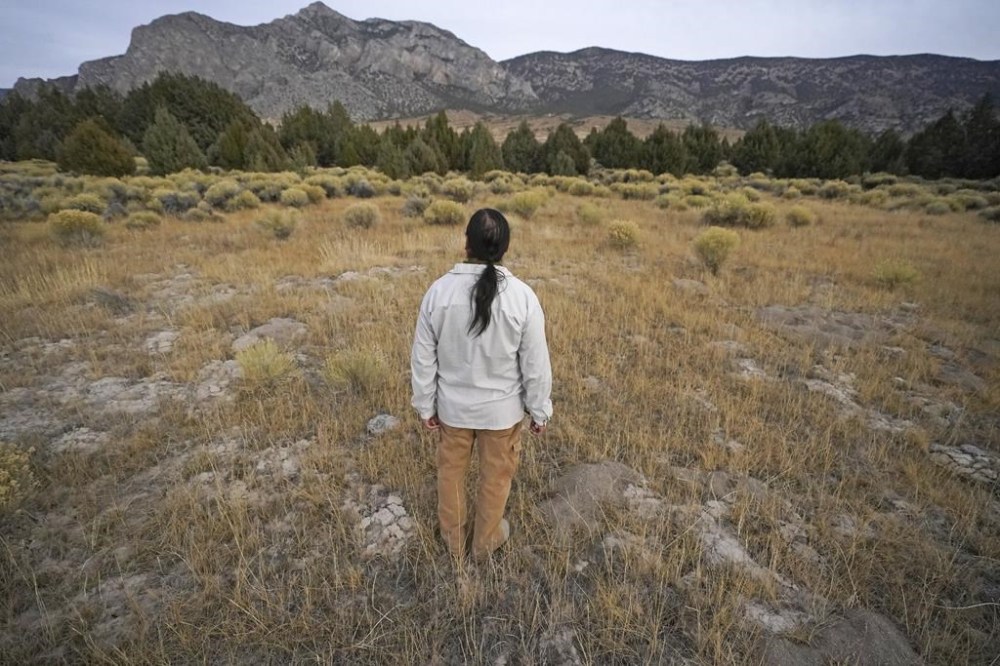
ELY, Nev. (AP) — White attackers turned a lush, high desert oasis in eastern Nevada, with its bubbling springs and a rare stand of Rocky Mountain junipers, into killing fields. They massacred hundreds of Native people there in the 1800s — a horrific history once retold in hushed tones behind closed doors.
That was until tribal members reluctantly found themselves defending the valley’s historical significance in state hearings. In the 2000s, they shared their painful past with authorities weighing whether to divert substantial amounts of groundwater that feeds the valley their relatives have long considered sacred.
To tribal members, Bahsahwahbee — Shoshoni for “Sacred Water Valley” — is where the spirits of their dead live on in the trees growing among the open graves, the final resting place of ancestors who remained where they were slain.
Now they want to tell their story on their own terms. The Ely Shoshone, Duckwater Shoshone, and the Confederated Tribes of the Goshute Reservation — a coalition representing about 1,500 enrolled tribal members — are lobbying the federal government to designate nearly 40 square miles (100 square kilometers) as Bahsahwahbee National Monument.
“The goal is to commemorate what happened there to protect the memory of that place,” said Warren Graham, the Duckwater Shoshone chairman.
This lush section of the valley was visited by Shoshone and Goshute people, who were all related and called themselves “Newe,” for centuries, serving as a sacred site for healing and celebration. It was desecrated at least three times. In the mid-1800s, federal soldiers carried out two massacres at Bahsahwahbee in retaliation for alleged attacks on settlers and their property.
During the final massacre in 1897, two girls were away on a walk during the fall harvest. Upon return, they found vigilantes killing their family and friends.
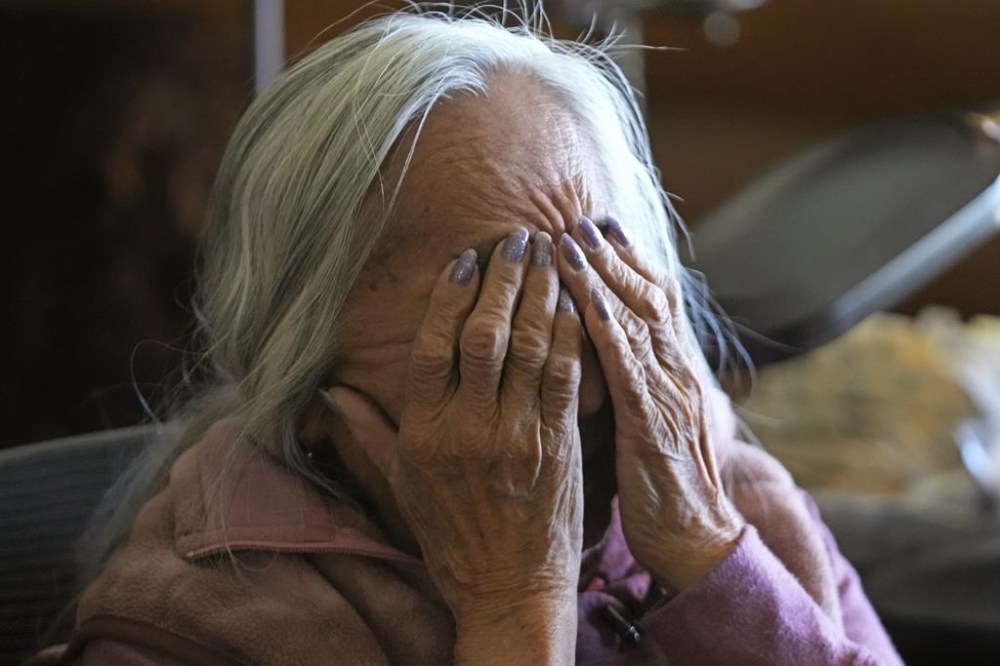
One of those girls was Laurene Mamie Swallow, grandmother to 86-year-old Delaine Spilsbury, an Ely Shoshone elder who has worked for years on federal recognition of the sacred site.
“The people that were killed here were left here,” said Spilsbury, sitting at dusk in a camp chair nestled among the trees. “Their spirits, their bodies are in those trees. And so we darn sure are going to protect those people.”
For more than a century, the history of the massacres was recounted on a need-to-know basis. Charlene Pete’s mother closed the doors and drew the blinds the day she told her children about the violence against their Goshute ancestors — trained from her days at a boarding school to believe she’d face punishment for recalling her heritage.
“That’s the first time I’d ever seen my mom emotional like that,” Pete said, recounting a wailing sound she later learned was customary for mourning. It was one of the few traditions her mother recalled from a time before the government forced her to attend a boarding school established to assimilate Native American children into white society.
When Las Vegas, which nearly doubled its population from 1990 to 2000, pursued a pipeline in the early 2000s to divert groundwater from the Bahsahwahbee area and pump it 300 miles to the burgeoning desert city, tribal members felt compelled to speak up.
“It came to a point where we had to start talking to save it,” said Ely Shoshone elder Alvin Marques. He testified in a multi-decade legal battle alongside ranchers, local officials and environmental groups who all opposed the project by the Southern Nevada Water Authority.
College of Southern Nevada biology professor David Charlet said the trees likely wouldn’t last more than a half-century with a depleted water table.
“It can take cold, but it can’t take the heat and lack of water during the summer,” Charlet said of the rare stand of trees.
Rocky Mountain junipers — known locally as swamp cedars for the springs they rely on to survive hot summers — are usually found thousands of feet higher on mountains. Birds likely dispersed their seeds, and they thrived because of the valley’s shallow springs that fed the soil, according to Charlet.
Ultimately, the Nevada Division of Water Resources denied the Southern Nevada Water Authority’s applications to pump water based on the protection of the cultural resource, said state engineer Adam Sullivan, who worked for the department during the ruling and later was appointed to lead it.
Protecting water for sacred trees is not something the agency had previously done, Sullivan said. In permitting projects, “we look broadly at what is in the public interest, and that has evolved.”
The water agency appealed to a state district court, but was rebuffed and withdrew its permit requests in 2020.
Even if the land becomes a national monument, the water beneath Bahsahwahbee would remain under the state’s jurisdiction. Today, there are no major water permit applications in the valley, and any future applications to extract significant amounts of water would face high scrutiny, Sullivan said.
But the land and its heritage would be managed by the National Park Service, whose mission it is to preserve them, explained Neal Desai of the National Parks Conservation Association.
The designation would send a message that “we have decided as a country that this place is absolutely essential and we will commit to doing our best to ensure that this place, this story, the reasons that it’s important, that it will be preserved and interpreted for the benefit of future generations,” he said.
Bahsahwahbee is already listed on the National Register of Historic Places — a mostly symbolic title. It remains under the Bureau of Land Management, whose focus is in managing public land for multiple users. In becoming a monument, the land would transfer to the National Park Service, which would work alongside tribes to preserve the place and its history.
Tribal members involved in the monument effort say having enough water for the sacred trees is important, but the designation is really an opportunity to tell their story on their terms.
“They don’t teach about what happened to the Native American people in history enough,” said Graham.
The Southern Nevada Water Authority supports a monument designation that allows for the continuation of existing ranching and agricultural activities, said Bronson Mack, water authority spokesman. The agency maintains a working ranch in the valley with limited water rights to support the operation.
As a national monument, its story would join the ranks of other painful American memories elevated on the national stage, including Japanese internment camps, sites associated with lynching of African Americans, and places where other massacres of Native people occurred.
It would also join Avi Kwa Ame, a stretch of biologically rich mountains and valleys in southern Nevada, and Baaj Nwaavjo I’tah Kukveni, an expanse of canyons, plateaus and streams in northern Arizona — both sacred to Native people in those areas. They are two of five national monuments President Joe Biden created in 2023, using his authority under the Antiquities Act of 1906.
The designation has broad support from the three tribes as well as the Nevada Legislature and the state’s U.S. senators, Catherine Cortez Masto and Jacky Rosen, both Democrats who have lobbied Interior Secretary Deb Haaland on the issue. Cortez Masto’s office said the senator expects to soon introduce a bill in Congress to designate the monument.
A monument would be an important step toward reconciliation after more than 150 years, explained Monte Sanford, the tribes’ monument campaign director.
“There has never been an effort by the United States government to reconcile and recognize what happened to the Newe people at Bahsahwahbee,” he said.

Looking at the trees grown from the same soil where her ancestors died, Spilsbury said she hopes the monument would help people heal, no matter who they are. She knows locals in nearby Ely whose ancestors were involved in the vigilante killing her grandmother witnessed.
“I know that if they could go and say, this is where we made amends with these folks, that it would be just as important to them as it is to me,” she said. “Or maybe more.”
___
The Associated Press receives support from the Walton Family Foundation for coverage of water and environmental policy. The AP is solely responsible for all content. For all of AP’s environmental coverage, visit https://apnews.com/hub/climate-and-environment.
Associated Press religion coverage receives support through the AP’s collaboration with The Conversation US, with funding from Lilly Endowment Inc. The AP is solely responsible for this content.
The Free Press acknowledges the financial support it receives from members of the city’s faith community, which makes our coverage of religion possible.