Churches and nonprofits ensnared in Georgia push to restrict bail funds
Advertisement
Read this article for free:
or
Already have an account? Log in here »
To continue reading, please subscribe:

Digital Subscription
One year of digital access for only $205*
- Enjoy unlimited reading on winnipegfreepress.com
- Read the E-Edition, our digital replica newspaper
- Access News Break, our award-winning app
- Play interactive puzzles
*First annual payment billed as $205.00 + GST for one year. This annual subscription will automatically renew at $233.00 + GST every 52 weeks (10% off the regular annual price of $259.35). Offer available to new and qualified returning subscribers only. Cancel any time.
To continue reading, please subscribe:
Add Free Press access to your Brandon Sun subscription for only an additional
$1 for the first 4 weeks*
- Enjoy unlimited reading on winnipegfreepress.com
- Read the E-Edition, our digital replica newspaper
- Access News Break, our award-winning app
- Play interactive puzzles
*Your next Brandon Sun subscription payment will increase by $1.00 and you will be charged $17.95 plus GST for four weeks. After four weeks, your payment will increase to $24.95 plus GST every four weeks.
Read unlimited articles for free today:
or
Already have an account? Log in here »
Hey there, time traveller!
This article was published 21/02/2024 (961 days ago), so information in it may no longer be current.
ATLANTA (AP) — When she was behind bars in Georgia, Nia Thomas would use toothpaste to stick handwritten flyers to the wall and spread the word about community bail funds that could pay inmates’ bonds, no strings attached.
“I was posting the phone numbers in everybody’s rooms, everybody’s dorms, every jail I went to,” Thomas said.
But wide-scale initiatives like the one that paid $50,000 for her pretrial release on drug trafficking charges in May 2022 could be significantly restricted, if not criminalized, under a Georgia bill awaiting Republican Gov. Brian Kemp’s signature. Opponents have called the measure an unprecedented attack on bail funds, churches and other community organizations that post inmates’ bonds as they await trial.
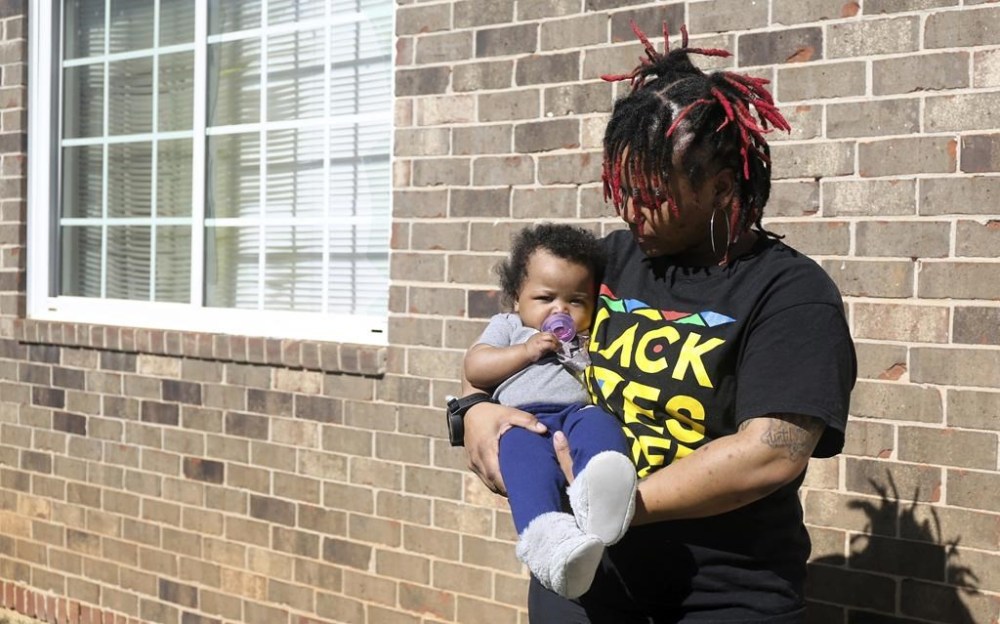
Thomas, a mother of four who is currently awaiting sentencing after reaching a plea deal, said she frequently encountered fellow inmates who had been charged with misdemeanors or traffic violations but were languishing in jail for months because they were unable to gather a few hundred dollars to secure their freedom.
Her own bond was far larger, but her application for relief was accepted by the Georgia nonprofit Barred Business, which paid for her release as part of community bail funds’ annual “Mama’s Day Bail Out” initiative. Within days, Thomas, now 30, was reunited with her family in Atlanta as they held a celebratory crab boil.
Initiatives such as “Mama’s Day Bail Out” and the “Freedom Day Project” — which occur in June, around Juneteenth and Father’s Day — are a hallmark for some Black churches in Georgia including Atlanta’s historic Ebenezer Baptist Church, where the Rev. Martin Luther King Jr. preached.
Senate Bill 63, which passed the GOP-dominated Legislature earlier this month, would expand the number of charges that require cash bail, while restricting who can post that bail.
Specifically, no person or organization could post more than three cash bonds in a year. Groups such as churches or charitable bail funds could post unlimited surety bonds, but only if they fulfill the same requirements that bail bond companies do — a process involving passing background checks, paying fees, holding a business license, securing the approval of the local sheriff and establishing a cash escrow account or other form of collateral.
Proponents say well-meaning organizations should have no issue following the same rules as bail bond companies. Republican bill sponsor Sen. Randy Robertson insists he has not created any “red tape” by forcing bail funds to go through these numerous requirements.
But the measure comes as conservative legislatures in recent years have sought to constrain community bail funds. Countless protesters arrested during 2020’s racial injustice protests benefited from the funds, and more recently they’ve posted bond for activists arrested in connection with violent demonstrations against a planned Atlanta-area police training center that critics dubbed “Cop City.”
Georgia prosecutors have noted that some “Stop Cop City” protesters had the Atlanta Solidarity Fund’s phone number written on their body, evidence, according to the prosecutors, that the activists intended to do something that could get them arrested. Three of the bail fund’s leaders were charged with charity fraud last year and are among 61 indicted on racketeering charges.
Rep. Houston Gaines said the Atlanta Solidarity Fund’s legal issues show the need for more oversight.
“Once they reach that (three-cash-bond-per-year) threshold, these groups need to register properly as a bondsman. … They can bail out as many folks as they want, but they need to do so under the same rules and regulations as bondsmen,” he said.
Democrats, though, are aghast at the proposal, which they argue would cause even worse overcrowding in jails and disproportionately hurt poor, minority defendants. They have urged Kemp to veto it and have portrayed the legislation as a gift to for-profit bail bond companies and a betrayal of his predecessor, GOP Gov. Nathan Deal, who made criminal justice reform a hallmark of his legacy.
“Why should a church have to become a bail bondsman to bond out its constituents, its citizens, its parishioners?” said Democratic Rep. Tanya Miller. “What happened to your First Amendment right to pool your money and go bond out people because you care about them as human beings or what they stand for to your community?”
Bridgette Simpson, the executive director of Barred Business, which provides not only bail but also long-term support such as mental health services and housing aid, said she’s struggling to contemplate what would happen to her nonprofit if the bill becomes law.
“I’m devastated,” Simpson said. “I’ve cried quite a few times because I’m very close with the mothers that we bail out. It’s heartbreaking because how would else Nia have gotten out? How else would she have gotten to spend time with her children?”
Robertson, a longtime sheriff’s deputy and former state president of the Fraternal Order of Police, said Simpson should have no issue continuing her organization’s work: “Maybe her model will need to be tweaked. I promise, I am not an evil person.”
The American Civil Liberties Union of Georgia has threatened to sue if Kemp signs the bill, saying it “unconstitutionally criminalizes poverty and restricts conduct protected by the First Amendment.” A Kemp spokesperson said the legislation is undergoing a “thorough review process.”
And while the Georgia Association of Professional Bondsmen is in favor of the overall bill, the group’s president, Charles Shaw, told the Associated Press that the GAPB is “neutral” on the specific paragraph that clamps down on bail funds.
“We do believe that there has been an abuse of the process by certain bail funds across the country of unknown entities funding the release of people without really any means to secure the bond or get the people back, which is the whole purpose of bond,” Shaw said. “But we certainly don’t want to oppress churches or a family member from getting out their family.”

Community bail funds have been around for more than a century: during the period known as the “first Red Scare,” the ACLU created a bail fund in 1920 to help labor organizers and other alleged Communists who were facing sedition charges.
Bail funds went on to play a significant role in the civil rights movement and received newfound attention for helping to bail out thousands of activists during the 2020 racial injustice protests that roiled the nation, with bail fund donation links going viral on social media as celebrities and countless others poured in donations.
The funds were so effective that they increasingly drew the ire of politicians, who started pushing bills to restrict community bail funds, said Pilar Weiss, who helps lead the National Bail Fund Network, which includes more than 90 nonprofits across the U.S. But no state has enacted anything close to what Georgia has passed, she said.
Thomas spent the past year and a half volunteering, going back to school and providing for her family by doing an assortment of jobs, including babysitting, cleaning homes and delivering food — all while taking care of her 4-month-old daughter, Nilah. Without Barred Business, Thomas believes she would still be stuck behind bars and would be facing a tougher sentence.
“If I was never bonded out, I would have never gotten the opportunity to show that I can turn my life around,” Thomas said.
The Free Press acknowledges the financial support it receives from members of the city’s faith community, which makes our coverage of religion possible.