

Cecil L. ‘Chip’ Murray, influential pastor and civil rights leader in Los Angeles, dies
Advertisement
Read this article for free:
or
Already have an account? Log in here »
To continue reading, please subscribe:
Monthly Digital Subscription
$0 for the first 4 weeks*
- Enjoy unlimited reading on winnipegfreepress.com
- Read the E-Edition, our digital replica newspaper
- Access News Break, our award-winning app
- Play interactive puzzles
*No charge for 4 weeks then price increases to the regular rate of $19.00 plus GST every four weeks. Offer available to new and qualified returning subscribers only. Cancel any time.
Monthly Digital Subscription
$4.75/week*
- Enjoy unlimited reading on winnipegfreepress.com
- Read the E-Edition, our digital replica newspaper
- Access News Break, our award-winning app
- Play interactive puzzles
*Billed as $19 plus GST every four weeks. Cancel any time.
To continue reading, please subscribe:
Add Free Press access to your Brandon Sun subscription for only an additional
$1 for the first 4 weeks*
*Your next subscription payment will increase by $1.00 and you will be charged $16.99 plus GST for four weeks. After four weeks, your payment will increase to $23.99 plus GST every four weeks.
Read unlimited articles for free today:
or
Already have an account? Log in here »
Hey there, time traveller!
This article was published 06/04/2024 (614 days ago), so information in it may no longer be current.
LOS ANGELES (AP) — The Rev. Dr. Cecil L. “Chip” Murray, an influential pastor and civil rights leader who used his tenure at one of Los Angeles’ oldest churches to uplift the predominantly Black neighborhoods of South Los Angeles following one of the country’s worst race riots, has died. He was 94.
Murray died on Friday, according to an announcement from the USC Center for Religion and Civic Culture. He died of natural causes, his son, Drew Murray, told the Los Angeles Times.
Born in Lakeland, Florida, in 1929, Murray spent 27 years as the pastor of the First African Methodist Episcopal Church of Los Angeles. The church was small when he took over. But by the time he retired, it had grown into an 18,000-member mega church.
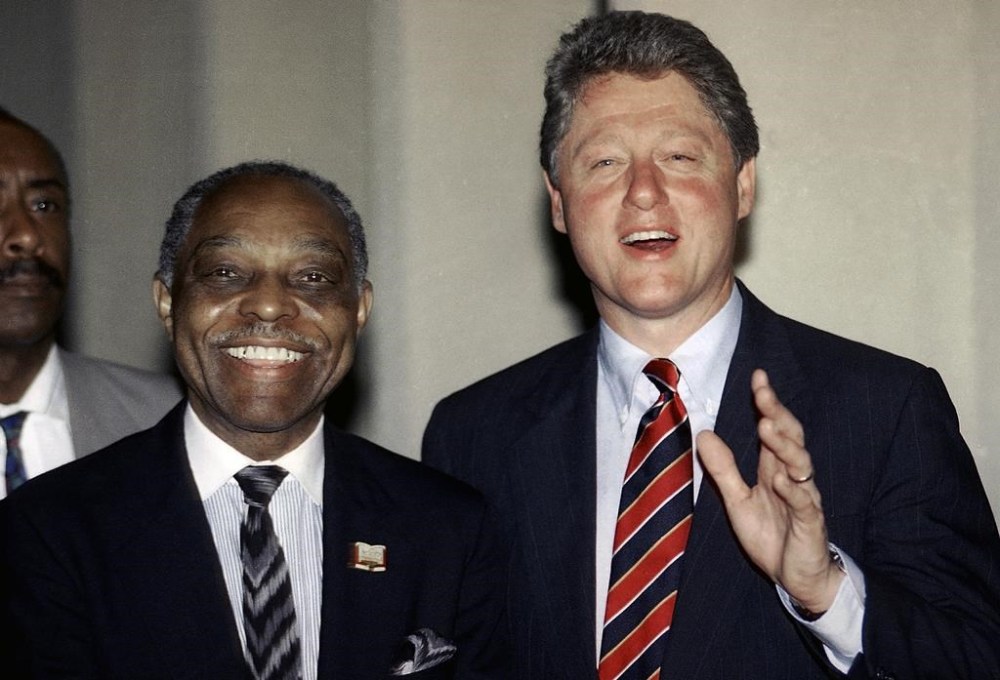
In 1992, the acquittal of four police officers who were caught on video violently beating Rodney King triggered an explosion of violence in the predominantly Black neighborhoods of South Los Angeles. Murray emerged as a calming presence and was a frequent guest on national television news shows. He used his connections with the city’s political and business leaders to raise money for recovery efforts, including loans for businesses and assistance for people displaced by the violence.
“While many famous preachers have roots in Southern California, Chip Murray is unparalleled in his ability to mobilize the city of Los Angeles to heal the inequities related to race and income inequality,” said Donald E. Miller, the Leonard K. Firestone Professor of Religion at USC and co-founder of the Center for Religion and Civic Culture.
During his time as pastor, First AME became a must-stop for prominent politicians, including former presidents George W. Bush and Bill Clinton along with former California governors Pete Wilson, Gray Davis and Arnold Schwarzenegger. Under Murray’s leadership, the church worked to transform the community through a host of programs and initiatives, including job training, support for foster children and developing affordable housing units for low-income families.
Los Angeles Mayor Karen Bass said Murray dedicated his life to service, community and “putting God first in all things.”

“I had the absolute honor of working with him, worshiping with him, and seeking his counsel,” Bass said. “My heart is with the First AME congregation and community today as we reflect on a legacy that changed this city forever.”
After retiring as First AME’s pastor, he joined the faculty at the University of Southern California as the Tansey Professor of Christian Ethics, where he trained about 1,000 faith leaders in the “ Murray Method ” of church leadership.
The Free Press acknowledges the financial support it receives from members of the city’s faith community, which makes our coverage of religion possible.