On Eid al-Adha, Senegal’s star sheep are for luxury, not sacrifice
Advertisement
Read this article for free:
or
Already have an account? Log in here »
To continue reading, please subscribe:

Digital Subscription
One year of digital access for only $205*
- Enjoy unlimited reading on winnipegfreepress.com
- Read the E-Edition, our digital replica newspaper
- Access News Break, our award-winning app
- Play interactive puzzles
*First annual payment billed as $205.00 + GST for one year. This annual subscription will automatically renew at $233.00 + GST every 52 weeks (10% off the regular annual price of $259.35). Offer available to new and qualified returning subscribers only. Cancel any time.
To continue reading, please subscribe:
Add Free Press access to your Brandon Sun subscription for only an additional
$1 for the first 4 weeks*
- Enjoy unlimited reading on winnipegfreepress.com
- Read the E-Edition, our digital replica newspaper
- Access News Break, our award-winning app
- Play interactive puzzles
*Your next Brandon Sun subscription payment will increase by $1.00 and you will be charged $17.95 plus GST for four weeks. After four weeks, your payment will increase to $24.95 plus GST every four weeks.
Read unlimited articles for free today:
or
Already have an account? Log in here »
Hey there, time traveller!
This article was published 12/06/2024 (851 days ago), so information in it may no longer be current.
DAKAR, Senegal (AP) — When Cheikh Moustapha Seck, a 24-year-old sheep breeder from Senegal, speaks about his animals, his face lights up.
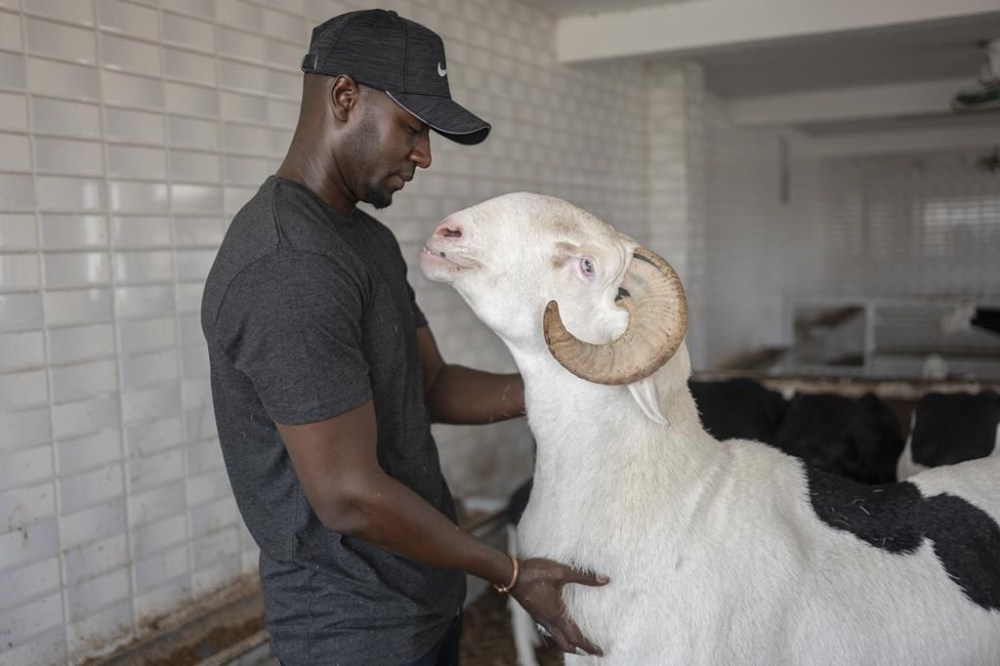
“You need love and patience to work with the sheep,” said Seck, affectionately stroking the long neck of Sonko, his champion sheep, named after the country’s new prime minister.
Sonko is no ordinary sheep. It is a locally bred Ladoum, the equivalent of a Ferrari among the woolly creatures. The majestic-looking Ladoum can weigh up to 397 pounds (180 kilograms), and it has made this coastal West African nation famous among breeders.
As Muslims worldwide prepare to celebrate Eid al-Adha this weekend, the second most important holiday in the Islamic calendar, the Ladoum get their moment to shine.
During Tabaski, as the holiday is locally known, Muslims commemorate the Quranic tale of Ibrahim’s willingness to sacrifice Ismail as an act of obedience to God. They kill and eat a sheep, making the animal extremely sought after in the days before the holiday.
Sonko the sheep was born last year, when its namesake Ousmane Sonko was still an imprisoned opposition leader and seemingly far from leading the country. Just like him, Sonko the sheep “was a warrior and our hope,” Seck said.
As political events have calmed since Senegal’s election earlier this year, this weekend’s celebrations have new life. People have turned their attention from protests to pampering — the prize sheep, at least.
Celebrated for their gleaming white fur and symmetrical horns, the Ladoum is most often bought for prestige breeding and beauty contests, and not to be eaten. On Eid al-Adha, like Ibrahim’s son, they will be spared.
Very few in Senegal can afford a Ladoum. Worth up to $70,000, the sheep is the ultimate symbol of social prestige in a country where the GDP per capita does not exceed $1,600. After years of record inflation, many struggle to afford regular sheep at prices starting from around $280.
The Ladoum spend their days being groomed, massaged and fed syringes of vitamins in special parlors, decorated with photos of champion sheep and their lineage.

Balla Gadiaga, a parlor owner who inherited the passion for sheep from his parents, said his clients come from all over the African continent.
“Just yesterday, I had someone from Abuja on the phone,” he said, referring to Nigeria’s capital. “We sell to clients in Senegal but also in Gambia, Nigeria, Mali. Everywhere.”
His favorite sheep is named BRT after the acronym for electric buses driving around Dakar, the capital. It is of “excellent measurements” and “extraordinary beauty,” he said. It is also worth $40,000, a deal compared to Gadiaga’s most expensive at over $65,000.
Gadiaga said the sheep are not only great business but also a source of happiness.
“When you are stressed out and you go in front of the sheep, you are cool,” he said. “You feel at ease.”
The Free Press acknowledges the financial support it receives from members of the city’s faith community, which makes our coverage of religion possible.