Israel’s Holocaust memorial opens a conservation facility to store artifacts, photos and more
Advertisement
Read this article for free:
or
Already have an account? Log in here »
To continue reading, please subscribe:

Digital Subscription
One year of digital access for only $205*
- Enjoy unlimited reading on winnipegfreepress.com
- Read the E-Edition, our digital replica newspaper
- Access News Break, our award-winning app
- Play interactive puzzles
*First annual payment billed as $205.00 + GST for one year. This annual subscription will automatically renew at $233.00 + GST every 52 weeks (10% off the regular annual price of $259.35). Offer available to new and qualified returning subscribers only. Cancel any time.
To continue reading, please subscribe:
Add Free Press access to your Brandon Sun subscription for only an additional
$1 for the first 4 weeks*
- Enjoy unlimited reading on winnipegfreepress.com
- Read the E-Edition, our digital replica newspaper
- Access News Break, our award-winning app
- Play interactive puzzles
*Your next Brandon Sun subscription payment will increase by $1.00 and you will be charged $17.95 plus GST for four weeks. After four weeks, your payment will increase to $24.95 plus GST every four weeks.
Read unlimited articles for free today:
or
Already have an account? Log in here »
Hey there, time traveller!
This article was published 08/07/2024 (816 days ago), so information in it may no longer be current.
JERUSALEM (AP) — Israel’s national Holocaust museum opened a new conservation facility in Jerusalem on Monday that will preserve, restore and store its more than 45,000 artifacts and works of art in a vast new building, including five floors of underground storage.
Yad Vashem, the World Holocaust Remembrance Center, serves as both a museum and a research institution. It welcomes nearly a million visitors each year, leads the country’s annual Holocaust memorial day and hosts nearly all foreign dignitaries visiting Israel.
“Before we opened this building, it was very difficult to exhibit our treasures that were kept in our vaults. They were kind of secret,” said Yad Vashem chairman Dani Dayan. “Now there’s a state-of-the-art installation (that) will help us to exhibit them.”
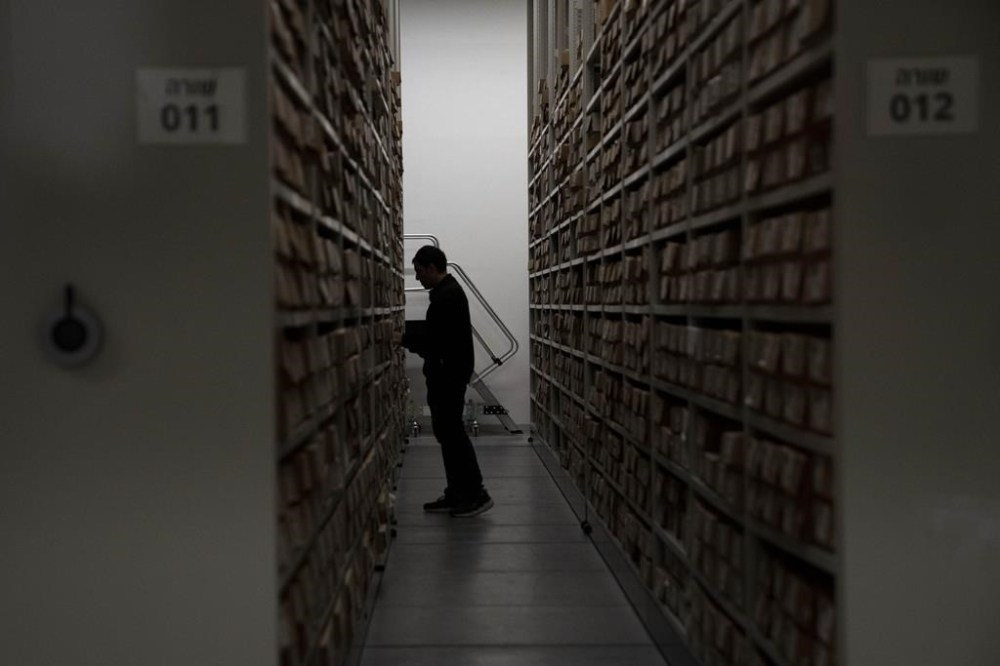
The David and Fela Shapell Family Collections Center, located at the Yad Vashem museum in Jerusalem, will also provide organization and storage for the museum’s 225 million pages of documents and half a million photographs.
Dayan said the materials will now be kept in a facility that preserves them in optimal temperatures and conditions.
“Yad Vashem has the largest collections in the world of materials related to the Holocaust,” Dayan said. “We will make sure that these treasures are kept for eternity.”
The new facility includes advanced, high-tech labs for conservation, enabling experts to revisit some of the museum’s trickier items, such as a film canister that a family who fled Austria in 1939 brought with them. It was donated to the museum but arrived in an advanced state of decay.
“The film arrived in the worst state it could. It smelled really bad,” said Reut Ilan-Shafik, a photography conservator at Yad Vashem. Over the years, the film had congealed into a solid piece of plastic, making it impossible to be scanned.
Using organic solvents, conservators were able to restore some of the film’s flexibility, allowing them to carefully unravel pieces of it. Using a microscope, Ilan-Shafik was able to see a few frames in their entirety, including one showing a couple kissing on a bench in a park and other snapshots of Europe before World War II.

“It is unbelievable to know that the images of the film that we otherwise thought lost to time” have been recovered, said Orit Feldberg, granddaughter of Hans and Klara Lebel, the couple featured in the film reel.
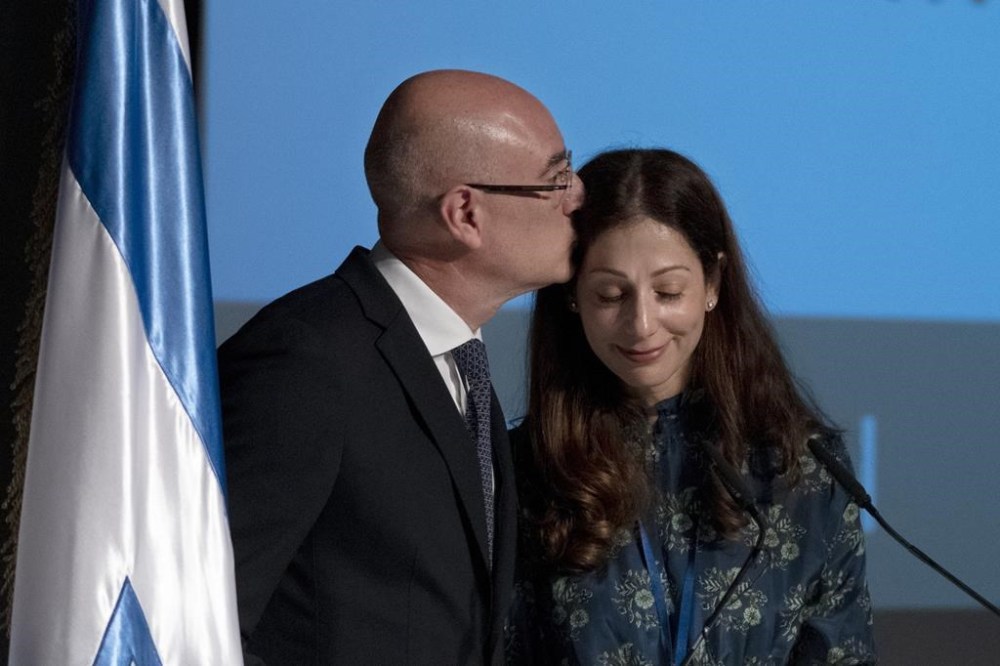
Feldberg’s mother donated the film canister, one of the few things the Lebels were able to take with them when they fled Austria.
“These photographs not only tell their unique story but also keep their memory vibrantly alive,” Feldberg said.
Conservation of items from the Holocaust is an expensive, painstaking process that has taken on greater importance as the number of survivors dwindles.
Last month, the Auschwitz Memorial announced it had finished a half-million-dollar project to conserve 3,000 of the 8,000 pairs of children’s shoes that are on display at the Nazi concentration camp in Poland.
The Free Press acknowledges the financial support it receives from members of the city’s faith community, which makes our coverage of religion possible.