

What are the main obstacles to a ceasefire in Gaza and the release of hostages?
Advertisement
Read this article for free:
or
Already have an account? Log in here »
To continue reading, please subscribe:

Digital Subscription
One year of digital access for only $205*
- Enjoy unlimited reading on winnipegfreepress.com
- Read the E-Edition, our digital replica newspaper
- Access News Break, our award-winning app
- Play interactive puzzles
*First annual payment billed as $205.00 + GST for one year. This annual subscription will automatically renew at $233.00 + GST every 52 weeks (10% off the regular annual price of $259.35). Offer available to new and qualified returning subscribers only. Cancel any time.
To continue reading, please subscribe:
Add Free Press access to your Brandon Sun subscription for only an additional
$1 for the first 4 weeks*
- Enjoy unlimited reading on winnipegfreepress.com
- Read the E-Edition, our digital replica newspaper
- Access News Break, our award-winning app
- Play interactive puzzles
*Your next Brandon Sun subscription payment will increase by $1.00 and you will be charged $17.95 plus GST for four weeks. After four weeks, your payment will increase to $24.95 plus GST every four weeks.
Read unlimited articles for free today:
or
Already have an account? Log in here »
Hey there, time traveller!
This article was published 13/01/2025 (640 days ago), so information in it may no longer be current.
Israel and Hamas have been holding indirect talks for more than a year aimed at ending the war in Gaza and returning scores of militant-held hostages in exchange for Palestinians imprisoned by Israel.
But despite intensive mediation by the United States, Qatar and Egypt, the talks have repeatedly stalled over several key issues, including the details of the exchange, whether the ceasefire would be permanent and the withdrawal of Israeli forces.
As each side has accused the other of backtracking, the war has ground on.
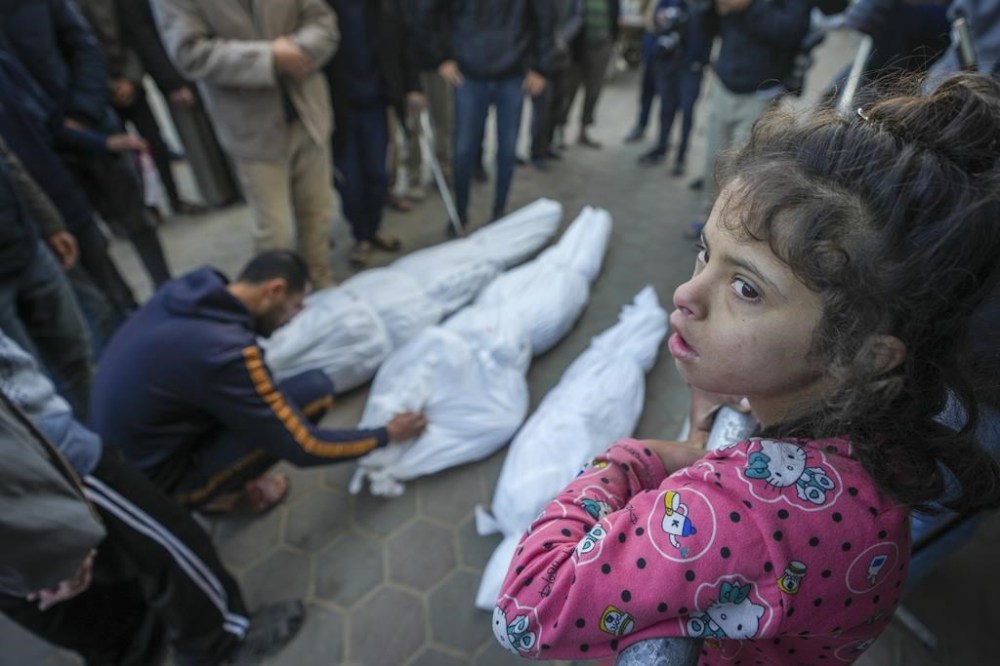
Dozens of Palestinians have been killed each day in Israeli strikes, and most of Gaza’s 2.3 million people are huddled in squalid tent camps, their neighborhoods in ruins. Humanitarian groups struggle to deliver desperately needed aid, and experts have warned of famine.
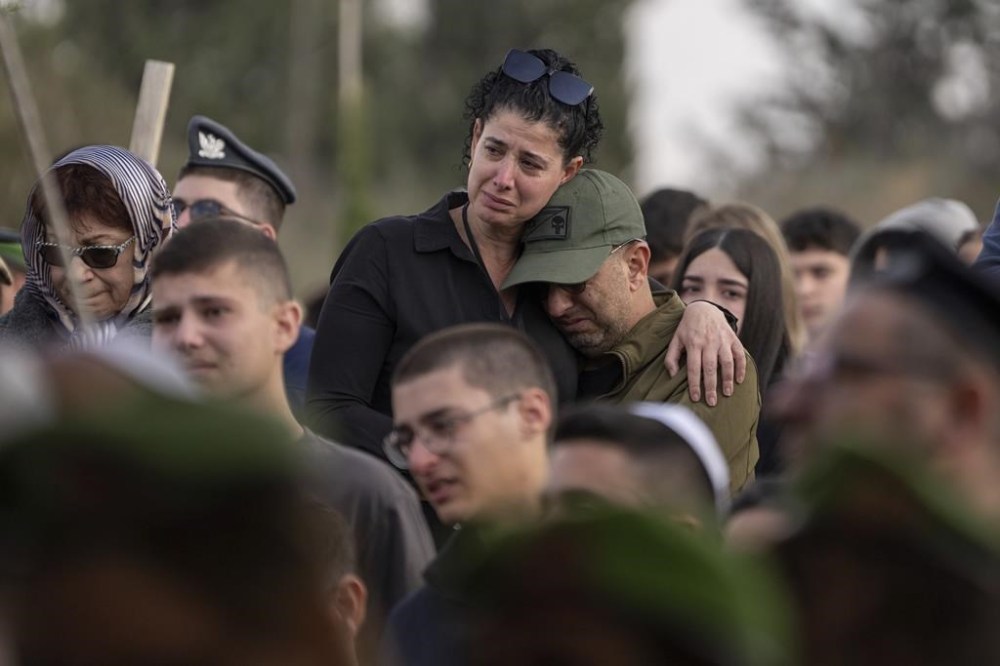
In Israel, families of the hostages have held weekly rallies demanding a deal for their release, fearing their loved ones will die in the harsh conditions of their captivity the longer the fighting drags on.
Here’s a look at the main points of contention.
Lists of names but no clarity on hostages
Hamas and other groups are still holding around 100 hostages captured in the Oct. 7, 2023 attack on southern Israel that ignited the war, in which militants killed about 1,200 people, mostly civilians, and abducted around 250. The Israeli military has declared a third of the hostages dead, but suspects that the true number could be around half.
Hamas is demanding the release of a large number of Palestinian prisoners, including senior militants convicted of orchestrating attacks that killed civilians. Israel is reluctant to free such prisoners, especially since one of the masterminds of the 2023 attack, the slain Hamas leader Yahya Sinwar, was a former prisoner released in such a deal.
The two sides have exchanged lists of names, with Israel demanding more information about which hostages are alive to ensure they come out first. Hamas says it needs at least a brief truce to determine the status of the hostages, because they are being held by various groups in scattered, secret locations.
Hamas seeks a lasting truce; Israel wants ‘total victory’
The emerging deal calls for a multiphase plan. In the first stage, Hamas would release the most vulnerable hostages and Israeli forces would pull back from some areas, allowing some Palestinians to return to their homes and a surge of humanitarian aid.
In the second step — which would be negotiated during the first — the rest of the living hostages would be released in exchange for a lasting ceasefire and the withdrawal of Israeli forces.
Hamas has said it won’t release the remaining hostages without assurances that the war will end. Israel’s offensive has killed more than 46,000 people in Gaza, mostly women and children, according to local health authorities, which don’t say how many of the dead were militants.
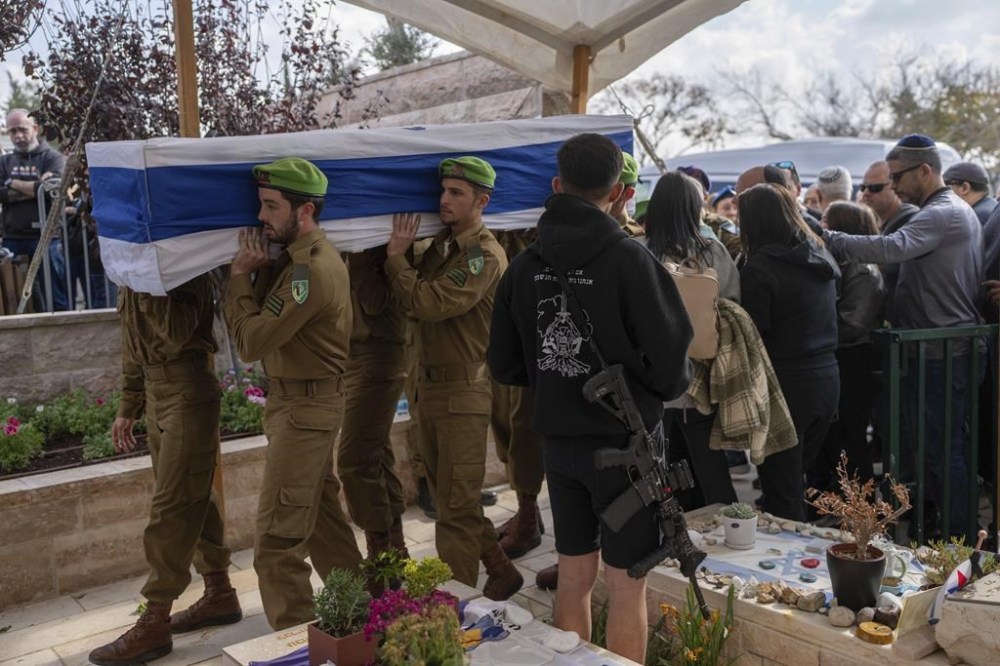
Hamas likely fears that Israel will resume its offensive — and step up its intensity — once the hostages are out and the militants no longer have their most valuable bargaining chip.
Israeli Prime Minister Benjamin Netanyahu has vowed to do just that. He says that Israel won’t end the war until it has destroyed Hamas’ military and governing abilities and ensured that the Palestinian militant group no longer poses a threat.
The lack of trust goes both ways: Israelis fear that Hamas will drag out negotiations over the second phase, extending the ceasefire indefinitely while the hostages languish.
Israel says it must retain strategic corridors
The talks nearly collapsed last summer when Netanyahu said that Israel would maintain a lasting presence in the Philadelphi corridor, a strip of land along the Gaza-Egypt border.
Israel says Hamas has long smuggled weapons into Gaza through tunnels beneath the corridor and that it must control the area to prevent Hamas from rebuilding. Egypt, a key mediator, says it blocked the tunnels years ago, and is opposed to any Israeli presence on the Gaza side of its border.
Israel has also demanded a mechanism for inspecting people returning to their homes in northern Gaza, from which around a million people fled following Israeli evacuation orders at the start of the war. Their return is a key Hamas demand, the details of which are still being worked out.
Israel says people returning to the north should be searched for weapons. That would probably require an Israeli presence in what’s known as the Netzarim corridor, a strip of closed roads and military installations stretching from the border to the sea just south of Gaza City.
The Palestinians are opposed to any permanent Israeli occupation, though Hamas has reportedly shown flexibility on the timetable of the Israeli withdrawal.
Clashing visions for postwar Gaza
Israel says Hamas can never again rule Gaza, but it has yet to endorse a realistic plan for an alternative government. With no internal rivals, Hamas has been able to quickly regroup after Israeli operations, even in the hardest-hit areas, and still controls much of the territory.
The Biden administration has long pushed for a grand bargain in which a reformed Palestinian Authority would govern postwar Gaza with the support of Arab and Muslim countries, including Saudi Arabia, which would also take the historic step of forging ties with Israel.
But Arab and Muslim leaders say they will only sign onto such plans if they include a pathway to a Palestinian state in the occupied West Bank, Israeli-annexed east Jerusalem and Gaza, territories Israel captured in the 1967 Mideast war.
Israel’s government is opposed to Palestinian statehood and has ruled out any role for the Palestinian Authority in Gaza. Netanyahu says that Israel will maintain open-ended security control while delegating governance to politically independent Palestinians. But none appear to have volunteered, and Hamas has threatened anyone who cooperates with Israel in running the territory.

Hamas has said, however, that it’s willing to relinquish control of Gaza to other Palestinians. Late last year, it agreed to an Egyptian-brokered plan for a group of independents to govern the territory under the auspices of the Palestinian Authority, which has yet to accept the proposal.
Hamas has also demanded the lifting of a blockade imposed by Israel and Egypt after it seized power in 2007, which experts say is needed for Gaza to be rebuilt.
The lifting of the blockade, however, would allow Hamas to claim a major victory and to eventually rebuild its military capabilities. That’s another nonstarter for Israel.
___
Follow AP’s war coverage at https://apnews.com/hub/israel-hamas-war
Related Articles
Significant progress made in talks over Israel-Hamas ceasefire and hostage release, officials say

Advertisement Advertise With Us
Advertisement Advertise With Us
The Free Press acknowledges the financial support it receives from members of the city’s faith community, which makes our coverage of religion possible.



