Bill 21 at the Supreme Court: Five things about Quebec’s contentious secularism law
Advertisement
Read this article for free:
or
Already have an account? Log in here »
To continue reading, please subscribe:

Digital Subscription
One year of digital access for only $205*
- Enjoy unlimited reading on winnipegfreepress.com
- Read the E-Edition, our digital replica newspaper
- Access News Break, our award-winning app
- Play interactive puzzles
*First annual payment billed as $205.00 + GST for one year. This annual subscription will automatically renew at $233.00 + GST every 52 weeks (10% off the regular annual price of $259.35). Offer available to new and qualified returning subscribers only. Cancel any time.
To continue reading, please subscribe:
Add Free Press access to your Brandon Sun subscription for only an additional
$1 for the first 4 weeks*
- Enjoy unlimited reading on winnipegfreepress.com
- Read the E-Edition, our digital replica newspaper
- Access News Break, our award-winning app
- Play interactive puzzles
*Your next Brandon Sun subscription payment will increase by $1.00 and you will be charged $17.95 plus GST for four weeks. After four weeks, your payment will increase to $24.95 plus GST every four weeks.
Read unlimited articles for free today:
or
Already have an account? Log in here »
Hey there, time traveller!
This article was published 23/01/2025 (625 days ago), so information in it may no longer be current.
MONTREAL – Quebec’s secularism law, known as Bill 21, was challenged in court as soon as it was adopted more than five years ago. With the Supreme Court of Canada announcing Thursday it will hear arguments on the validity of the law, here’s a look at some of the issues behind the legislation.
What is Bill 21?
Adopted in June 2019, the Act respecting the laicity of the state affirms the “paramountcy of state laicity” and outlines four principles of Quebec secularism: separation of state and religion, the religious neutrality of the state, the equality of all citizens, and freedom of conscience and religion. Among its most controversial measures is the prohibition of civil servants who are considered in positions of power — such as police officers, teachers, and judges — from wearing religious symbols at work. The law also requires people offering and receiving government services to have their face uncovered.
Why is this law so important in Quebec?
Following decades of debate over the religious accommodation of minorities in the province, the Coalition Avenir Québec government of François Legault proposed Bill 21 as a way to settle the issue. The Parti Québécois tabled similar legislation in 2013, but the bill was not passed before the party lost the 2014 election to the Liberals.
Legault and his government say the law represents the wishes and values of the majority of Quebecers, who for generations have fought for a distinct, secular society, beginning with the Quiet Revolution in the 1960s, which significantly reduced the influence of the Catholic Church in the province. They have framed the legislation as the reflection of the province’s autonomy within Canada, and they defend Bill 21 by saying it doesn’t go as far as other laws on state secularism, including in France.
Who is challenging Bill 21 and why?
The law pre-emptively invokes Section 33 of the Canadian Charter of Rights and Freedoms, known as the notwithstanding clause, to shield the legislation from court challenges over fundamental rights violations. Civil rights groups, labour unions, and organizations representing various minorities are among those who have taken the law to court, but they’ve been limited in their arguments because of Section 33.
With the case now heading to the Supreme Court, it’s likely others will seek to be heard, including the federal government. Federal Justice Minister Arif Virani framed the case as a national issue touching on fundamental freedoms and rights. The federal government also has serious concerns with the pre-emptive use of Section 33. Since Bill 21 was adopted, other provinces have made pre-emptive use of the clause, including Saskatchewan, whose government used it to shield a law requiring transgender students under 16 to get parental consent before teachers can use their preferred names and pronouns.
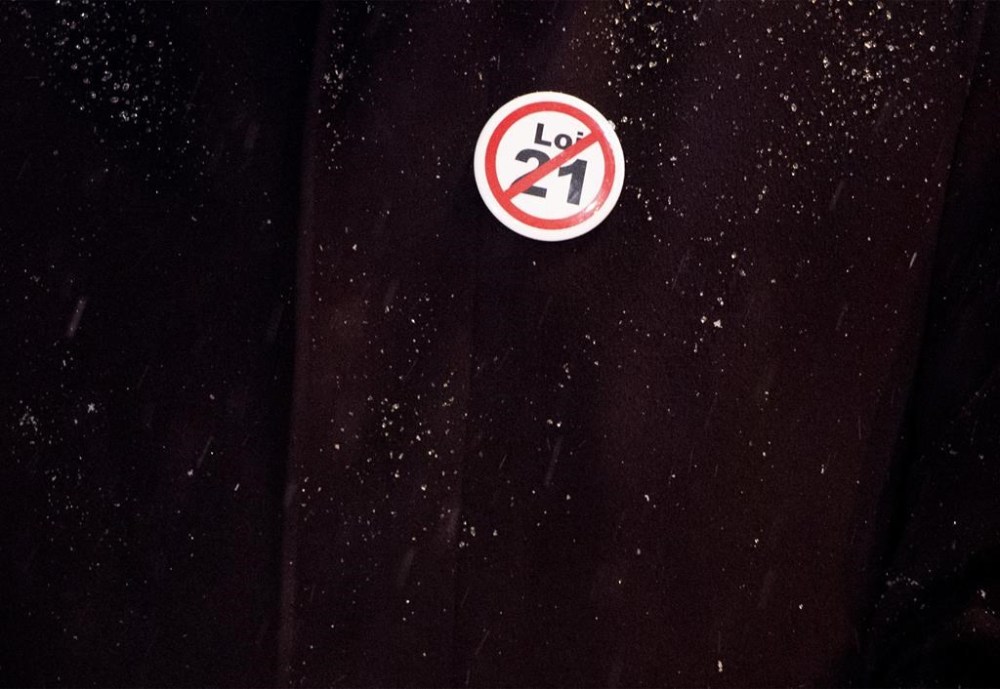
People take part in a protest in support of school teacher Fatemeh Anvari and against Bill 21 in Montreal, Wednesday, Dec. 15, 2021. Anvari was removed from her classroom at a school in Chelsea, Que., for wearing a hijab. THE CANADIAN PRESS/Graham Hughes
What has been the reaction across the country to the law?
In English Canada, the law is largely viewed among the political class as discriminatory. Some provinces have tried to recruit workers in Quebec who are from minority groups that are targeted by the law, and some Canadian municipalities have passed resolutions against Bill 21 and even pledged money to fight it in court.
Prime Minister Justin Trudeau has said his government planned to intervene if the High Court took up the case, and that he’s opposed to attempts by the provinces and territories to pre-emptively use the notwithstanding clause to suspend basic rights.
“That’s not the right thing to do, in my opinion,” Trudeau said in January 2023. NDP Leader Jagmeet Singh has said he would support a federal legal intervention in the matter. Conservative Leader Pierre Poilievre has said he is opposed to the law, and that while he respects the province’s ability to pass its own legislation, he hopes it is repealed.

Is Canadian unity at risk if the Supreme Court strikes it down?
The provincial Parti Québécois and the federal Bloc Québécois, parties that advocate for Quebec independence, say the legal challenges to the law — and the federal government’s plan to intervene at the Supreme Court — are an attack on the province’s right to determine its own path. Legault, who used to be a minister with the PQ and formerly an ardent sovereigntist, has said it was “disrespectful” that the federal government planned to take part in the Supreme Court challenge.
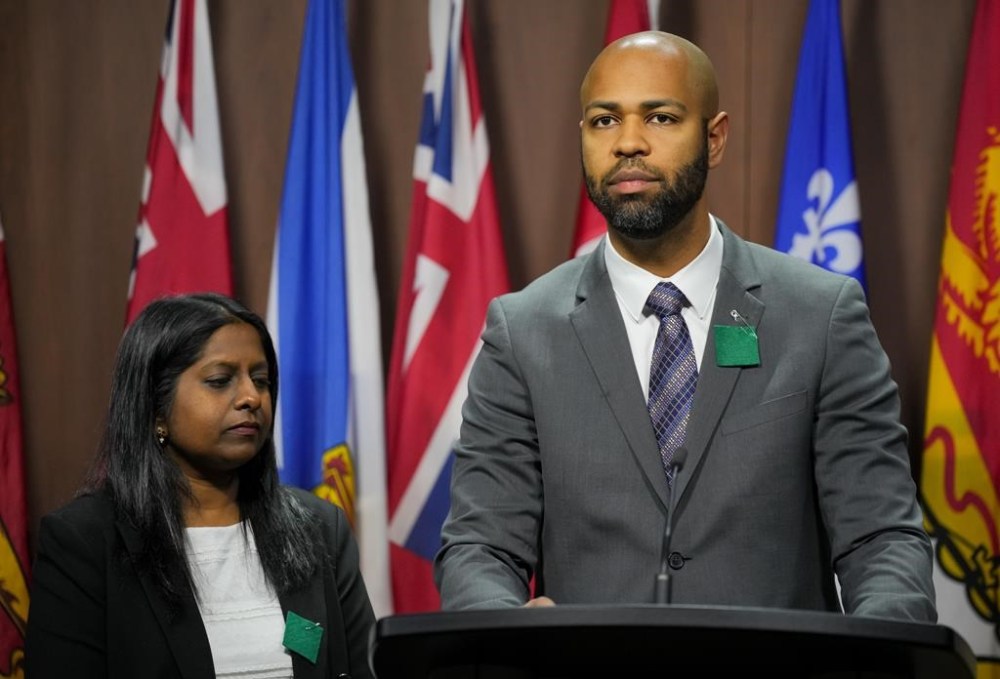
While it’s impossible to know for sure how the province will react if the Supreme Court strikes down the law, what’s clear is that Quebec nationalists — whose ranks include Legault and many of his ministers — would be deeply troubled. As well, the sovereigntist PQ has been leading in the polls for months and if an election were held today the party would win a majority government, according to poll aggregating site 338Canada.com. PQ Leader Paul St-Pierre Plamondon has promised to hold an independence referendum by 2030, support for which would likely rise if the country’s top court declares Bill 21 unconstitutional.
While there’s no timetable for the case to be heard at the Supreme Court, Quebecers will head to the polls in 2026 to elect a new provincial government.
This report by The Canadian Press was first published Jan. 23, 2025.
Related Articles
Quick quotes: Supreme Court agrees to hear challenge to Quebec secularism law

Advertisement Advertise With Us
Advertisement Advertise With Us
The Free Press acknowledges the financial support it receives from members of the city’s faith community, which makes our coverage of religion possible.