

AP PHOTOS: The rail tracks of Auschwitz still cross the area as aging reminders of horror
Advertisement
Read this article for free:
or
Already have an account? Log in here »
To continue reading, please subscribe:
Monthly Digital Subscription
$1 per week for 24 weeks*
- Enjoy unlimited reading on winnipegfreepress.com
- Read the E-Edition, our digital replica newspaper
- Access News Break, our award-winning app
- Play interactive puzzles
*Billed as $4.00 plus GST every four weeks. After 24 weeks, price increases to the regular rate of $19.95 plus GST every four weeks. Offer available to new and qualified returning subscribers only. Cancel any time.
Monthly Digital Subscription
$4.99/week*
- Enjoy unlimited reading on winnipegfreepress.com
- Read the E-Edition, our digital replica newspaper
- Access News Break, our award-winning app
- Play interactive puzzles
*Billed as $19.95 plus GST every four weeks. Cancel any time.
To continue reading, please subscribe:
Add Free Press access to your Brandon Sun subscription for only an additional
$1 for the first 4 weeks*
*Your next subscription payment will increase by $1.00 and you will be charged $16.99 plus GST for four weeks. After four weeks, your payment will increase to $23.99 plus GST every four weeks.
Read unlimited articles for free today:
or
Already have an account? Log in here »
Hey there, time traveller!
This article was published 26/01/2025 (426 days ago), so information in it may no longer be current.
OSWIECIM, Poland (AP) — During World War II, men, women and children were transported from across Europe to Auschwitz-Birkenau, horrendous journeys in which they were packed into cramped cattle cars.
They arrived onto an unloading platform, known as the ramp, where Nazi doctors made selections, deciding who would be murdered immediately and who would be used for slave labor.
Many of those rail tracks are abandoned but still exist within the site of the Auschwitz-Birkenau State Museum, stark reminders of the industrial nature of the killing. But they also extend beyond the memorial site, cutting through fields and running along family homes and a bus station, aging testaments of the horrors making their mark on life today.
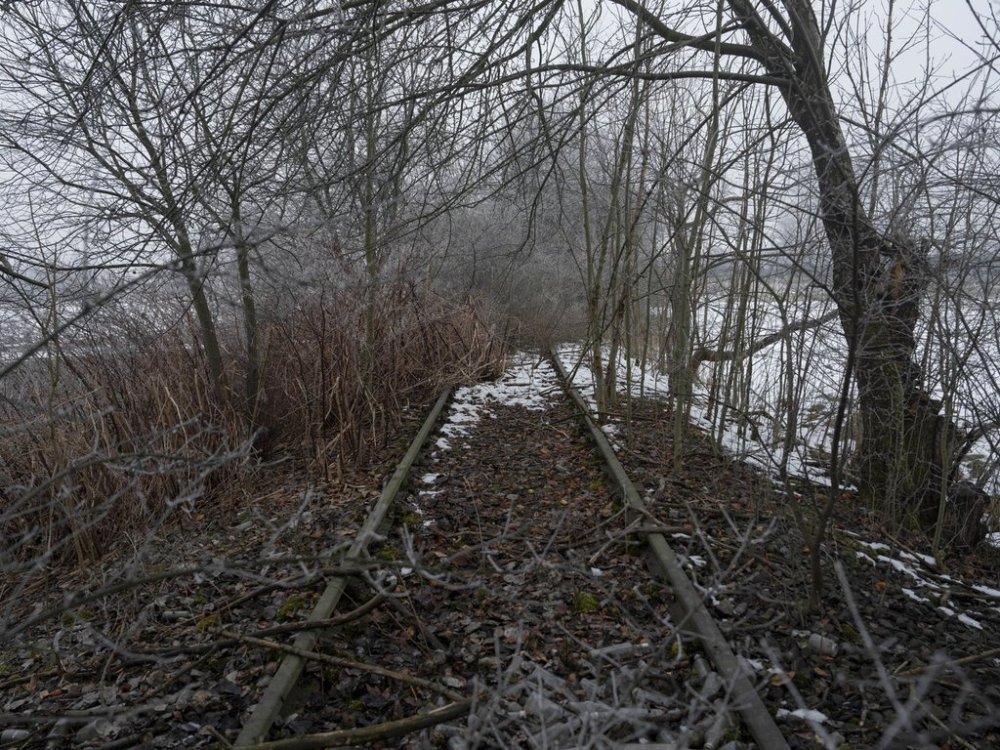
In all, 1.1 million people perished at Auschwitz in gas chambers or from disease, starvation and exhaustion. About 90% of the victims were Jewish, while Poles, Roma and Sinti, and Soviet prisoners of war were also among the victims.
The camp was liberated by Soviet troops on Jan. 27, 1945.
Nazi Germany established its largest extermination camp in Oswiecim — the name of the Polish town that was called Auschwitz under German occupation — because it was centrally located in Europe, with the railway infrastructure making it possible to transport Jews there from all across Europe — from Belgium, France and the Netherlands, from Italy and from Hungary.

On the grounds of Birkenau there is a memorial in the form of a rail carriage dedicated to the memory of the 420,000 Hungarian Jews who were deported to Auschwitz from May to July 1944.
On Monday, the world will mark the 80th anniversary of the camp’s liberation, with elderly survivors of Nazi atrocities gathering with state leaders and royalty.
The Free Press acknowledges the financial support it receives from members of the city’s faith community, which makes our coverage of religion possible.