Richard Williamson, Catholic bishop whose denial of Holocaust embarrassed Pope Benedict XVI, dies
Advertisement
Read this article for free:
or
Already have an account? Log in here »
To continue reading, please subscribe:

Digital Subscription
One year of digital access for only $205*
- Enjoy unlimited reading on winnipegfreepress.com
- Read the E-Edition, our digital replica newspaper
- Access News Break, our award-winning app
- Play interactive puzzles
*First annual payment billed as $205.00 + GST for one year. This annual subscription will automatically renew at $233.00 + GST every 52 weeks (10% off the regular annual price of $259.35). Offer available to new and qualified returning subscribers only. Cancel any time.
To continue reading, please subscribe:
Add Free Press access to your Brandon Sun subscription for only an additional
$1 for the first 4 weeks*
- Enjoy unlimited reading on winnipegfreepress.com
- Read the E-Edition, our digital replica newspaper
- Access News Break, our award-winning app
- Play interactive puzzles
*Your next Brandon Sun subscription payment will increase by $1.00 and you will be charged $17.95 plus GST for four weeks. After four weeks, your payment will increase to $24.95 plus GST every four weeks.
Read unlimited articles for free today:
or
Already have an account? Log in here »
Hey there, time traveller!
This article was published 30/01/2025 (608 days ago), so information in it may no longer be current.
ROME (AP) — Richard Williamson, an ultra-traditionalist Catholic bishop whose denial of the Holocaust created a scandal in 2009 when Pope Benedict XVI rehabilitated him and other members of his breakaway society, has died. He was 84.
Williamson suffered a cerebral hemorrhage in his native England on Jan. 24 and died Wednesday, the Society of St. Pius X said in a statement on Thursday.
Williamson was among four men consecrated bishop in 1988 by the late Archbishop Marcel Lefebvre, who formed the group in 1969 in opposition to the Second Vatican Council. Vatican II was the series of 1960s church meetings that modernized the Catholic Church by allowing Mass in the vernacular rather than Latin and revolutionizing the church’s relations with Jews.
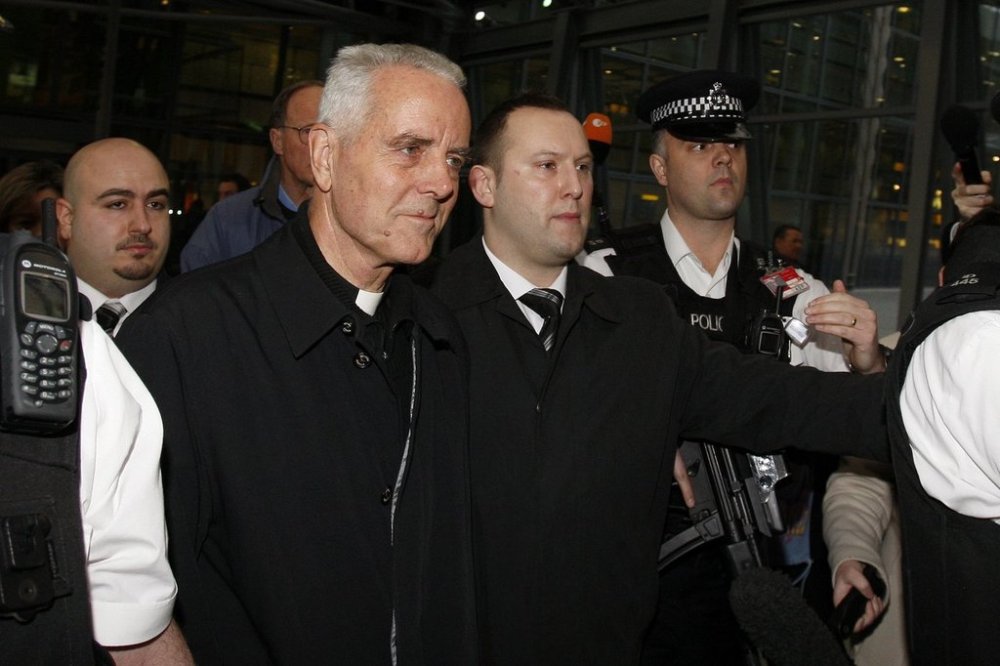
In 1988, the Vatican excommunicated Lefebvre, Williamson and the other bishops, because they were consecrated without papal consent.
First as cardinal and then as pope, Benedict worked to heal the schism and bring the group back under Rome’s wing, fearing the spread of a parallel, pre-Vatican II church. The fear wasn’t unfounded: The society, which is based in Menzingen, Switzerland, boasts six seminaries and dozens of chapels, schools and retreat centers around the globe.
As part of his outreach, Benedict removed the excommunications of Williamson and the surviving bishops in 2009. But an uproar ensued after Williamson said in a television interview that aired on Swiss television just before the pope’s decree was made public that he didn’t believe Jews were killed in gas chambers during World War II.
The scandal was an acute embarrassment for the German-born pope, who later acknowledged mistakes in the Williamson affair and said that a simple internet search would have turned up Williamson’s views.
Williamson later ran afoul of the society itself, which expelled him in 2012 for insubordination. He had ignored a deadline to “declare his submission” to its authority and had called for the society’s superior to resign, the group said at the time.

The following year, a German court fined him for having denied the Holocaust in the 2009 television interview. Holocaust denial is a crime in Germany.
In announcing Williamson’s death, the society said that Williamson had been ordained a priest by Lefebvre in 1976 and had taught in the society’s seminaries in Europe, the U.S. and Argentina. He had also served in a leadership position as second assistant general from 1988-1994.
“Sadly, his path and that of the Society separated many years ago,” the statement said.
___
Associated Press religion coverage receives support through the AP’s collaboration with The Conversation US, with funding from Lilly Endowment Inc. The AP is solely responsible for this content.
The Free Press acknowledges the financial support it receives from members of the city’s faith community, which makes our coverage of religion possible.