

A deadly flight out of Wichita has one of America’s most historic aviation cities reeling
Advertisement
Read this article for free:
or
Already have an account? Log in here »
To continue reading, please subscribe:
Monthly Digital Subscription
$1 per week for 24 weeks*
- Enjoy unlimited reading on winnipegfreepress.com
- Read the E-Edition, our digital replica newspaper
- Access News Break, our award-winning app
- Play interactive puzzles
*Billed as $4.00 plus GST every four weeks. After 24 weeks, price increases to the regular rate of $19.95 plus GST every four weeks. Offer available to new and qualified returning subscribers only. Cancel any time.
Monthly Digital Subscription
$4.99/week*
- Enjoy unlimited reading on winnipegfreepress.com
- Read the E-Edition, our digital replica newspaper
- Access News Break, our award-winning app
- Play interactive puzzles
*Billed as $19.95 plus GST every four weeks. Cancel any time.
To continue reading, please subscribe:
Add Free Press access to your Brandon Sun subscription for only an additional
$1 for the first 4 weeks*
*Your next subscription payment will increase by $1.00 and you will be charged $16.99 plus GST for four weeks. After four weeks, your payment will increase to $23.99 plus GST every four weeks.
Read unlimited articles for free today:
or
Already have an account? Log in here »
Hey there, time traveller!
This article was published 31/01/2025 (421 days ago), so information in it may no longer be current.
WICHITA, Kan. (AP) — When American Eagle Flight 5342 took off from Wichita, the Midwest city with a proud aviation history was glowing from a big moment.
It had just hosted the next generation of Olympic hopefuls at the U.S. Figure Skating Championships, the kind of major sporting event that leaders of the largest city in Kansas had envisioned when they opened a 15,000-seat arena in 2010. For Wichita, which once built many of the nation’s aircraft, the skating showcase was another way of putting the community in America’s heartland on a larger stage.
Then came the horror of learning the flight never made it.
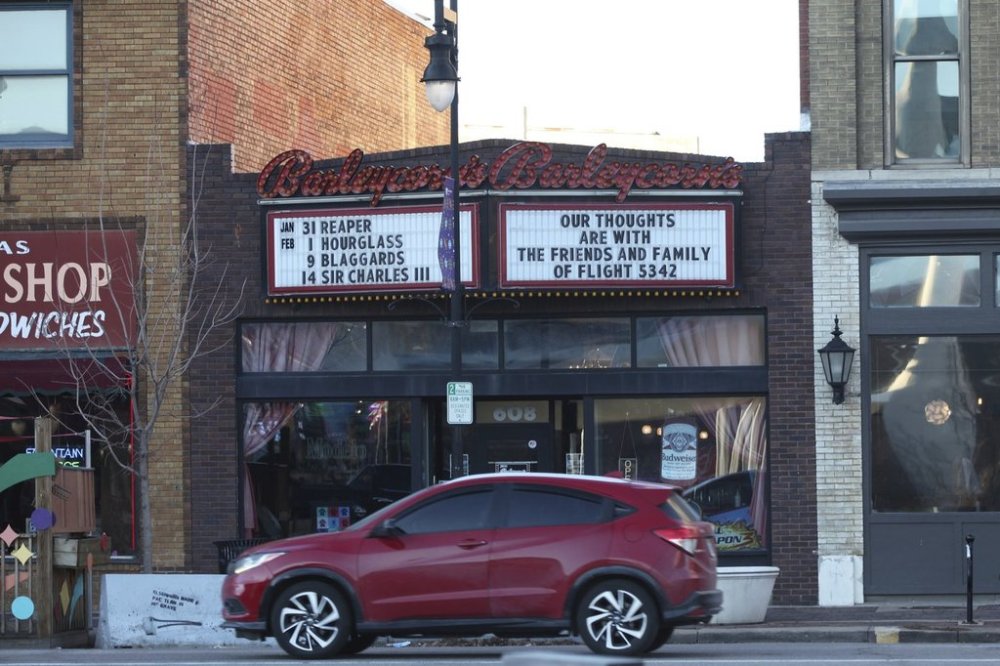
“We were so proud to see these high-level athletes, their families, their friends, fans, coming to our community and sharing their skills and talents so that the whole world could see,” Mayor Lily Wu said. “To end it with this type of tragedy just truly breaks my heart.”
The midair collision Wednesday night between the plane and an Army helicopter in Washington, D.C., has left Wichita grieving. The worst U.S. air disaster in a generation killed 67 people, including young figure skaters who had attended a national development camp in Wichita following the championships. No one survived.
The city of nearly 400,000 residents has deep connections to America’s aviation history and is a regional hub for oil companies, engineers and drillers, riding the industry’s boom-and-bust cycles.
It was unclear how many of the victims may have been Wichita residents. Authorities have not released a list of the passengers, who included hunting buddies, an attorney on a business trip and a college student returning from her grandfather’s funeral.
Following the collision, city and religious leaders held a prayer vigil that turned out hundreds of people who prayed for victims’ families and pledged to provide comfort.
“This unity cannot just stay in sadness. It has to elicit something greater, something brighter, something that can shine forth,” said Rabbi Shmulik Greenberg of Chabad, a Hasidic synagogue and community center in Wichita.
An aircraft hub in the Midwest
Wichita started as a trading post after the American Civil War, had a short life as a cattle drive town and boomed in the 1940s and 1950s, with military and civilian aircraft production.
Passengers moving through security at Dwight D. Eisenhower National Airport, named for the president who grew up in Abilene, first walk past a display describing Wichita as the “Air Capital of the World.”
The industry has a history of more than a century in the area, with storied founders such as Clyde Cessna and Walter and Olive Ann Beech, who gave their names to aircraft companies. During World War II, Boeing made more than 1,700 bombers in Wichita, said Logan Daugherty, curator of the Kansas Aviation Museum.
The industry employs tens of thousands of area residents, who work for major manufactures such as Spirit AeroSystems, as well as a network of more than 350 suppliers, according to an economic development agency called the Greater Wichita Partnership.
The community has had its share of other strivers: The first White Castle restaurant opened here in 1921, beginning one of the first fast-food hamburger chains. Two Wichita State University students opened the first Pizza Hut in 1958. Koch — the energy, agriculture and manufacturing conglomerate with 121,000-plus employees — has its leafy headquarters grounds in the north part of the city.
The city recently celebrated the first anniversary of the start of the single daily commercial American Airlines flight from Wichita to Washington.
The manufacturer of the passenger airline that went down, Bombardier, has its U.S. headquarters in Wichita. Jim Howell, who serves on the local county commission, said the plane had been certified in the city.
“There’s a lot of connections to this plane. There’s a lot of connections to Bombardier as a company,” said Howell, who spent two decades working in flight testing, including a stint with Bombardier in the early 1990s. “We have a lot of employees who work for Bombardier who are still involved in testing and maintaining those types of planes here in Wichita.”
A growing city
Wichita’s population more than doubled between 1940 and 1960 and has since grown steadily and more diverse. The public school system — the largest in the state, educating roughly 11% of all Kansas students — says it has families from more than 100 nations, speaking more than 110 languages and dialects other than English.
It’s also a politically diverse city. Although President Donald Trump has carried Sedgwick County, which includes Wichita, three times, Democratic Gov. Laura Kelly has won it twice.
Rushing to help

The city has mourned other aviation tragedies, including in 1970, when a plane carrying players, coaches and fans of Wichita State University’s football team crashed in Colorado, killing 31 of the 37 people on board.
Following the tragedy in Washington, the city’s nonprofit Wichita Community Foundation almost immediately set up a fund to collect donations for victims’ families, to cover burial expenses and provide mental health or other services. Shelly Prichard, the foundation’s president and CEO, said on the night of the crash they “started having people reach out to us about how they could help.”
Kristin Anneler, who attended the vigil in Wichita following the collision, said she was impressed that people of different faiths and views came together to mourn the victims.
“It’s just a tiny little bite — right? Of the cross section of humanity that we often forget about because we run in our own circles and we think our own thoughts,” she said.
___ Hollingsworth reported from Mission, Kansas.
The Free Press acknowledges the financial support it receives from members of the city’s faith community, which makes our coverage of religion possible.