After Columbia arrests, international college students fall silent
Advertisement
Read this article for free:
or
Already have an account? Log in here »
To continue reading, please subscribe:

Digital Subscription
One year of digital access for only $205*
- Enjoy unlimited reading on winnipegfreepress.com
- Read the E-Edition, our digital replica newspaper
- Access News Break, our award-winning app
- Play interactive puzzles
*First annual payment billed as $205.00 + GST for one year. This annual subscription will automatically renew at $233.00 + GST every 52 weeks (10% off the regular annual price of $259.35). Offer available to new and qualified returning subscribers only. Cancel any time.
To continue reading, please subscribe:
Add Free Press access to your Brandon Sun subscription for only an additional
$1 for the first 4 weeks*
- Enjoy unlimited reading on winnipegfreepress.com
- Read the E-Edition, our digital replica newspaper
- Access News Break, our award-winning app
- Play interactive puzzles
*Your next Brandon Sun subscription payment will increase by $1.00 and you will be charged $17.95 plus GST for four weeks. After four weeks, your payment will increase to $24.95 plus GST every four weeks.
Read unlimited articles for free today:
or
Already have an account? Log in here »
Hey there, time traveller!
This article was published 15/03/2025 (573 days ago), so information in it may no longer be current.
In the span of a week, a hush has descended on higher education in the United States.
International students and faculty have watched the growing crackdown on pro-Palestinian protesters at Columbia University with apprehension. Some say they are familiar with government crackdowns but never expected them on American college campuses.
The elite New York City university has been the focus of the Trump administration’s effort to deport foreigners who took part in pro-Palestinian demonstrations at colleges last year.
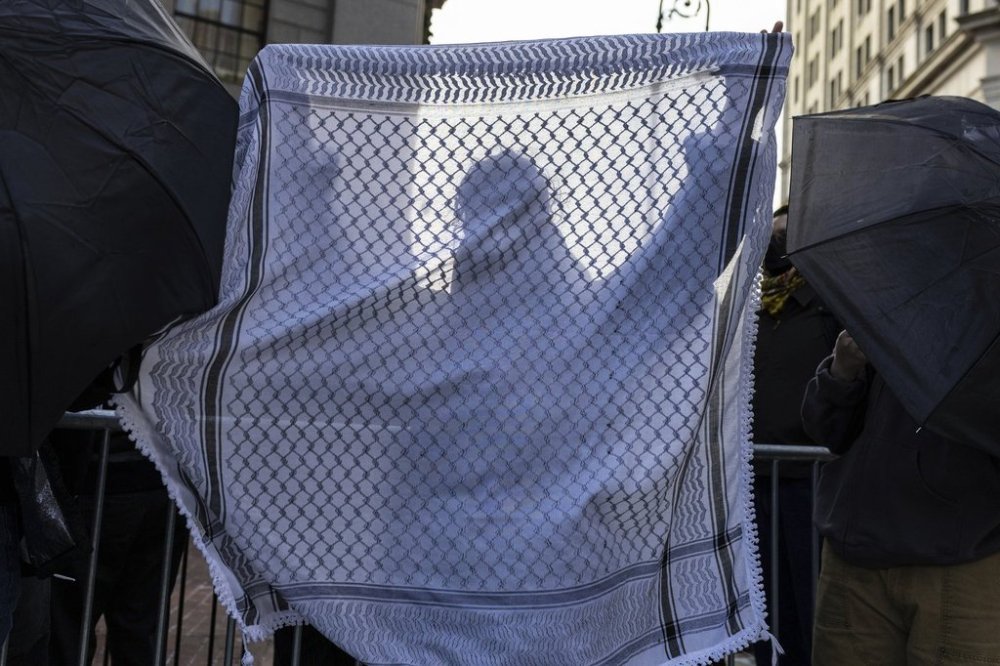
Federal immigration agents have arrested two foreigners — one of them a student — who protested last year at Columbia. They’ve revoked the visa of another student, who fled the U.S. this week. Department of Homeland Security agents also searched the on-campus residences of two Columbia students on Thursday but did not make any arrests there.
GOP officials have warned it’s just the beginning, saying more student visas are expected to be revoked in the coming days.
Columbia’s Graduate School of Journalism issued a statement reporting “an alarming chill” among its foreign students in the past week.
“Many of our international students have felt afraid to come to classes and to events on campus,” said the statement signed by “The Faculty of Columbia Journalism School.”
It added: “They are right to be worried.”
Alarm at campuses across the country
International students and faculty across the U.S. say they feel afraid to voice opinions or stand out on campus for fear of getting kicked out of the country.
“Green-card-holding faculty members involved in any kind of advocacy that might be construed as not welcome by the Trump administration are absolutely terrified of the implications for their immigration status,” said Veena Dubal, a law professor at the University of California, Irvine.
Dubal, who is also general counsel for the American Association of University Professors, says some international faculty are now shying away from discourse, debate, scholarly research and publishing articles in peer-reviewed journals.
“We are literally not hearing their voices. There is a silencing happening that has a huge impact on the vibrancy of higher education,” Dubal said. “People are very, very scared.”
The first arrest
The first publicly known arrest occurred last Saturday, when federal immigration agents arrested Mahmoud Khalil, a prominent Palestinian activist and outspoken graduate student, in the lobby of his apartment building near the Columbia campus.
Khalil has become the face of President Donald Trump’s drive to punish what he calls antisemitic and anti-American protests that swept U.S. campuses last year. Khalil, a legal U.S. resident with a green card, is being held in a federal detention complex in Louisiana.
Students and faculty who participated in the protests at Columbia have insisted criticizing Israel and advocating for Palestinian rights isn’t antisemitic. Some Jewish students and faculty say the anti-Israel rhetoric made them feel unsafe.
Civil rights advocates say the detention of Khalil is an assault on free speech. But the ongoing arrests send a wider message that disagreeing with the Trump administration could get you kicked out of the country, said Brian Hauss, a senior staff attorney at the American Civil Liberties Union.
“If the administration can do this to Mr. Khalil because of the speech about Palestine, it can do it to any non-U.S. citizen who takes a position on hot-button global issues, including the war between Russia and Ukraine, the tariffs imposed against U.S. allies or the rise of far-right political parties in Europe,” he said.
That worry has spread outside New York.
A Bangladeshi student at Louisiana State University, who agreed to speak only on condition of anonymity for fear of being targeted by authorities, said she has stopped posting about anything political on social media since the first arrest at Columbia. She fears losing her green card.
“I feel like it’s not safe for me to share those things anymore because I have a fear that a quote-unquote ‘authoritarian regime’ is lurking over social media posts,” the student said. When she lived in Bangladesh, she said, people could be arrested for posting dissent on social media. “What I fear is a similar situation in the United States.”
Advice from colleges and universities
Some schools have been advising international students to be cautious of what they say publicly and to watch what they say online. Several international students on a variety of college campuses said they preferred not to speak with a reporter out of concern for their immigration status.
Administrators at Columbia’s Graduate School of Journalism have warned students who are not U.S. citizens about their vulnerability to arrest or deportation.
“Nobody can protect you, these are dangerous times,” the school’s dean, Jelani Cobb, said in a post Thursday on Bluesky explaining the comment. “I went on to say that I would do everything in my power to defend our journalists and their right to report but that none of us had the capacity to stop DHS from jeopardizing their safety.”
At the University of California, Davis, the Global Affairs Program has updated its website with guidance on the First Amendment and advice on free speech for non-U.S. citizens.
“While international students and scholars have broad rights to freedom of speech and lawful assembly, please be aware that being arrested or detained by law enforcement may trigger current and/or future immigration consequences,” the school says on its website. “Each person should take appropriate care and utilize their best judgment.”
Escalations after Khalil’s arrest
Immigration authorities’ activities at Columbia quickly escalated this week.

Leqaa Kordia, a Palestinian from the West Bank, was arrested by immigration officers for overstaying her student visa, the Department of Homeland Security said Friday. The former student’s visa was terminated in January 2022 for “lack of attendance,” the department said. She was previously arrested for her involvement in protests at Columbia in April 2024, the agency added.
The Trump administration also revoked the visa of Ranjani Srinivasan, an Indian citizen and doctoral student at Columbia University, for allegedly “advocating for violence and terrorism.” Srinivasan opted to “self-deport” Tuesday, five days after her visa was revoked, the department said.
The president has warned the arrest and attempted deportation of Khalil will be the “first of many.” Secretary of State Marco Rubio told reporters Friday that more student visas were likely to be revoked in the coming days.
___
The Associated Press’ education coverage receives financial support from multiple private foundations. AP is solely responsible for all content. Find AP’s standards for working with philanthropies, a list of supporters and funded coverage areas at AP.org.
The Free Press acknowledges the financial support it receives from members of the city’s faith community, which makes our coverage of religion possible.