‘We don’t get to discriminate’: How a Raleigh ministry decided to help resettle Afrikaners
Advertisement
Read this article for free:
or
Already have an account? Log in here »
To continue reading, please subscribe:
Digital Subscription
One year of digital access for only $1.44 a week*
- Enjoy unlimited reading on winnipegfreepress.com
- Read the E-Edition, our digital replica newspaper
- Access News Break, our award-winning app
- Play interactive puzzles
*Billed as $5.77 plus GST every four weeks. After 52 weeks, price increases to the regular rate of $19.95 plus GST every four weeks. Offer available to new and qualified returning subscribers only. Cancel any time.
To continue reading, please subscribe:
Add Free Press access to your Brandon Sun subscription for only an additional
$1 for the first 4 weeks*
- Enjoy unlimited reading on winnipegfreepress.com
- Read the E-Edition, our digital replica newspaper
- Access News Break, our award-winning app
- Play interactive puzzles
*Your next Brandon Sun subscription payment will increase by $1.00 and you will be charged $17.95 plus GST for four weeks. After four weeks, your payment will increase to $24.95 plus GST every four weeks.
Read unlimited articles for free today:
or
Already have an account? Log in here »
Hey there, time traveller!
This article was published 23/05/2025 (518 days ago), so information in it may no longer be current.
RALEIGH, N.C. (RNS) — The 12×30-foot storage unit in a Raleigh, North Carolina, suburb is crammed full of chairs, tables, mattresses, lamps, pots and pans.
Most of its contents will soon be hauled off to two apartments that Welcome House Raleigh is furnishing for three newly arrived refugees. It’s a job the ministry, which is a project of the Cooperative Baptist Fellowship of North Carolina, has handled countless times on behalf of newly arrived refugees from such places as Afghanistan, the Democratic Republic of the Congo, Syria and Venezuela.
But these two apartments are going to three Afrikaners — whose status as refugees is, according to many faith-based groups and others, highly controversial.
___
This content is written and produced by Religion News Service and distributed by The Associated Press. RNS and AP partner on some religion news content. RNS is solely responsible for this story.
___
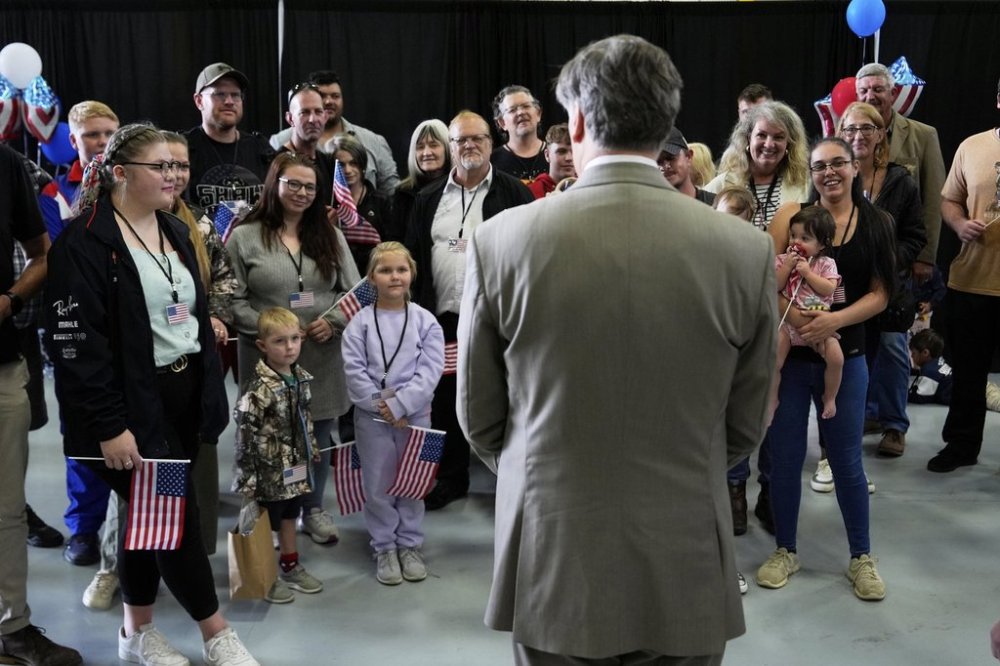
Last week, Marc Wyatt, director of Welcome House Raleigh, received a call from the North Carolina field office of the U.S. Committee for Refugees and Immigrants asking if he could help furnish the apartments for the refugees, among the 59 Afrikaners who arrived in the U.S. last week from South Africa, he told RNS. It was a common request for the ministry that partners with refugee resettlement agencies to provide temporary housing and furniture for people in need.
And at the same time, the request was extremely challenging. After thinking about it, consulting with the Welcome House network director and asking for feedback from ministry volunteers, Wyatt said yes.
“Our position is that however morally and ethically charged it is, our mandate is to help welcome and love people,” said Wyatt, a retired Cooperative Baptist Fellowship missionary who now works for CBF North Carolina. “Our holy book says God loves people. We don’t get to discriminate.”
He recognized that Afrikaners are part of a white ethnic minority that created and led South Africa’s brutal segregationist policies known as apartheid for nearly 50 years. That policy, which included denying the country’s Black majority rights to voting, housing, education and land, ended in 1994, when the country elected Nelson Mandela in its first free presidential election.
Like Wyatt and Welcome House, many faith-based groups are now considering whether to help the government resettle Afrikaners after the Trump administration shut down refugee resettlement for all others.
Last week, the Episcopal Church chose to end its refugee resettlement partnership with the U.S. government rather than resettle Afrikaners. Presiding Bishop Sean Rowe said his church’s commitment to racial justice and reconciliation, and its long relationship with the late Anglican Archbishop Desmond Tutu made it impossible for the church to work with the government on resettling Afrikaners.
In January, in one of his first executive orders, President Donald Trump shuttered the decades-old refugee program, which brings people to the U.S. who are displaced by war, natural disasters or persecution. The decision left thousands of refugees, many living in camps for years and having undergone a rigorous vetting process, stranded.
But then Trump directed the government to fast-track the group of Afrikaners for resettlement, saying these white farmers in South Africa are being killed in a genocide, a baseless claim. The order left many refugee advocates who have worked for years to resettle vulnerable people enraged.
“Refugees sit in camps for 10, 20 years, but if you’re a white South African Afrikaner, then suddenly you can make it through in three months?” asked the Rev. Randy Carter, director of the Welcome Network and a pastor of a CBF church. “There’s a lot of words I’d like to attach to that, but I don’t want any of those printed.”
Carter said he respects and honors the Episcopal Church’s decision not to work with the government on resettling the Afrikaners, even if his network has taken a different approach.
“The call to welcome is not always easy,” Carter said. “Sometimes it’s hard.”
At the same time, he said, it’s important resettlement volunteers keep in mind that the ministry opposes apartheid and racism, both in the U.S. and abroad, and is committed to repentance and repair.
The North Carolina field office for the USCRI resettlement group also recognized how fraught this particular resettlement is for its faith-based partners.
“In our communication with them, we said, ‘Look, we know this is not a normal issue. You or your constituencies may have reservations, and we understand that. That should not affect our partnership,’” said Omer Omer, the North Carolina field office director for USCRI. “If you want to participate, welcome. If not, we understand.”

Wyatt got nearly two dozen comments on his Facebook post in which he announced his decision to work with the refugee agency in resettling the Afrikaners. Nearly all wrote in support of his decision. “I’m up sleepless pondering this,” acknowledged one person. “Complicated, but the right call,” wrote another.
USCRI did not release the names of the three Afrikaners who chose to settle in Raleigh, a couple and a single individual. Other Afrikaners chose to be resettled in Idaho, Iowa, New York and Texas.
Secretary of State Marco Rubio suggested last week that more Afrikaners are on the way. The Trump administration argues white South Africans are being discriminated against by the country’s government, pointing to a law potentially allowing the government to seize privately held land under certain conditions. Since the end of apartheid, the South African government has made efforts to level the economic imbalance and redistribute land to Black South Africans that had been seized by the former colonial and apartheid governments.
Wyatt, who has been running the Welcome House Raleigh ministry for 10 years, providing temporary housing and a furniture bank for refugees, and now asylum seekers, said he has settled the matter in his mind.
“My wife and I have come to the position that if it’s not a full welcome, just like we would with anybody else, then it’s not a welcome,” he said. “If we don’t actually seek to include them into our lives like we would anybody else, then we’re withholding something and that’s not how we understand our holy book.”
The Free Press acknowledges the financial support it receives from members of the city’s faith community, which makes our coverage of religion possible.