

Muslims look forward to the annual Eid feast. Many Africans are now struggling to afford it
Advertisement
Read this article for free:
or
Already have an account? Log in here »
To continue reading, please subscribe:
Monthly Digital Subscription
$1 per week for 24 weeks*
- Enjoy unlimited reading on winnipegfreepress.com
- Read the E-Edition, our digital replica newspaper
- Access News Break, our award-winning app
- Play interactive puzzles
*Billed as $4.00 plus GST every four weeks. After 24 weeks, price increases to the regular rate of $19.95 plus GST every four weeks. Offer available to new and qualified returning subscribers only. Cancel any time.
Monthly Digital Subscription
$4.99/week*
- Enjoy unlimited reading on winnipegfreepress.com
- Read the E-Edition, our digital replica newspaper
- Access News Break, our award-winning app
- Play interactive puzzles
*Billed as $19.95 plus GST every four weeks. Cancel any time.
To continue reading, please subscribe:
Add Free Press access to your Brandon Sun subscription for only an additional
$1 for the first 4 weeks*
*Your next subscription payment will increase by $1.00 and you will be charged $16.99 plus GST for four weeks. After four weeks, your payment will increase to $23.99 plus GST every four weeks.
Read unlimited articles for free today:
or
Already have an account? Log in here »
Hey there, time traveller!
This article was published 05/06/2025 (295 days ago), so information in it may no longer be current.
KARA, Nigeria (AP) — Muslim families across west Africa are grappling with the steep cost of rams for the traditional sacrifice that is central to the celebration of Eid al-Adha, a struggle that mirrors the region’s deepening economic and humanitarian crises.
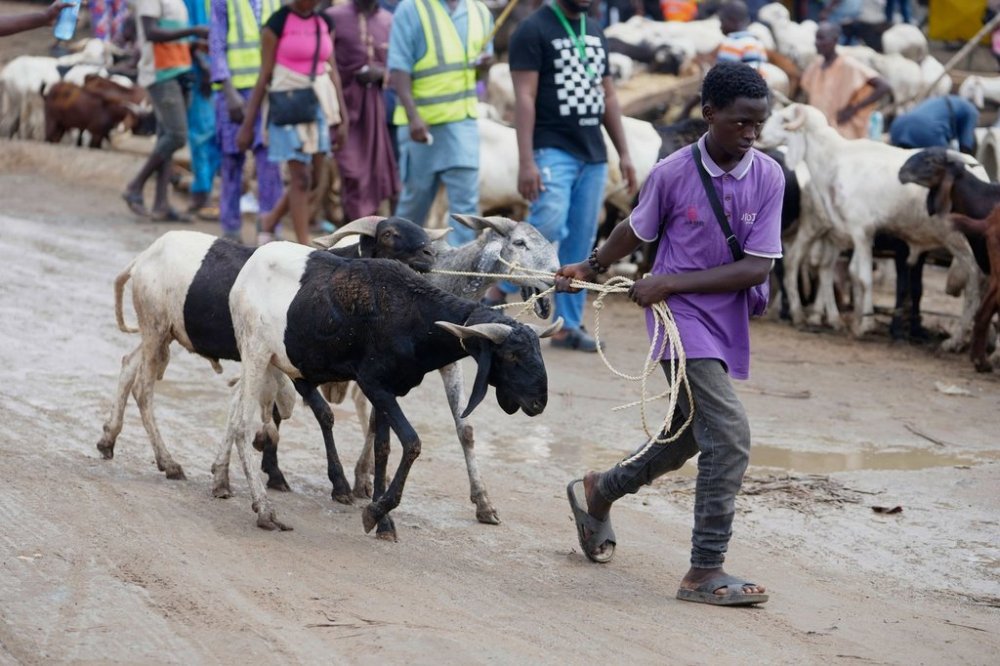
At the Kara livestock market in southern Nigeria’s Ogun state, ram sellers and buyers are in a bind. Prices have at least doubled compared with last year, slowing sales for what is usually a busy market packed in the lead-up to Eid.
“The ram that I bought for 200,000 naira ($127) last year, this year we started negotiating from 600,000 naira ($380),” said Abiodun Akinyoye, who came to buy meat for the festival.
The U.N. World Food Programme said last month that over 36 million people are struggling to meet basic food and nutrition needs in West Africa and Central Africa, a number expected to rise to 52 million during this year’s lean season from June to August.
More than 10 million of the most vulnerable people across the region have been uprooted by conflict, the WFP said, added to other major drivers like food inflation and climate conditions like extreme weather.
“We are at a tipping point and millions of lives are at stake,” said Margot van der Velden, WFP’s regional director.
With a majority of Muslim populations in most of the worst-hit countries, families who previously bought rams to take part in the annual joyful festival are finding it difficult to sustain that lifestyle with some spending significantly more of their disposable income on trying to fulfill the religious rites.
“Everyone is suffering,” Nigerian ram seller Jaji Kaligini said as he lamented the cost-of-living crisis fueled by President Bola Tinubu’s economic policies, such as a sudden removal of subsidies. “We don’t know what to do.”
In countries like Niger, where growing insecurity have worsened the living conditions, the military government banned ram exports this year to stabilize local supply. While that has helped availability, it has tightened supplies in neighboring Nigeria and Benin.
“There’s enough livestock (in Niger),” said Hasoumi Daouda, who was at a local market to buy ram. “But it’s the financial crisis that makes them too expensive to buy.”
Even in predominantly Muslim countries like Morocco, its rulers in February urged citizens to forgo buying sheep to be sacrificed during this year’s Eid al-Adha amid record inflation and climate change.

The challenge of hardship is also raising the question of how obligatory the ram sacrifice is for Muslims. The tradition is not mandatory for those who “genuinely cannot afford it,” Bukola Hameed, a Nigerian Islamic scholar, said.
However, those who can afford it also have “a duty to share their meat with poorer neighbors,” another Islamic scholar, Mikail Adekunle, added.
____
Adebayo reported from Abuja, Nigeria ____
Follow AP’s Africa coverage at: https://apnews.com/hub/africa
The Free Press acknowledges the financial support it receives from members of the city’s faith community, which makes our coverage of religion possible.