Picking the new pontiff
Former Vatican correspondent’s book explores the choosing of Pope Leo XIV

Advertisement
Read this article for free:
or
Already have an account? Log in here »
To continue reading, please subscribe:

Digital Subscription
One year of digital access for only $205*
- Enjoy unlimited reading on winnipegfreepress.com
- Read the E-Edition, our digital replica newspaper
- Access News Break, our award-winning app
- Play interactive puzzles
*First annual payment billed as $205.00 + GST for one year. This annual subscription will automatically renew at $233.00 + GST every 52 weeks (10% off the regular annual price of $259.35). Offer available to new and qualified returning subscribers only. Cancel any time.
To continue reading, please subscribe:
Add Free Press access to your Brandon Sun subscription for only an additional
$1 for the first 4 weeks*
- Enjoy unlimited reading on winnipegfreepress.com
- Read the E-Edition, our digital replica newspaper
- Access News Break, our award-winning app
- Play interactive puzzles
*Your next Brandon Sun subscription payment will increase by $1.00 and you will be charged $17.95 plus GST for four weeks. After four weeks, your payment will increase to $24.95 plus GST every four weeks.
Read unlimited articles for free today:
or
Already have an account? Log in here »
Hey there, time traveller!
This article was published 26/07/2025 (408 days ago), so information in it may no longer be current.
The goal of a Vatican conclave is to choose a new pope. That’s what happened in May when Robert Prevost was chosen to become Pope Leo XIV.
But a conclave is also a referendum on the previous pope and his legacy — whether to follow in the same direction or change course. That’s the view of Christopher White, a former Vatican correspondent for the National Catholic Reporter and author of the new book Pope Leo XIV: Inside the Conclave and the Dawn of a New Papacy (Loyola Press).
Although every conclave is a referendum, the stakes were much higher this time, White said in an interview. When the 133 cardinals gathered in the Sistine Chapel at the Vatican on May 7, the question they were answering when selecting a new pope was whether to follow the vision of Pope Francis for a more open, inclusive and welcoming church or to repudiate it in favour of an emphasis on tradition and doctrine.
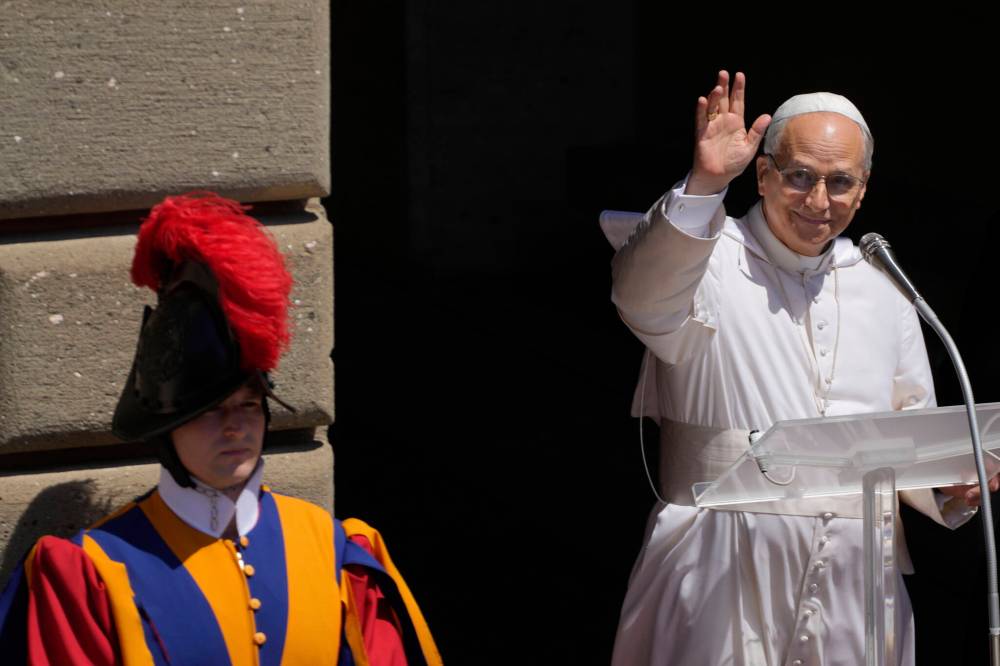
Gregorio Borgia / The Associatecd Press files
Pope Leo XIV waves to faithful in the square in front of the Apostolic Palace for the noon Angelus prayer in Castel Gandolfo, Italy, last Sunday.
By choosing Prevost as their next leader, the cardinals clearly indicated they wanted the church to keep going in that direction. But with one difference; not as fast.
While wanting to keep the changes made by Francis alive, their vote showed a desire for a pope who would be “more cautious and careful in bringing it about,” White said. At the same time, they also wanted someone who could manage those changes better than Francis. They found that person in Prevost.
Francis, White said, was “not much of an administrator. He didn’t think deeply about how to get to the next step or to bring the Vatican officials on board.”
Pope Leo, on the other hand, is a manager and more systematic. “He will be able to take what Francis started and create a blueprint for change, a game plan,” said White.
While Leo’s election was welcomed by most, it wasn’t welcomed by all. Before the conclave, White said there was a small, extremely wealthy and influential group of American Catholics who gathered in Rome to try to sway the cardinals to vote for someone who would take a harder line on doctrine and against inclusiveness, bringing an end to Francis’s vision for a more open and synodal church.
Although a minority, they had a slick and well-financed marketing and communications plan “that allowed their voices to be amplified far beyond their actual numbers,” White said. Their messaging suggested the church had been severely divided by Francis.
But their hopes were quashed when the smoke came out of the chimney on May 8. Their preferred candidate, Cardinal Peter Erdo of Hungary, did not emerge as the successor to Francis. He had been viewed as the top choice for conservatives in the conclave.
For White, it wasn’t just the selection of Prevost that showed the church was united in keeping with Francis’s vision; it was how quickly it happened, needing just four rounds of voting — dismissing the notion that the church was deeply divided.
According to White, the election of Pope Leo was a sign that the Roman Catholic Church wanted to be “open to all.” It was an affirmation of Francis’s famous mantra about who was welcome in the church, delivered at the 2023 World Youth Day in Portugal: “Todos, todos, todos.” (“Everyone, everyone, everyone.”)
Some may wonder about publishing a book so soon after Leo’s election. White acknowledged it’s only the first word on Leo.
“Deeper books will come later, this is just a snapshot,” he said, adding his goal was to “pull back the curtain” on the process of how the American came to be head of the 1.4 billion member church, what it could mean for the future, and also a reflection on the papacy of Francis.
Written with a broad audience in mind, the book is accessible to Catholics and non-Catholics alike, with White explaining the intricate and sometimes-mysterious world of the Vatican. It also shows the benefits of his four years as a Vatican correspondent through his many conversations with cardinals, Vatican officials and, before he was elected, Pope Leo himself.

Through the book, readers get a first-hand portrait of the new pope — someone quieter and more introverted than Francis.
While Leo’s papacy “may look boring from the outside, he may be more effective in the long term,” said White, adding that will make it tougher for the media since he likely won’t be giving surprising soundbites to reporters.
Looking ahead, White said Leo will have many challenges. This includes the ongoing debates around women in church leadership and LGBTTQ+ inclusion — reports on both those topics commissioned by Francis are due to land on Leo’s desk this year. White thinks he will be open to more involvement by women, and won’t backtrack on how Francis opened doors for blessing members of same-sex unions.
Overall, White, who is Roman Catholic, is optimistic that Leo will continue what Francis started. “The church is at its best when it is open and welcoming,” he said. “I will personally be rooting for him.”
faith@freepress.mb.ca
The Free Press is committed to covering faith in Manitoba through our Religion in the News project. This reporting continues because readers like you step forward to fund it.
Donate now to support our reporting on religion.
Your donation is eligible for a charitable tax receipt.
BECOME A FAITH JOURNALISM SUPPORTER
Our newsroom depends on a growing audience of readers to power our journalism. If you are not a paid reader, please consider becoming a subscriber.
Our newsroom depends on its audience of readers to power our journalism. Thank you for your support.
The Free Press is committed to covering faith in Manitoba through our Religion in the News project. This reporting continues because readers like you step forward to fund it.
Donate now to support our reporting on religion.
Your donation is eligible for a charitable tax receipt.
BECOME A FAITH JOURNALISM SUPPORTER
Our newsroom depends on a growing audience of readers to power our journalism. If you are not a paid reader, please consider becoming a subscriber.
Our newsroom depends on its audience of readers to power our journalism. Thank you for your support.
Advertisement Advertise With Us
Advertisement Advertise With Us
The Free Press acknowledges the financial support it receives from members of the city’s faith community, which makes our coverage of religion possible.