Canada Post issues Hanukkah stamp
A reminder that we live in a country made up of diverse people, cultures, religions and heritages
Advertisement
Read this article for free:
or
Already have an account? Log in here »
To continue reading, please subscribe:

Digital Subscription
One year of digital access for only $205*
- Enjoy unlimited reading on winnipegfreepress.com
- Read the E-Edition, our digital replica newspaper
- Access News Break, our award-winning app
- Play interactive puzzles
*First annual payment billed as $205.00 + GST for one year. This annual subscription will automatically renew at $233.00 + GST every 52 weeks (10% off the regular annual price of $259.35). Offer available to new and qualified returning subscribers only. Cancel any time.
To continue reading, please subscribe:
Add Free Press access to your Brandon Sun subscription for only an additional
$1 for the first 4 weeks*
- Enjoy unlimited reading on winnipegfreepress.com
- Read the E-Edition, our digital replica newspaper
- Access News Break, our award-winning app
- Play interactive puzzles
*Your next Brandon Sun subscription payment will increase by $1.00 and you will be charged $17.95 plus GST for four weeks. After four weeks, your payment will increase to $24.95 plus GST every four weeks.
Read unlimited articles for free today:
or
Already have an account? Log in here »
Hey there, time traveller!
This article was published 13/12/2025 (297 days ago), so information in it may no longer be current.
When Canada Post issued its first ever Christmas stamp in 1964, the most recent census data at the time indicated that 89 per cent of the country’s population identified as Christian.
By 2017, that figure had changed significantly, with just over half of Canadians, according to an Ipsos poll on Canadian Religion, Faith and Spirituality, indicating that they belonged to the Christian faith.
The time had come, Canada Post realized, to recognize the religious holidays and celebrations of other faiths and cultures. That year, it launched its multicultural holiday stamp program, issuing stamps to commemorate the Muslim holiday of Eid al-Fitr, the Hindu holiday of Diwali and the Jewish holiday of Hanukkah. That program has continued on a regular basis ever since.
Jacquelyn Martin / The Associated Press files
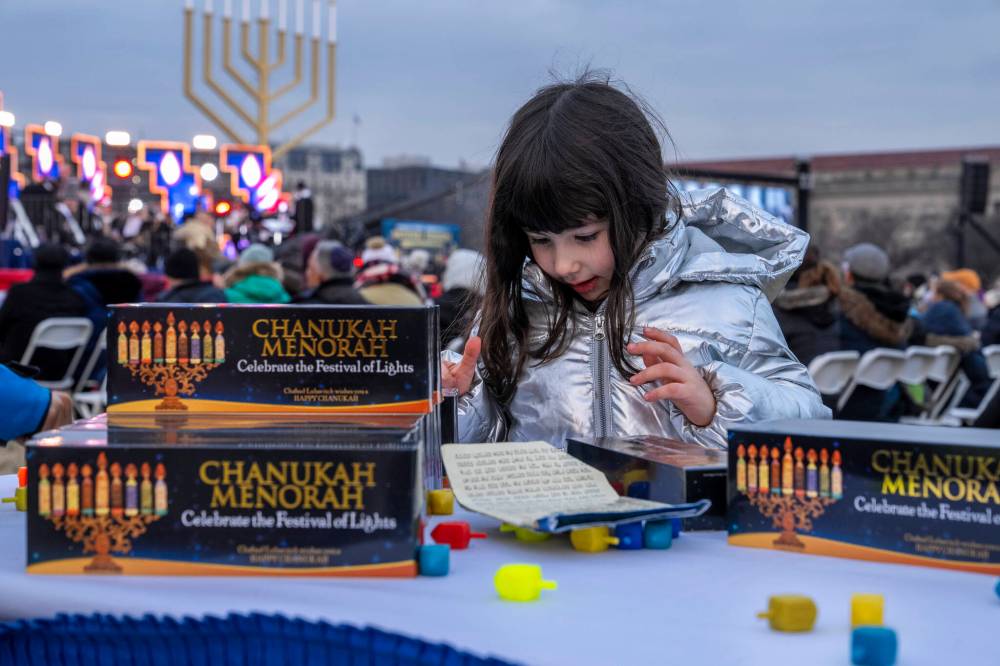
A hanukkiyah is an eight-branched candelabrum or menorah that is lit every night of the eight-day holiday.
“Canada is among a number of countries that issues stamps commemorating religious holidays celebrated by a minority population,” says David Hartwig, an associate editor with Linn’s Stamp News, a weekly stamp magazine that has been publishing for almost 100 years.
“Recognizing a country’s religious and cultural diversity through stamps is one way postal agencies acknowledge the range of faiths, customs and celebrations observed by citizens in the country. Highlighting minority communities and their heritage can promote a sense of inclusion and shared identity, while also drawing attention to the resilience and history of those groups.”
This year’s Canada Post Hanukkah stamp is the eighth one to be issued by the Crown corporation. It was released on Nov. 13, just a few weeks in advance of the holiday, which begins this year at sundown on Dec. 14. The image on the stamp is of a more than century old brass hanukkiyah, currently on display at the Aron Museum in Montreal.
A hanukkiyah is an eight-branched candelabrum or menorah that is lit every night of the eight day holiday. As previous Canada Post stamps have illustrated, hanukkiyahs come in myriad shapes, styles, materials and themes. All of these various hanukkiyahs are considered kosher for the holiday as long as they have eight candle holders aligned in a straight row and a central, taller candle holder set apart from the others for the shamash. The shamash is the servant candle used to light the other candles.
Hanukkah, also called the Festival of Lights, is a celebration of religious freedom. It commemorates the second century BCE victory of a group of Jewish rebels known as the Maccabees over the Syrian-Greek Emperor Antiochus IV Epiphanes’s forced Hellenism and outlawing of Jewish religious practice.
According to the Book of Maccabees, when the rebels successfully reasserted their religious freedom and regained control of Jerusalem, they immediately sought to rededicate their defiled Jewish temple, the Beit HaMikdash. Searching desperately for the sanctified lamp oil used to light the temple’s menorah, the Maccabees only managed to locate a single vial of this special oil, enough to keep the flame lit for one day.
Miraculously, that single vial of oil kept the flame alit for eight days instead, allowing time for new oil to be collected and consecrated.
Today’s celebration of Hanukkah stems from that ancient narrative.
The festival, which falls during the darkest time of the year in Canada, is widely celebrated with the singing of joyful songs that recount the miracle of the lights, the consumption of festive foods cooked in oil, family and community parties and the recitation of special blessings that accompany the lighting of the candles. The candle lighting, however, is the central ritual of the holiday.
The candle light serves as a reminder of the strength and courage of the Maccabees, the resilience of the Jewish religion, and the historical ties of the Jewish people to Jerusalem — all factors that are reflected in the new Canada Post holiday stamp. The hanukkiyah on the stamp is adorned with a Magen David and a crown which, according to the Canada Post press release, “symbolizes the Torah and the return of Jewish kingship after Jewish fighters reclaimed Jerusalem from foreign rule.”

It also is adorned with two lions, universally representing strength and courage and specifically referring to King Solomon and to the ancient Tribe of Judah.
Like all of Canada Post’s multicultural stamps, the 2025 Hanukkah stamp also serves another purpose. It reminds Canadians that they live in a country made up of diverse people, cultures, religions and heritages, and it is both beneficial and imperative to recognize, respect and try to understand that diversity.
“Canada’s stamp program places emphasis on recognizing the role of various communities to the country’s history,” Hartwig explains.
“Stamps don’t define a national identity, but they do reflect it. Because each stamp issue captures subjects a country chooses to highlight at a particular moment, stamps form a visual record of what mattered publicly at the time. Over time, they create a visual record that can contribute to how a nation presents itself and how it’s remembered.”
swchisvin@gmail.com
The Free Press is committed to covering faith in Manitoba through our Religion in the News project. This reporting continues because readers like you step forward to fund it.
Donate now to support our reporting on religion.
Your donation is eligible for a charitable tax receipt.
BECOME A FAITH JOURNALISM SUPPORTER
The Free Press is committed to covering faith in Manitoba through our Religion in the News project. This reporting continues because readers like you step forward to fund it.
Donate now to support our reporting on religion.
Your donation is eligible for a charitable tax receipt.
BECOME A FAITH JOURNALISM SUPPORTER

Advertisement Advertise With Us
Advertisement Advertise With Us
The Free Press acknowledges the financial support it receives from members of the city’s faith community, which makes our coverage of religion possible.