

Final pilgrims cross Holy Door as Vatican claims Jubilee success with 33 million visitors
Advertisement
Read this article for free:
or
Already have an account? Log in here »
To continue reading, please subscribe:
Monthly Digital Subscription
$1 per week for 24 weeks*
- Enjoy unlimited reading on winnipegfreepress.com
- Read the E-Edition, our digital replica newspaper
- Access News Break, our award-winning app
- Play interactive puzzles
*Billed as $4.00 plus GST every four weeks. After 24 weeks, price increases to the regular rate of $19.95 plus GST every four weeks. Offer available to new and qualified returning subscribers only. Cancel any time.
Monthly Digital Subscription
$4.99/week*
- Enjoy unlimited reading on winnipegfreepress.com
- Read the E-Edition, our digital replica newspaper
- Access News Break, our award-winning app
- Play interactive puzzles
*Billed as $19.95 plus GST every four weeks. Cancel any time.
To continue reading, please subscribe:
Add Free Press access to your Brandon Sun subscription for only an additional
$1 for the first 4 weeks*
*Your next subscription payment will increase by $1.00 and you will be charged $16.99 plus GST for four weeks. After four weeks, your payment will increase to $23.99 plus GST every four weeks.
Read unlimited articles for free today:
or
Already have an account? Log in here »
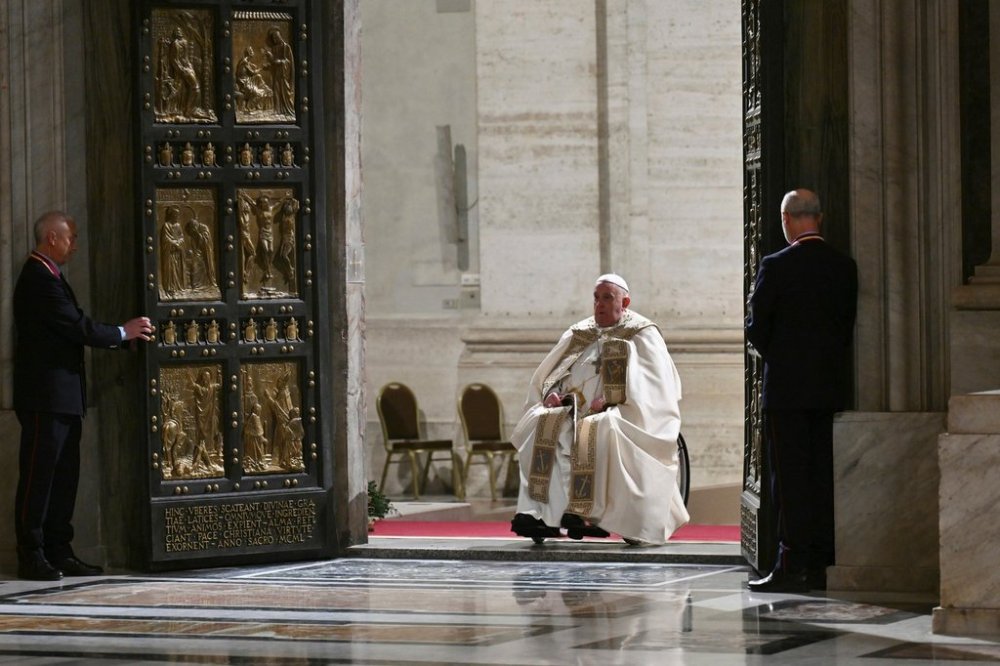
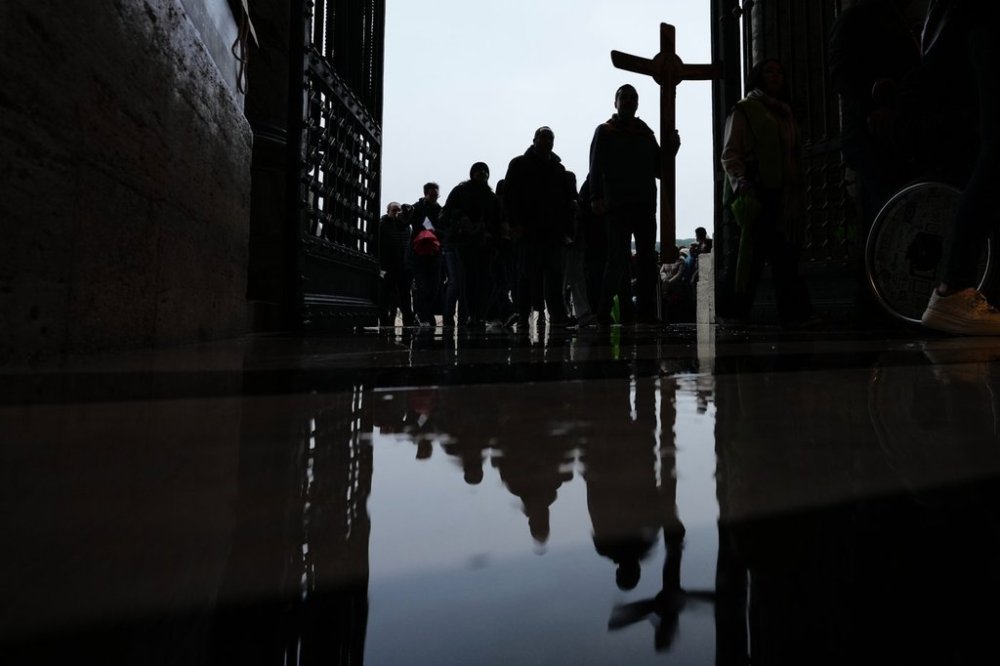
VATICAN CITY (AP) — The final pilgrims of the 2025 Holy Year passed through the Holy Door of St. Peter’s Basilica late Monday, as the Vatican claimed success after more than 33 million people participated in this the rarest of Jubilees: opened by one pope and closed by another.
Pope Leo XIV on Tuesday will officially close out the Holy Year by shutting the basilica’s Holy Door, capping a dizzying year of special audiences, Masses and meetings that dominated his first months as pope and in many ways put his own agenda on hold.
For the Vatican, a Holy Year is a centuries-old tradition of the faithful making pilgrimages to Rome every 25 years to visit the tombs of Saints Peter and Paul and receive indulgences for the forgiveness of their sins if they pass through the Holy Door.
For Rome, it’s a chance to take advantage of some 4 billion euros ($4.3 billion) in public funds to carry out long-delayed projects to lift the city out of years of neglect and bring it up to modern, European standards.
The last pilgrims to get through
Among the last to cross the threshold of St. Peter’s was Natalie Turner, a public defender from Birmingham, England who was pushed in a wheelchair along the pilgrim route, across cobblestones and up ramps, by her son, Philip.
Turner, who needs a wheelchair because of her severe arthritis, said she was thrilled to make it through at the last minute and said she believes it will give her and her son “special graces and blessings.”
She said the trip to the Vatican, her first, “is a great way of grounding me, and helping me to realize that as bad as those things are that I see, God has it. He is in control, and I cannot take it all, I can only do as much as I can do.”
“Wonderful. Unique. Something I will never experience again, probably,” she said as she passed through the door.
Participation grew after Francis’ death
The Vatican on Monday said 33,475,369 pilgrims had participated and Italy, the U.S. and Spain were the top nationalities represented.
But at a press conference, the Vatican’s Holy Year organizer, Archbishop Rino Fisichella, acknowledged the number was only an estimate and could include double counting. There was no breakdown between Holy Year pilgrims and Rome’s overall tourism numbers.
The Vatican arrived at the figure by combining the number of people who officially registered for Jubilee events, volunteer crowd counters at Rome-area basilicas and closed-circuit television cameras at St. Peter’s Basilica, which recorded around 25,000 to 30,000 people a day crossing the threshold of the Holy Door.
The official number exceeded the 31.7 million people originally forecast by a study conducted by the Roma Tre University.
The Vatican said it recorded a steady increase in participation following the death of Pope Francis in April and the election of Leo, a transition that made this Holy Year only the second in history to be opened by one pope and closed by another. In 1700, Pope Innocent XII opened the Jubilee and Pope Clement XI closed it after Innocent’s death.
A dispute over fountains
Rome Mayor Roberto Gualtieri said 110 of the 117 public works projects initially associated with the Jubilee had been completed, including the most audacious: a pedestrian piazza at the end of the Via della Conciliazione boulevard, opposite St. Peter’s Basilica, that required the rerouting of traffic to an underground tunnel.
The design of Piazza Pia, as the square is known, also saw the major point of disagreement between Fisichella and Gualtieri over the two round fountains that frame the view along Conciliazione toward the basilica.
Gualtieri liked the fountains. Fisichella didn’t, but had to put his preferences aside because the piazza is on Italian soil.
“This was probably the only point on which we had to say, laughing and smiling, that we didn’t completely agree,” Fisichella said. “He liked those two fountains, I liked others, but I had to back down.”

Fisichella said he didn’t think the contemporary stone fountains suited a piazza that looks toward the baroque splendor of St. Peter’s Basilica and along the fascist-era architecture of Via della Conciliazione, which was itself created by razing a neighborhood for the 1950 Jubilee.
One year later, Fisichella has gotten used to them but still doesn’t love them.
“I always thought they looked like foot baths,” he said.
___
Associated Press religion coverage receives support through the AP’s collaboration with The Conversation US, with funding from Lilly Endowment Inc. The AP is solely responsible for this content.
The Free Press acknowledges the financial support it receives from members of the city’s faith community, which makes our coverage of religion possible.