

What to know about the Muslim Brotherhood after the US terrorist designation
Advertisement
Read this article for free:
or
Already have an account? Log in here »
To continue reading, please subscribe:
Monthly Digital Subscription
$1 per week for 24 weeks*
- Enjoy unlimited reading on winnipegfreepress.com
- Read the E-Edition, our digital replica newspaper
- Access News Break, our award-winning app
- Play interactive puzzles
*Billed as $4.00 plus GST every four weeks. After 24 weeks, price increases to the regular rate of $19.95 plus GST every four weeks. Offer available to new and qualified returning subscribers only. Cancel any time.
Monthly Digital Subscription
$4.99/week*
- Enjoy unlimited reading on winnipegfreepress.com
- Read the E-Edition, our digital replica newspaper
- Access News Break, our award-winning app
- Play interactive puzzles
*Billed as $19.95 plus GST every four weeks. Cancel any time.
To continue reading, please subscribe:
Add Free Press access to your Brandon Sun subscription for only an additional
$1 for the first 4 weeks*
*Your next subscription payment will increase by $1.00 and you will be charged $16.99 plus GST for four weeks. After four weeks, your payment will increase to $23.99 plus GST every four weeks.
Read unlimited articles for free today:
or
Already have an account? Log in here »
BEIRUT (AP) — The Trump administration waded into a regional debate over the Muslim Brotherhood on Tuesday, designating the Lebanese, Jordanian and Egyptian chapters of the transnational Sunni Islamist group as terrorist organizations.
The group founded in the 1920s in Egypt inspired Islamist political movements around the region.
Its ideology has been both popular and divisive in the Arab and Muslim world. The Brotherhood’s leaders say it renounced violence decades ago and seeks to set up Islamic rule through elections and other peaceful means, but some of the group’s offshoots have armed wings. Critics, including a number of autocratic governments across the region, view it as a threat.
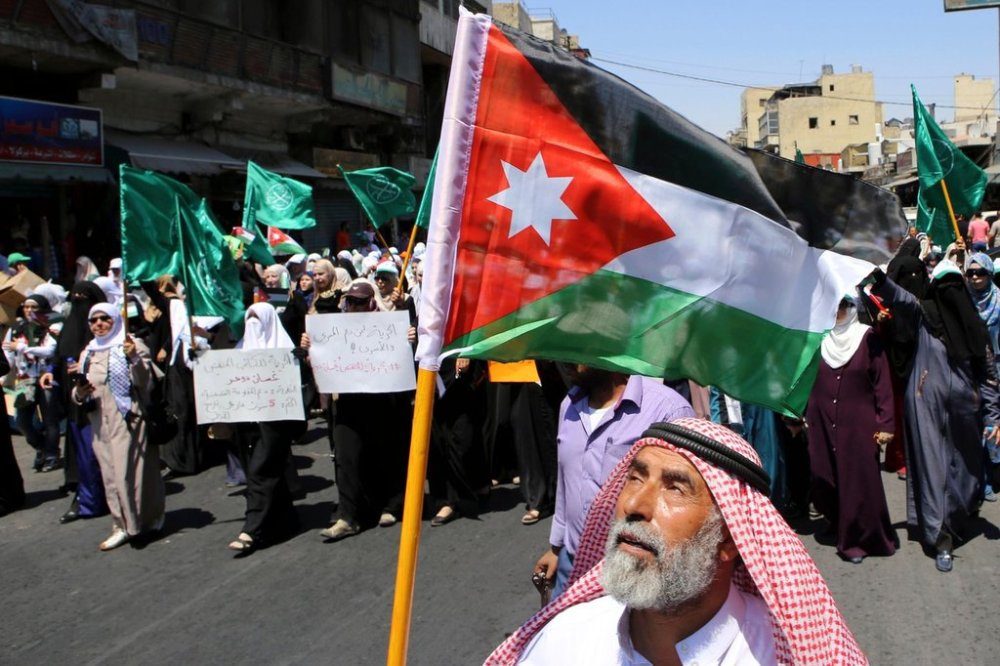
Here’s how the group started and where it stands now.
Early days
The Muslim Brotherhood rose as a pan-Arab Islamist political movement, founded in Egypt in 1928 by a school teacher-turned-ideologue Hassan al-Banna. He believed that Islamic teachings should be the basis for governance.
In its early days, the group largely focused on providing social services, but it later turned to militancy, with an armed wing that fought against British colonialists and Israel. It was implicated in the assassination of Egyptian Prime Minister Mahmoud Fahmi al-Nokrashi in 1948 after he outlawed the group. Two months later, al-Banna was assassinated in Cairo.
After Egypt’s 1952 military coup, the Brotherhood was accused of an assassination attempt against President Gamal Abdel-Nasser, who retaliated by executing prominent Brotherhood ideologue Sayyed Qutb and imprisoning thousands of other members.
The group witnessed a revival in the 1970s under then-President Anwar Sadat, who tolerated the Brotherhood and used it as a counterweight to leftist opponents. The group formally foreswore violence.
Rise and fall
During the 30-year rule of autocrat Hosni Mubarak, the Brotherhood was technically banned but also tolerated. By 2005 it had become Egypt’s strongest political opposition group, winning a fifth of the seats in parliament.
The Brotherhood rose to power following elections in Egypt a year after the 2011 popular uprising that toppled Mubarak. But the group fueled opponents’ fears that it aimed to monopolize power.
After giant protests over Brotherhood President Mohammed Morsi’s divisive rule, the Egyptian army ousted the group in 2013, crushing it in a bloody crackdown.
The authorities later outlawed the group and labeled it a terrorist organization. Authorities under President Abdel-Fattah el-Sissi have cracked down heavily on Brotherhood members and those suspected of links to the group, jailing thousands.
The Brotherhood’s leader, or supreme guide, Mohammed Badie, remains behind bars in Egypt under several life sentences, the last of which was upheld in July 2021. Nearly all of the group’s senior leaders have been imprisoned or live in exile.
The spread of ideology and armed conflict
After its founding in Egypt, the Muslim Brotherhood developed into a transnational network with chapters across the Middle East.
Some of those have engaged in armed uprisings against their own governments or fought against Israel. In 1982, the Muslim Brotherhood in Syria staged an anti-government rebellion, launching attacks that targeted military officers, state institutions and ruling party offices.
In February 1982, then-Syrian President Hafez Assad ordered an assault on the city of Hama to quell the unrest. Between 10,000 to 40,000 people were killed or disappeared in the government offensive that left the city in ruins.
The Palestinian militant group Hamas, which launched the Oct. 7, 2023 attack on southern Israel triggering the war in Gaza, has roots in the Muslim Brotherhood. Hamas was formed in December 1987 in Gaza, several days after the outbreak of the first intifada, or Palestinian uprising, against Israel. It called for armed resistance and for setting up an Islamic state in all of historic Palestine.
In its founding charter, Hamas defined itself as a Palestinian branch of the Brotherhood.
The Lebanese branch of the Muslim Brotherhood, al-Jamaa al-Islamiya (or the Islamic Group) is a Sunni Muslim political party but also has an armed wing. After the outbreak of the Israel-Hamas war, its armed wing joined forces with the Shiite militant group Hezbollah and launched rockets across the border into Israel.
The al-Jamaa al-Islamiya leader Mohammed Takkoush told The Associated Press at the time that his group and Hezbollah supported different sides in regional conflicts and Syria and Yemen but put their differences aside to fight Israel.
Regional and international divisions
Sunni regional powers Turkey and Qatar have been sympathetic to the Muslim Brotherhood’s ideology, while other Sunni powers in the region — including Saudi Arabia, the United Arab Emirates and Egypt — see the group as a threat and have cracked down on it.

Earlier this year, Jordan announced a sweeping ban on the Brotherhood that could include shutting down the country’s largest opposition party, after accusing the Islamist group of planning attacks. The monarchy banned the Brotherhood a decade ago but officially licensed a splinter group and continued to tolerate the Islamic Action Front while restricting some of its activities.
The U.S. says its chapters in Lebanon, Jordan and Egypt engage in or facilitate and support violence and destabilization campaigns that harm their own regions, United States citizens and United States interests.
The State Department designated the Lebanese branch a foreign terrorist organization, the most severe of the labels, which makes it a criminal offense to provide material support to the group. The Jordanian and Egyptian branches were listed by Treasury as specially designated global terrorists for providing support to Hamas.
___
Mednick reported from Tel Aviv, Israel.
The Free Press acknowledges the financial support it receives from members of the city’s faith community, which makes our coverage of religion possible.