

UN report calls on Syria to investigate abuses during deadly clashes with Druze last year
Advertisement
Read this article for free:
or
Already have an account? Log in here »
To continue reading, please subscribe:
Digital Subscription
One year of digital access for only $1.44 a week*
- Enjoy unlimited reading on winnipegfreepress.com
- Read the E-Edition, our digital replica newspaper
- Access News Break, our award-winning app
- Play interactive puzzles
*Billed as $5.77 plus GST every four weeks. After 52 weeks, price increases to the regular rate of $19.95 plus GST every four weeks. Offer available to new and qualified returning subscribers only. Cancel any time.
To continue reading, please subscribe:
Add Free Press access to your Brandon Sun subscription for only an additional
$1 for the first 4 weeks*
- Enjoy unlimited reading on winnipegfreepress.com
- Read the E-Edition, our digital replica newspaper
- Access News Break, our award-winning app
- Play interactive puzzles
*Your next Brandon Sun subscription payment will increase by $1.00 and you will be charged $17.95 plus GST for four weeks. After four weeks, your payment will increase to $24.95 plus GST every four weeks.
Read unlimited articles for free today:
or
Already have an account? Log in here »
BEIRUT (AP) — A United Nations inquiry Friday urged the Syrian government to investigate senior security officials involved in violations committed during sectarian clashes last summer in which at least 1,700 people died, the vast majority from the Druze religious minority.
It also said that there has been “no indication” that an umbrella group of Druze factions has investigated its own violations in the fighting, including targeted revenge attacks against the Bedouin community.
In a scathing report, the U.N. Independent International Commission of Inquiry on the Syrian Arab Republic urged Syria’s government to investigate the leadership of its security forces that allowed or organized sectarian attacks against the Druze community, and called on the de facto Druze authorities to do the same for their forces.
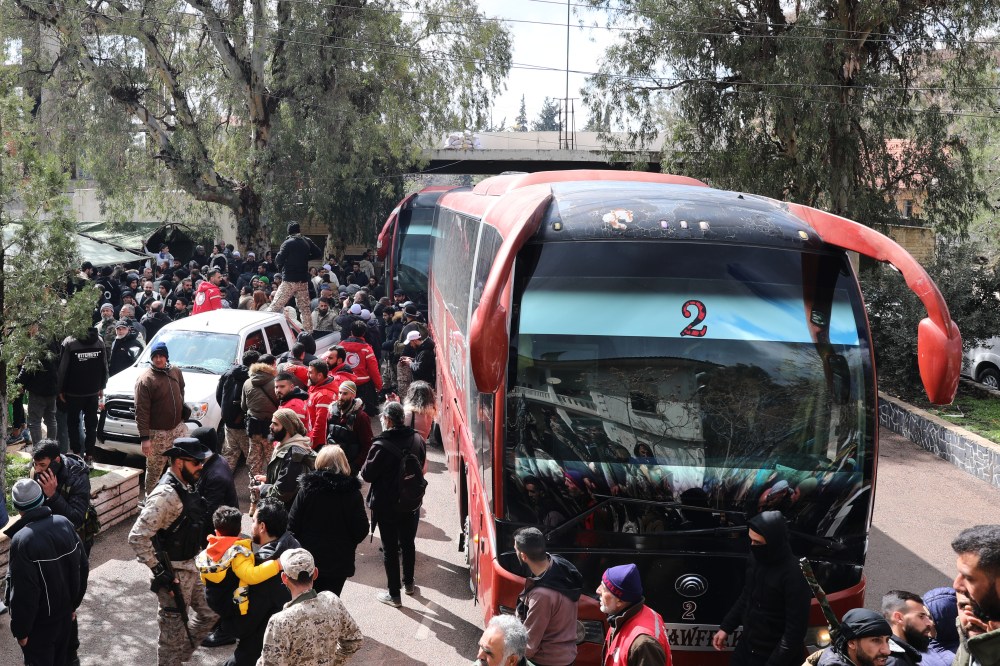
The report estimates about 200,000 people were displaced in the violence in Sweida, the heartland of Syria’s Druze community. Among the dead were almost 200 women and children.
In mid-July, armed groups affiliated with Druze spiritual leader Sheikh Hikmat al-Hijri clashed with local Bedouin clans, spurring intervention by government forces who effectively sided with the Bedouins. Targeted sectarian attacks, first against the religious minority group, and later the Bedouin community, and a series of abductions further soured ties.
Syria’s foreign ministry said in a statement that it is “treating the report’s findings regarding the grave violations against civilians … with the utmost seriousness and responsibility” and is committed to “holding all those involved in these violations accountable without exception.”
The ministry also criticized “continued violations” by groups led by al-Hijri and said the report “underscores the need for state institutions to fully resume their role in protecting civilians and strengthening the rule of law.”
President vows probe into the violence in Sweida
Syrian President Ahmad al-Sharaa has vowed to investigate the events and hold perpetrators on all sides to account, including government forces.
The inquiry said “accountability must go beyond arresting only those whose abuses were self-documented or easily identifiable from videos,” both in the security forces as well as among the groups of tribal and other fighters accompanying them.
“It must extend to all individuals implicated by evidence, reaching every appropriate level within the chain of command,” the report said.
U.N. investigators spent weeks in Syria, interviewing more than 400 survivors, officials and alleged perpetrators. They visited affected areas, including those under government control and those under de facto rule of an Israeli-backed umbrella group of local armed Druze factions.
Damascus needs to address whether “certain practices are tolerated” within elements of its security agencies, the report said, referring to the violence. It called for identifying members of the leadership who allowed it to happen and removing them.
Armed tribal fighters from other parts of the country mobilized into Sweida to support government forces and elements of the authorities appeared “unwilling or unable” to confront them, the report said.
The dayslong summer clashes in Sweida marked a setback for al-Sharaa, who has been striving to assert his government’s full authority across the war-torn country and appeal to Syria’s minorities.
Though some prisoner swaps have taken place, there has been no viable reconciliation. Human rights group criticize Damascus for the lack of viable accountability measures for attacks on civilians.
Systematic atrocities and overwhelmed hospitals
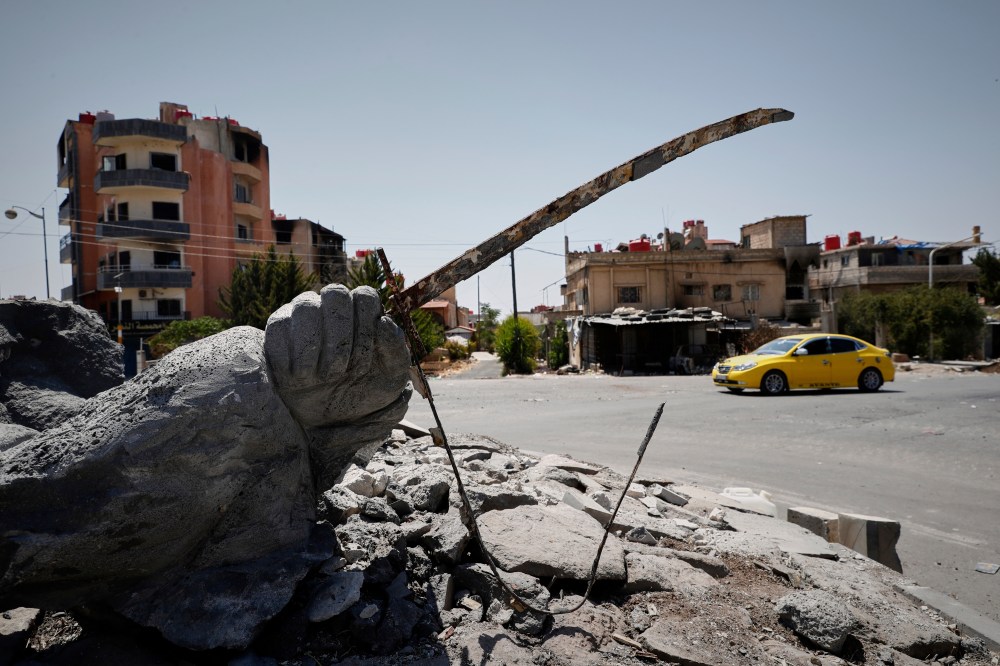
The report described “widespread looting and systematic burning” during the government-led advance, as well as killings and abductions of civilians. Tribal fighters targeted almost every home in 35 villages in the province that were mixed or Druze-majority.
“Particularly, the Druze population has been subjected to severe sectarian violence, leading to massive displacement that is expected to persist for an extended period,” the report said.
Some of the bodies were found months after the ceasefire, some on streets or in fields, and in other instances burned or mutilated, the report said.
“Nearly all Druze religious sites in those villages … were looted, burned, and vandalized,” according to the report. It added that three houses of worship were burned, and another one looted and vandalized.
Retaliatory attacks against Bedouin civilians largely in Sweida province’s western countryside took place. The report said while most documented cases took place amid the hostilities, there were many cases where the attacks “appeared to be deliberately directed at civilian areas.”

The report mentions Bedouin civilians, including children and elderly people, being shot and killed while fleeing on foot, and a case where two men’s bodies were left hanging at the gate of a village for days. Four mosques were also targeted.
The scale of the violence overwhelmed hospitals both in Sweida and neighboring Daraa province, as hundreds of bodies were brought in during the spiraling violence, with no room in the morgue. Many of the bodies were severely burned while others were left outside and “likely scavenged by wild animals before being found.”
“Hospital staff and first responders were forced to allow the burial of bodies before they could be identified; while safeguarding records and images of where the body was found and when, and of remaining clothing or jewelry, body marks or tattoos where available, to aid subsequent identification,” the report said.
___
An earlier version of the story erroneously stated that the U.N. inquiry said there was “no indication” that the government was investigating its violations. This was corrected to be in reference to an umbrella group of Druze factions.
The Free Press acknowledges the financial support it receives from members of the city’s faith community, which makes our coverage of religion possible.