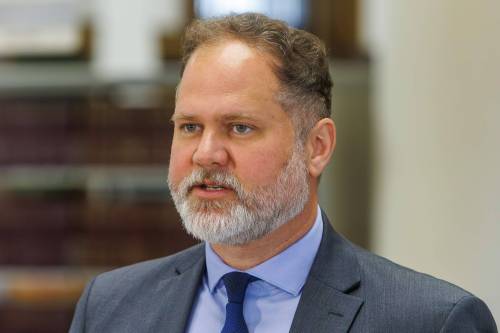
Solidarity Dialogues workshops counter polarization
Advertisement
Read this article for free:
or
Already have an account? Log in here »
To continue reading, please subscribe:

Digital Subscription
One year of digital access for only $205*
- Enjoy unlimited reading on winnipegfreepress.com
- Read the E-Edition, our digital replica newspaper
- Access News Break, our award-winning app
- Play interactive puzzles
*First annual payment billed as $205.00 + GST for one year. This annual subscription will automatically renew at $233.00 + GST every 52 weeks (10% off the regular annual price of $259.35). Offer available to new and qualified returning subscribers only. Cancel any time.
To continue reading, please subscribe:
Add Free Press access to your Brandon Sun subscription for only an additional
$1 for the first 4 weeks*
- Enjoy unlimited reading on winnipegfreepress.com
- Read the E-Edition, our digital replica newspaper
- Access News Break, our award-winning app
- Play interactive puzzles
*Your next Brandon Sun subscription payment will increase by $1.00 and you will be charged $17.95 plus GST for four weeks. After four weeks, your payment will increase to $24.95 plus GST every four weeks.
Read unlimited articles for free today:
or
Already have an account? Log in here »
Amal Elsana Alhjooj is not a person to sit idly by when she encounters a challenge, conflict or situation that needs correcting. Over the years, that attitude and activism have led her to establish several innovative social justice and civil society initiatives that, among other achievements, have enhanced the livelihood and independence of Bedouin women in Israel, where Alhjooj was raised, and the relationship between Jews and Arabs both in Israel, Palestine and in Canada, where Alhjooj now lives.
Alhjooj’s most recent venture is a series of workshops called Solidarity Dialogues.
Solidarity Dialogues is an offshoot of PLEDJ, a social change non-profit that Alhjooj, who is Muslim, co-established in 2021 with Brian Bronfman, the Jewish president of the Peace Network for Social Harmony, to empower and organize marginalized communities to address systematic injustices that impede their lives.
Solidarity Dialogues is more narrow in scope, as it is designed specifically to address the deep seated polarization currently permeating Canadian workplaces, schools and society in general. Solidarity Dialogues’ series of workshops provide participants with the tools to navigate that polarization and the heated, intolerant and uncomfortable exchanges that tend to characterize that polarization. By differentiating between dialogue and debate, and hurt and harm, the workshops provide participants with safe spaces in which to step out of their comfort zones, listen empathetically and openly to others’ lived experiences, and develop mutual understanding and an ability to respond to conflict.
“The idea of Solidarity Dialogues was born right after Oct 7. when I was in a situation where I felt dispirited,” says Alhjooj, an associate professor at McGill University’s School of Social Work.
As she explains, her close colleague and friend, Vivian Silver, a former Winnipegger and the co-founder of the grassroots movement Women Wage Peace, was murdered during the Hamas attacks in Israel. Then, within a few weeks, more than 40 members of Alhjooj’s extended family were killed in Israeli retaliatory strikes in Gaza.
“It was a great pain and is still a great pain and I still haven’t had the time to mourn the people I lost,” she says. “It’s really easy to lose hope and it’s really easy to shrink your heart and lose clarity of what’s happening.”
But, she adds, losing hope is not her way of doing things.
“Anytime in my life when I encountered a crisis my answer was always what is the action that I need to take and not submit to this crisis,” she says.
“I was getting all these calls from many leaders of faith groups, especially imams and rabbis and professors from other universities and people asking what should we do, saying we don’t know how to engage in difficult conversations. We don’t know how to respond to the pain that our students are going through in our classrooms and in our communities.”
Alhjooj responded to those calls by devising Solidarity Dialogues and inviting 19 faith, academic and community leaders in Montreal to meet and learn together how to have difficult conversations and how to respond to the pain of those they were supposed to be leading. In the months since, more than 400 McGill students from diverse backgrounds and faiths also have participated in her workshops, and ten separate interfaith initiatives have been created as a result of the workshops.
“Many people in times of polarization don’t believe in dialogue,” Alhjooj says. “They don’t believe that they are able to speak with each other and they avoid the difficult conversations, sometimes because they don’t want to lose the relationships or break connections.”
Solidarity Dialogues, she continues, shows them that even with the biggest disagreements and different perspectives, and even with the greatest pain, when you create the right structure for dialogue, you can engage in difficult and productive and brave conversation.
Alhjooj recently brought that message to Winnipeg when she gave the keynote address on April 26 at Women for a Just Peace in Israel, Palestine and at Home, an event organized by Women Wage Peace Winnipeg in partnership with the Canadian Museum for Human Rights. That event saw a crowd of 170 Winnipeggers from different faiths and political leanings come together to learn about peace activism and bridge building.
Alhjooj reiterated her message the next day when, as a guest of the University of Manitoba Mauro Institute for Peace & Justice and the Office of Equity Transformation, she and her PLEDJ partner Bronfman, led an abridged version of the Solidarity Dialogues for two dozen of the university’s senior faculty and administrators.
That workshop was greatly anticipated and welcomed by Stanley Amaladas, the Director of Mauro Institute for Peace & Justice.
“In a world increasingly divided and polarized, we observe within our university community a troubling sense of disconnection — a feeling of not belonging,” he says. “This often leads to heated debates rooted in anger and frustration, which can deepen divides rather than connect them.”
Dialogue, he continues, offers a powerful alternative: a space to talk, listen, and truly understand each other.
“It holds the promise of awakening our shared humanity and inspiring us to stand together in solidarity.”
And that solidarity, as Alhjooj consistently emphasizes in her speeches and in her workshops, is especially critical at a time when stigmatization, safety concerns, hate speech and hate crimes are so prevalent both on and off educational campuses in Winnipeg, Montreal and across the country.
swchisvin@gmail.com
The Free Press is committed to covering faith in Manitoba through our Religion in the News project. This reporting continues because readers like you step forward to fund it.
Donate now to support our reporting on religion.
Your donation is eligible for a charitable tax receipt.
BECOME A FAITH JOURNALISM SUPPORTER
The Free Press acknowledges the financial support it receives from members of the city’s faith community, which makes our coverage of religion possible.