

Peru’s Catholic Church holds a symbolic ceremony in apology for Indigenous land dispossession
Advertisement
Read this article for free:
or
Already have an account? Log in here »
To continue reading, please subscribe:
Digital Subscription
One year of digital access for only $1.44 a week*
- Enjoy unlimited reading on winnipegfreepress.com
- Read the E-Edition, our digital replica newspaper
- Access News Break, our award-winning app
- Play interactive puzzles
*Billed as $5.77 plus GST every four weeks. After 52 weeks, price increases to the regular rate of $19.95 plus GST every four weeks. Offer available to new and qualified returning subscribers only. Cancel any time.
To continue reading, please subscribe:
Add Free Press access to your Brandon Sun subscription for only an additional
$1 for the first 4 weeks*
- Enjoy unlimited reading on winnipegfreepress.com
- Read the E-Edition, our digital replica newspaper
- Access News Break, our award-winning app
- Play interactive puzzles
*Your next Brandon Sun subscription payment will increase by $1.00 and you will be charged $17.95 plus GST for four weeks. After four weeks, your payment will increase to $24.95 plus GST every four weeks.
Read unlimited articles for free today:
or
Already have an account? Log in here »
LIMA, Peru (AP) — After years of allegations of land dispossession by a now-dissolved Catholic group, the highest ecclesiastical authorities in the Andean country on Saturday held a symbolic reparation ceremony for the Indigenous people whose land was taken away.
The Peru-based Sodalitium Christianae Vitae was dissolved din 2025 by the late Pope Francis, after years of attempts at reform and a Vatican investigation that uncovered sexual abuses by its founder, financial mismanagement by its leaders and spiritual abuses by its top members.
The ceremony in Peru took place before the Indigenous people of Tallán, in the northern community of Catacaos.
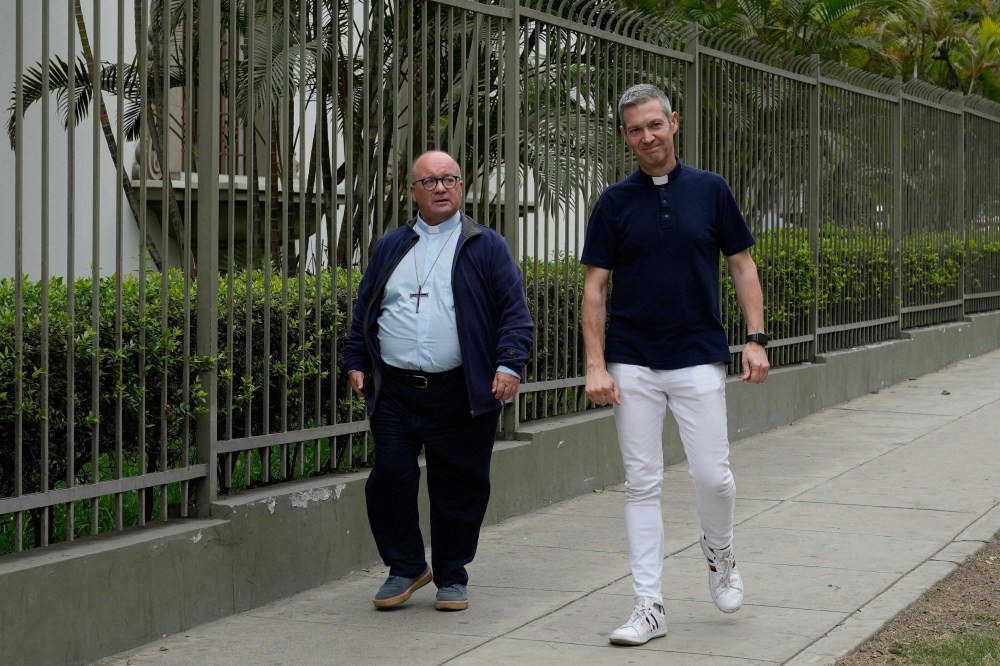
“We are here to ask for your forgiveness in the name of the Church,” Monsignor Jordi Bertomeu, apostolic commissioner who was in charge of the dissolution process of the Sodalitium, said before a packed church. “We are late. We should have come 20 years ago, and we are truly sorry.”
The Sodalitium was founded in 1971 as one of several Catholic societies born as a conservative reaction to the left-leaning liberation theology movement that swept through Latin America in the 1960s. At its height, the group counted about 20,000 members across South America and the United States, and was hugely influential in Peru.
In 2011, former members complained to the archdiocese in Peru’s capital, Lima, about abuses by its founder, Luis Figari. But neither the local church nor the Holy See took concrete action until one of the victims and a journalist wrote a book in 2015.
After an attempt at reform, Francis sent his two most trusted investigators, Bertomeu and Archbishop Charles Scicluna, to look into the Sodalitium abuse allegations. Their report uncovered “sadistic” sect-like abuses of power and spirituality, financial abuses in administering church funds and even instances of harassing critics.

During Saturday’s ceremony, Bertomeu recalled a message Francis sent to the community in 2024, telling them: “Fight for your lands, I am with you.”
The land disputes date back at least a decade, to when Sodalitium-linked companies began legal action to evict people from thousands of hectares in Catacaos following several property transfers that are not recognized by the farmers. Dozens of farmers were prosecuted for alleged “usurpation,” and two community leaders were shot and killed during clashes stemming from the eviction efforts.
The religious ceremony took place months after the Peruvian Episcopal Conference announced a possible visit by Pope Leo XIV to the South American country at the end of the year.
“Forgive us, offer us your forgiveness, because we too need it,” said Bertomeu, who described Catacaos as a community “fearful and broken.”
Tania Pariona, secretary of Peru’s National Human Rights Commission, said the ceremony was a “historic gesture” in which the church “is taking the lead over the state, which has failed to protect rural communities.”
Related Articles
Pope calls for robust regulation of AI in manifesto that ponders the future of humanity
Advertisement Advertise With Us
Advertisement Advertise With Us
The Free Press acknowledges the financial support it receives from members of the city’s faith community, which makes our coverage of religion possible.