Defying Pope Leo XIV, traditionalists go ahead with bishop consecrations in Switzerland
Advertisement
Read this article for free:
or
Already have an account? Log in here »
To continue reading, please subscribe:

Digital Subscription
One year of digital access for only $205*
- Enjoy unlimited reading on winnipegfreepress.com
- Read the E-Edition, our digital replica newspaper
- Access News Break, our award-winning app
- Play interactive puzzles
*First annual payment billed as $205.00 + GST for one year. This annual subscription will automatically renew at $233.00 + GST every 52 weeks (10% off the regular annual price of $259.35). Offer available to new and qualified returning subscribers only. Cancel any time.
To continue reading, please subscribe:
Add Free Press access to your Brandon Sun subscription for only an additional
$1 for the first 4 weeks*
- Enjoy unlimited reading on winnipegfreepress.com
- Read the E-Edition, our digital replica newspaper
- Access News Break, our award-winning app
- Play interactive puzzles
*Your next Brandon Sun subscription payment will increase by $1.00 and you will be charged $17.95 plus GST for four weeks. After four weeks, your payment will increase to $24.95 plus GST every four weeks.
Read unlimited articles for free today:
or
Already have an account? Log in here »
ECONE, Switzerland (AP) — A group of traditionalist Catholics directly defied Pope Leo XIV on Wednesday by consecrating four bishops without his consent, dismissing the resulting excommunications and break with the Holy See by saying it was necessary to defend the Catholic faith.
The Society of St. Pius X, which opposes modernizing reforms in the Catholic Church, went ahead with the five-hour ceremony at its seminary in Econe, Switzerland, despite a last-ditch appeal by Leo to call it off. The American pope warned in a letter Tuesday that consecrating bishops without his approval amounted to a “sin of extreme gravity” that will actually harm their faithful.
Leo’s secretary of state, Cardinal Pietro Parolin, went further and said the act “is a schismatic act” that incurs excommunications, although he said he didn’t know how or when they would be confirmed by the Holy See.
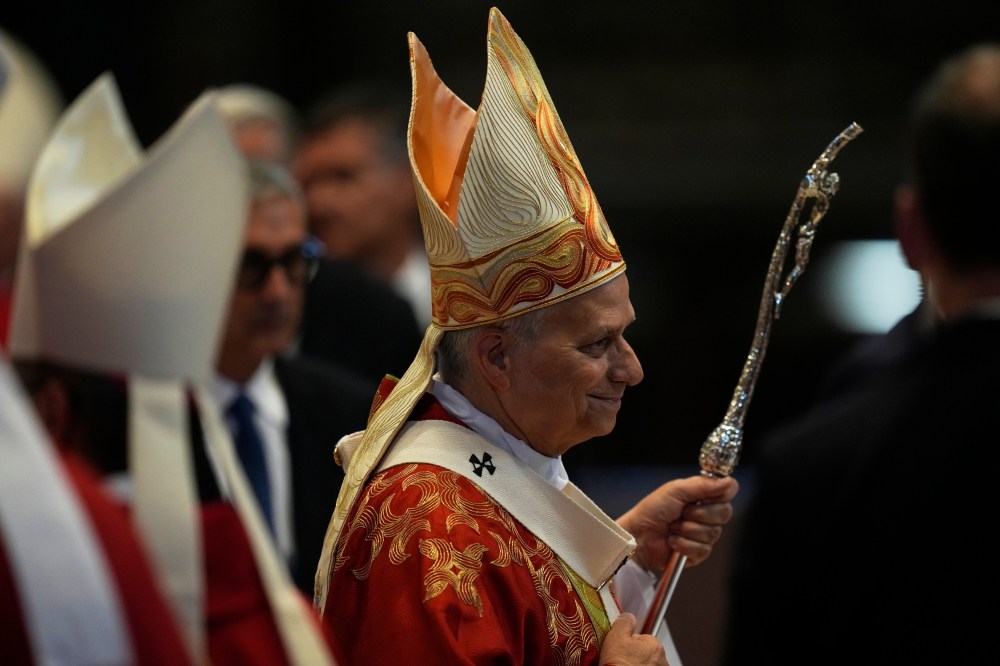
The consecrations amounted to a crisis for Leo, who has prioritized church unity and healing tensions with traditionalists that worsened during the Pope Francis pontificate.
The SSPX, as the society is known, is a threat to the Holy See because it represents a parallel, ultra-Catholic faith. It now has six bishops, 751 priests, 264 seminarians training in five seminaries, 145 religious brothers, 88 oblates and 250 religious sisters representing 50 nationalities, according to SSPX statistics.
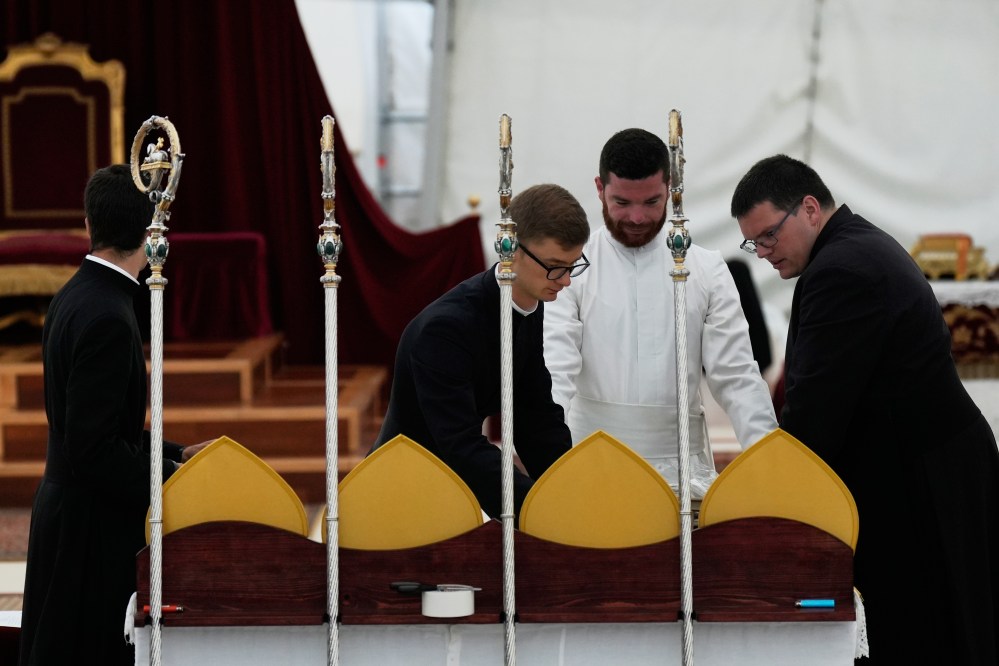
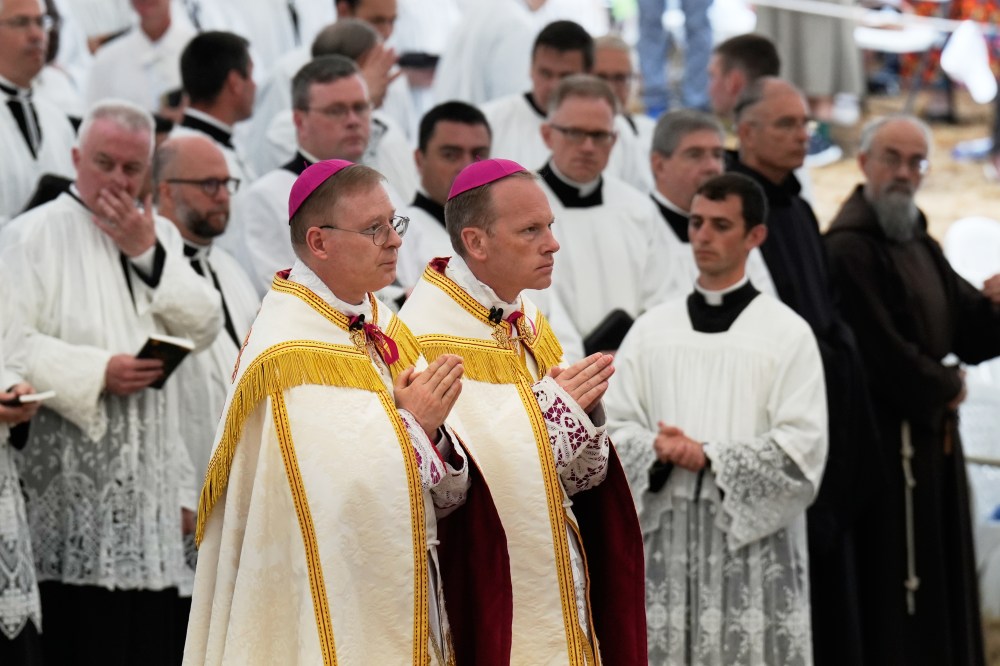
Bells tolled through the misty Alpine mountain valley as hundreds of priests walked two-by-two to the altar under a tent to start the service and then again at the end. An estimated 16,500 faithful who prefer the traditional Latin Mass over modern liturgies attended, sitting in a field through a downpour alongside their children who were too numerous for organizers to count.
The Mass, rich in velvet and gold-trimmed vestments, chanting and incense, was livestreamed on the society’s YouTube channel, with simultaneous explanations in several languages. The highly organized religious extravaganza underscored the society’s international reach, despite its schismatic outsider status, and appeal to conservative, traditionalist Catholics wary of the modern, secular world.
At the start of the Mass, a priest read aloud a statement justifying the consecrations as a necessary “sacred duty” and dismissing the resulting penalties. “We consider every punishment and censure brought to bear against this step will have no validity,” he said.
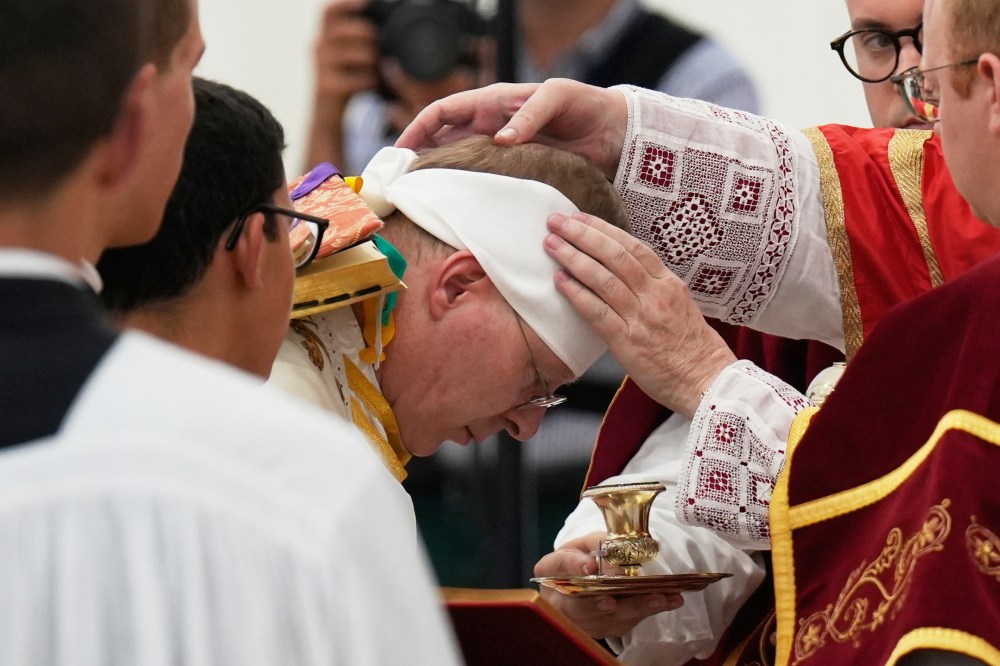
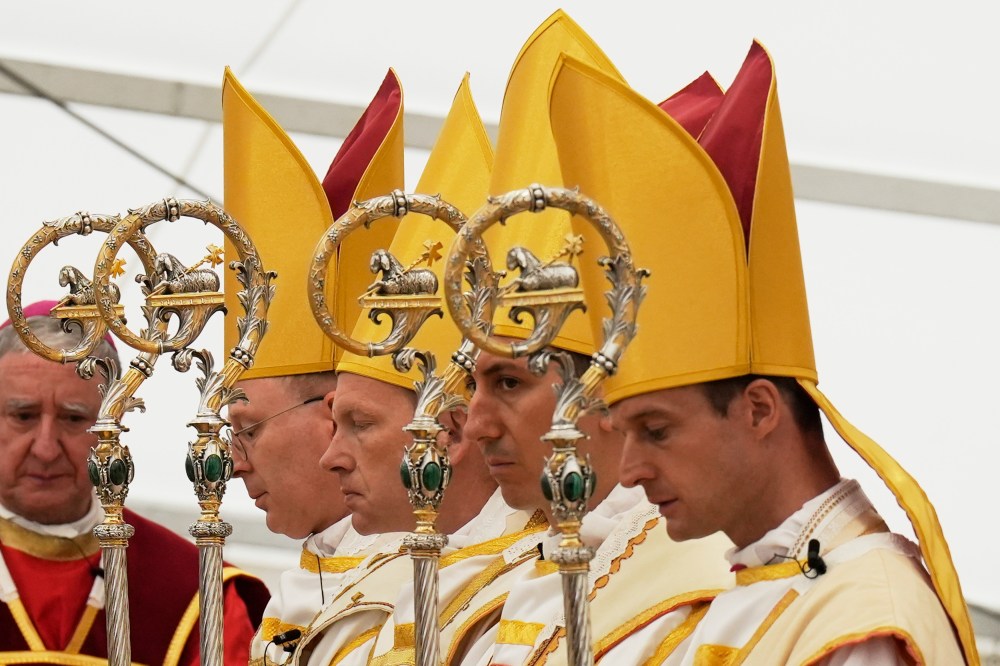
In the consecration rite, Bishop Alfonso de Galarreta, who himself was excommunicated after being consecrated without papal consent in 1988, placed his hands on the head of each of the four new bishops. The ritual confers the Holy Spirit from one bishop to another and recalls Christ’s gesture to his apostles. After they received their miter hats, gloves and pastoral staffs, the four made a procession through the crowd, blessing the faithful as bishops.
According to church law, consecrating a bishop without a papal mandate incurs the harshest penalty in the Catholic Church: automatic excommunication for the four new bishops and the bishop administering the rite. It also amounts to a schismatic act, an intentional rupture of church unity.
The society was founded in opposition to Vatican II
French Archbishop Marcel Lefebvre founded the SSPX in opposition to the modernizing reforms of the Second Vatican Council. Among other things, the 1960s meetings known as Vatican II revolutionized the church’s relations with other Christians, Jews and people of other faiths, and allowed Mass to be celebrated in the vernacular rather than Latin.
In 1988, Lefebvre consecrated four bishops without papal consent. The Vatican promptly excommunicated Lefebvre and the four bishops and declared the consecrations a “schismatic act.” Pope Benedict XVI in 2009 lifted the excommunications, but the SSPX today has no legal standing in the church.
The SSPX has accused the church of being rife with heresies and errors, and that only it is upholding the true faith of Christ. It has justified the consecrations, citing a “state of necessity” to minister to its faithful.
It identified the new bishops as Pascal Schreiber of Switzerland, Michael Goldade of the United States, Michel Poinsinet de Sivry of France and Marc Hanappier, also of France.
The Rev. Davide Pagliarani, the SSPX superior, said in his homily that the consecrations were necessary for the salvation of souls, but he also insisted they served Leo and the church.
“We are accused of not respecting the pope,” he said. “But it is precisely because we love the pope as the vicar of Christ, as the head of the church, that we don’t want to see the pope humiliated anymore, on the side of false shepherds representing false religions.”
Catholic faithful don’t incur penalties for attending SSPX services, but they also can attend Latin Masses celebrated by priests in communion with the Vatican.
The Vatican didn’t immediately comment on the consecrations and it wasn’t clear how or if it would declare the excommunications or any other penalties. The SSPX acknowledged in a statement late Wednesday that the consecrations did not have papal approval.
The ritual had a joyous air
And yet everything about Wednesday’s ceremony had the air of a joyous celebration. The SSPX website has had a countdown clock running for days ahead of the consecration. Participants received a baseball cap with the “Econe2026” seal on it.
And in perhaps the most obvious sign of a celebration, registered participants could buy a souvenir set of wine to commemorate the “historic” event for 75 Swiss francs ($92.50). The “Cuvee des Sacres” gift box featured pinot noir, syrah, Petit Arvine and Fendant, each bottle with a label depicting a bishop’s miter, his ring, a cross or crozier staff.
The field, located under giant power lines, was awash in smiling nuns, priests posing for photos, youths handing out bottled water, black-clad security guards with earpieces and orange-vested volunteers who occasionally cut short journalists’ interviews with the faithful. During the downpour, priests administered Communion under yellow and white umbrellas, the colors of the Holy See.
Arlina Onglao, a 71-year-old travel agent from the Philippines, said she wanted to be on hand for the “historic event” and didn’t care about the prospect of excommunications of the bishops. She said the Vatican had “lost credibility.”
“I don’t think it’s going to scare any of us. Me, I’m not scared,” she said. “I feel like I’m on a safer road to heaven.”
Medical researcher Wulfran Lindzondzo, 42, a native of Gabon who lives in France, said he wanted to “rediscover tradition” through the society, noting its presence in the African country.
“The Holy Father doesn’t really agree with it, but I hand over –- I will pray to the Good Lord that the authorities in Rome can one day accept coming back to the church’s traditions,” he said before the Mass.
Eduardo Limón of Ciudad Juarez, Mexico, lamented that Leo had asked the SSPX to halt the consecrations at the last minute. He prayed that “God illuminate him so he sees that the fraternity is an institution that has defended the faith,” he said.
“I’m both sad and content at the same time,” he added. “Sad because again Rome closes itself in accepting that the tradition is the only hope for faith. And happy because the father superior (Pagliarani) has said courageously we are going to go ahead with the consecrations.”
But many Catholics not in Econe, including conservative and traditional ones, opposed the consecrations as an act of severe disobedience that hurts the church.

“You can’t serve tradition while disobeying the church and her authority,” said the Rev. Robert Gahl, an ethics expert at the Catholic University of America.
___
Winfield contributed from Rome.
___
Associated Press religion coverage receives support through the AP’s collaboration with The Conversation US, with funding from Lilly Endowment Inc. The AP is solely responsible for this content.
The Free Press acknowledges the financial support it receives from members of the city’s faith community, which makes our coverage of religion possible.