Humanist conference to promote compassion, respect

Advertisement
Read this article for free:
or
Already have an account? Log in here »
To continue reading, please subscribe:

Digital Subscription
One year of digital access for only $205*
- Enjoy unlimited reading on winnipegfreepress.com
- Read the E-Edition, our digital replica newspaper
- Access News Break, our award-winning app
- Play interactive puzzles
*First annual payment billed as $205.00 + GST for one year. This annual subscription will automatically renew at $233.00 + GST every 52 weeks (10% off the regular annual price of $259.35). Offer available to new and qualified returning subscribers only. Cancel any time.
To continue reading, please subscribe:
Add Free Press access to your Brandon Sun subscription for only an additional
$1 for the first 4 weeks*
- Enjoy unlimited reading on winnipegfreepress.com
- Read the E-Edition, our digital replica newspaper
- Access News Break, our award-winning app
- Play interactive puzzles
*Your next Brandon Sun subscription payment will increase by $1.00 and you will be charged $17.95 plus GST for four weeks. After four weeks, your payment will increase to $24.95 plus GST every four weeks.
Read unlimited articles for free today:
or
Already have an account? Log in here »
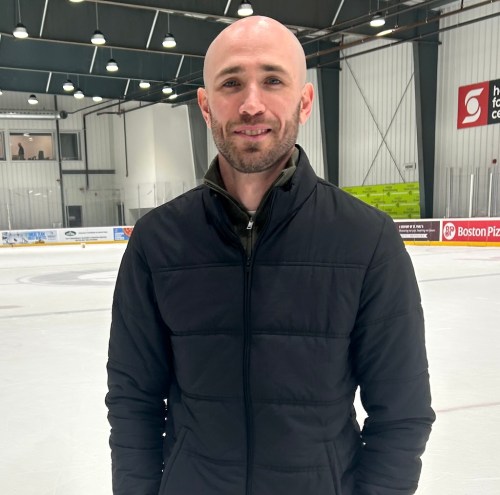
Daniel Dacombe is looking forward to the World Humanist Congress in Ottawa.
“I’m going to network with other humanists from around the world,” said Dacombe, who works for Shared Health and lives near Niverville.
“I’m looking forward to meeting people from other countries who have been building their own humanist communities, especially in places with more restrictive laws around non-belief.”
The theme of the Congress is “Humanism as Resistance.” That theme was chosen because, as the organizers put it, this is a time of “resurgent authoritarianism, escalating religious nationalism, and the aggressive spread of anti-science disinformation.”
Participants at the Aug. 7 to 9 conference will hear speakers and panels address the theme, and discuss their shared humanistic values such as respect and care for the natural world; the primacy of reason and science; rejection of the supernatural; standing against all forms of racism and prejudice; and promoting human rights for everyone — including the right to freedom of religion and unbelief.
For Dacombe, who calls himself a secular humanist, that means encouraging people to be more understanding, compassionate, kind and willing to “resist fascism and nationalism, we have to stand up for each other,” he said.
Resistance also means people actively working together to make the world a better place, he said.
“There’s a potential out there where we actually do have a bright future for our species. But we won’t get there passively.”
The congress, which happens every two years, is being held in Canada for the first time.
That wasn’t the plan. Originally, the 2026 congress was scheduled to be held in Washington, D.C. But after consulting with humanists in the U.S., Humanists International, which is based in Scotland and sponsors the worldwide gatherings, felt uncomfortable holding the event there due to the political climate in that country.
On short notice, they asked if Canada would host it. Humanist Canada said yes. Now over 500 people from 41 countries are registered for the sold-out event, which is described as the “largest, most vital and most influential international gathering of the global humanist movement.”
Janalee Morris is the executive director of Humanist Canada. When congress planners approached her organization a year ago about coming to Canada, they were glad to help out.
“They felt it would be difficult for people to come, to get visas,” she said of the decision by the international organization to request a change to Ottawa. “They thought people might choose not to come out of fear of what might happen, of ICE detaining people.”
For Morris, the congress is also an opportunity for people to talk about the responsibility of human beings to look after each other and the planet.
“We believe that there is no supernatural being that’s going to come and save us,” said Morris, who was raised Catholic but left that faith over its treatment of women and questions about God.
“We only have ourselves to try to make this world a better place, to try to make our own lives better. When you believe that, I think you automatically assume a responsibility to say, ‘It’s really just up to us.’”
Morris noted that humanists are not anti-religious. In fact, she regrets how religious decline in Canada means there are fewer spaces where people gather regularly to discuss shared beliefs and values — even if she doesn’t hold or support those same beliefs.
“For maybe and hour or two every week, people were sitting there thinking, ‘How do I put these values that I’m supposed to be holding into action in my life?’” she said.
With fewer people going to religious services or identifying with a religion today, Morris believes new spaces need to be created where people can discuss how to live a life “based on values, a good life, an ethical life, a moral life,” she said, adding this can be a place for religious and non-religious people alike to meet and talk.
“We may not all share the same beliefs, but most of us share the same values,” she said.
Also going to the congress is Leslie Rosenblood, secular chair of the Centre for Inquiry Canada, a national humanist organization. At a time when more and more people are leaving organized religion, he sees the event as a way to introduce humanism to Canadians and to invite others to join them.
“If you care about the people in your community, if you care about the next generation and the generation after that, and if you believe that it is our collective responsibility to make things better for those that will come after us, then you are not alone,” he said. “There are millions of us in Canada who think that way, and many more around the world. Find us. Talk to us. We welcome you.”
Jdl562000@yahoo.com
The Free Press is committed to covering faith in Manitoba through our Religion in the News project. This reporting continues because readers like you step forward to fund it.
Donate now to support our reporting on religion.
Your donation is eligible for a charitable tax receipt.
BECOME A FAITH JOURNALISM SUPPORTER
Our newsroom depends on a growing audience of readers to power our journalism. If you are not a paid reader, please consider becoming a subscriber.
Our newsroom depends on its audience of readers to power our journalism. Thank you for your support.
The Free Press is committed to covering faith in Manitoba through our Religion in the News project. This reporting continues because readers like you step forward to fund it.
Donate now to support our reporting on religion.
Your donation is eligible for a charitable tax receipt.
BECOME A FAITH JOURNALISM SUPPORTER
Our newsroom depends on a growing audience of readers to power our journalism. If you are not a paid reader, please consider becoming a subscriber.
Our newsroom depends on its audience of readers to power our journalism. Thank you for your support.
Advertisement Advertise With Us
Advertisement Advertise With Us
The Free Press acknowledges the financial support it receives from members of the city’s faith community, which makes our coverage of religion possible.