Abolitionist to the core Quaker movement fuelled by a fierce sense of social justice
Read this article for free:
or
Already have an account? Log in here »
To continue reading, please subscribe:

Digital Subscription
One year of digital access for only $205*
- Enjoy unlimited reading on winnipegfreepress.com
- Read the E-Edition, our digital replica newspaper
- Access News Break, our award-winning app
- Play interactive puzzles
*First annual payment billed as $205.00 + GST for one year. This annual subscription will automatically renew at $233.00 + GST every 52 weeks (10% off the regular annual price of $259.35). Offer available to new and qualified returning subscribers only. Cancel any time.
To continue reading, please subscribe:
Add Free Press access to your Brandon Sun subscription for only an additional
$1 for the first 4 weeks*
- Enjoy unlimited reading on winnipegfreepress.com
- Read the E-Edition, our digital replica newspaper
- Access News Break, our award-winning app
- Play interactive puzzles
*Your next Brandon Sun subscription payment will increase by $1.00 and you will be charged $17.95 plus GST for four weeks. After four weeks, your payment will increase to $24.95 plus GST every four weeks.
Read unlimited articles for free today:
or
Already have an account? Log in here »
A few weeks ago, the erstwhile punk-rock-poet John Samson Fellows taught an auditorium full of people how to fold a paper cup.
With each fold, he explained that origami is an activity he likes to do with people who are incarcerated.
“It can be really empowering to make something with your hands in that environment,” he explained over the rustle of fingers creasing paper.
Samson Fellows is perhaps best known as the former frontman for the indie-rock band the Weakerthans and the author of an anthem beloved in his hometown for its self-deprecating refrain: “I hate Winnipeg.”
But for the past few years, he’s been teaching creative writing and literacy to people in Manitoba jails.
“Three weeks ago, while I was still preparing for this talk, I got a furious email from a manager from the Winnipeg Remand Centre where I lead classes,” Samson Fellows told his audience as they put the finishing touches on their paper cups.
“He informed me that origami paper is contraband and told me to stop sharing it with my students immediately.”
When Samson Fellows called back to apologize and ask why origami paper was considered contraband, he was told that any object that could be modified into something else was forbidden.
“So,” he said, pausing to give weight to his next words: “Anything that can be changed or transformed is not permitted in the Winnipeg Remand Centre. Any change or transformation is not allowed in Manitoba prisons,” he repeated.
“In case I am being too subtle, this is an anecdote about how prisons can’t be reformed, and must be abolished.”
“Any change or transformation is not allowed in Manitoba prisons. In case I am being too subtle, this is an anecdote about how prisons can’t be reformed, and must be abolished.”
To most of the audience, this was likely not a revolutionary statement — though its implications surely are.
Samson Fellows was speaking to a roomful of Quakers, a Christian denomination known for its radical commitment to social justice, convening in Winnipeg for their annual gathering.
Quakers — formally known as the Religious Society of Friends — started in the 1600s when a small group of dissidents split from the Church of England. Quakers are democratic and non-hierarchical.
A typical Quaker worship service, known as a “meeting,” doesn’t have a leader, hymns or rituals. Instead, participants sit in a circle in expectant silence, waiting for the Spirit to move someone to share. Sometimes no one says anything, and that’s fine too.
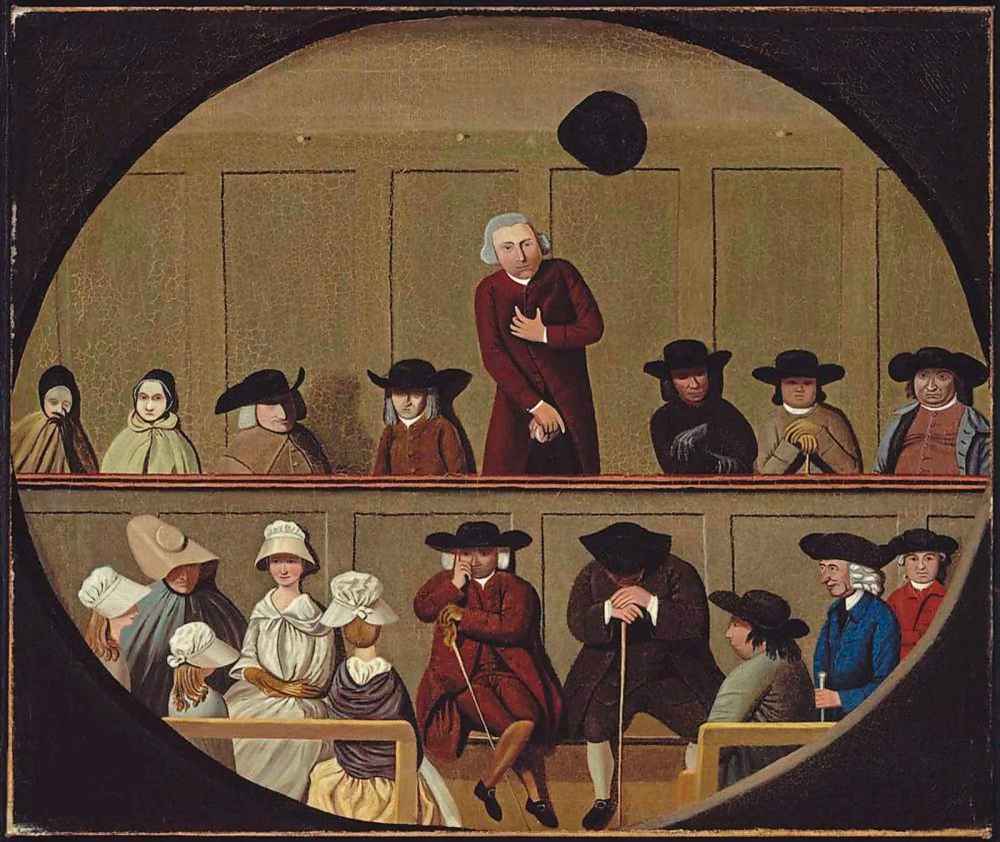
Most Sunday mornings, Samson Fellows can be found sitting silently in a rented room at the Old Grace Housing Co-op among the small circle of Quakers who make up the Winnipeg meeting.
Quakers are united by shared practice rather than a fixed set of doctrines, so there’s diversity of beliefs among them.
Some Quakers hold traditional Protestant beliefs, some are universalist, some are agnostic. Canadian Quakers are only one branch of the global Quaker community. Some branches hold more traditional church services with pastors and hymns.
But even the more conservative Quakers have a strong social justice streak, Samson Fellows says.
Samson Fellows grew up attending a Lutheran church but lost interest in religion in his teens, preferring instead the absurdism of Kurt Vonnegut. Decades later, he was going through a difficult time when a friend invited him to a Quaker meeting.
Samson Fellows found solace in the silence. But what really hooked him were the minutes of a business meeting from 1981.
That year, the Canadian Quakers, after much prayer and discussion, arrived at the conviction that Canada’s prison system was fundamentally violent, unjust and should be abolished.
“We are increasingly clear that the imprisonment of human beings, like their enslavement, is inherently immoral and is as destructive to the cagers as the caged.”
The statement reads, in part:
“The prison system is both a cause and a result of violence and social injustice. Throughout history, the majority of prisoners have been the powerless and the oppressed. We are increasingly clear that the imprisonment of human beings, like their enslavement, is inherently immoral and is as destructive to the cagers as the caged.”
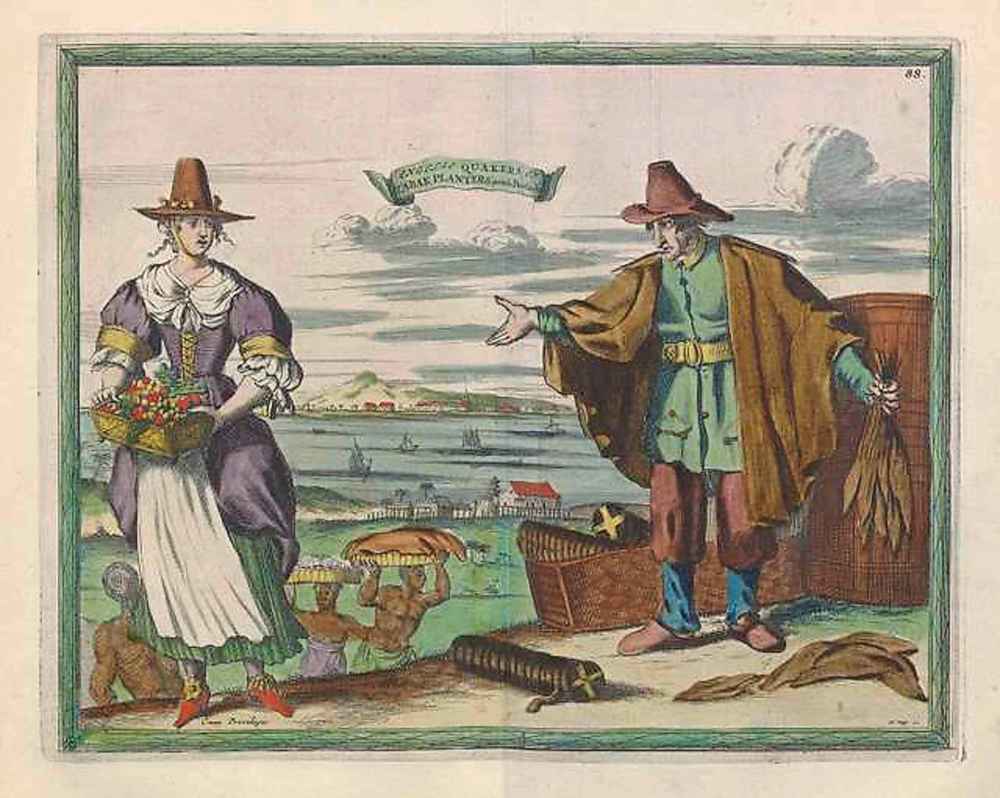
The reference to enslavement was a nod to the role Quakers played in the abolition of slavery in the U.S. and Great Britain.
Quaker colonists in the Americas, many of whom owned slaves, began questioning the morality of slavery in the late 1600s. They were guided by the Quaker principle that the light of God shines equally in every human being.
Some Quakers decided to free their slaves and pay them compensation.
In Britain, Quakers joined a campaign to try to outlaw the transatlantic slave trade. Many Quakers stopped putting sugar in their tea because sugar was grown by enslaved people.
When Samson Fellows discovered the 1981 resolution, he knew he’d found his people.
Reading theorists like Angela Davis and volunteering in prisons had led him to believe that incarcerating people was immoral. Prisons did little to help people rehabilitate or improve society in general. There were better ways to help people atone for their crimes.
Here was a Christian denomination that shared his politics and backed it up with faith and action.
Mel Burns, who wrote her master’s thesis on Quaker decision-making models, says she doesn’t know of any other Christian denomination that has taken such a stance against prisons.
Quakers, she points out, helped create the modern prison system in the first place, including the practice of solitary confinement.
They thought enforced solitude would help people reflect on their actions. It turned out to be incredibly harmful.
As with slavery, Quakers eventually came to see the harm they had done and feel some responsibility to undo it.
Quakers are a tiny denomination, numbering fewer than 2,000 in Canada, but they punch above their weight, says Karen Ridd, who works on prison justice for the Canadian Friends Service Committee, the Quakers’ peace and justice agency.
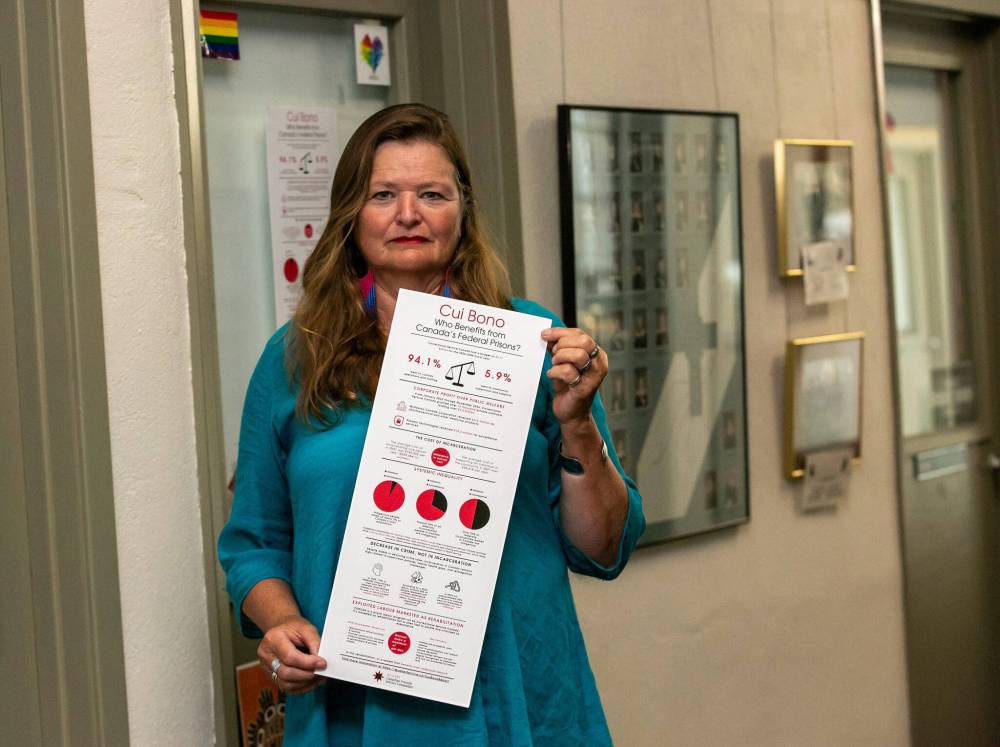
Her job is to try to “move the needle nationally on penal and prison abolition.” Doing that requires collaborating with academics, activists and other religious groups like Mennonites and the United Church of Canada.
“It’s also about how to create a society where crime is less likely to happen,” she says.
Even groups that don’t entirely support prison abolition can agree, for instance, that a guaranteed livable basic income would solve many of the problems that lead people to be incarcerated.
Last year, the Canadian Friends Service Committee published a series of videos in which a formerly incarcerated woman tells her story.
In 2016, Lisa Bowden was recovering from an unhealthy relationship and struggling with abandonment issues when she started using drugs. She turned to selling drugs to pay the rent. After she was arrested a second time for drug offences, she received a seven-year prison sentence.
But prison only exacerbated the trauma that had led her to commit crimes.
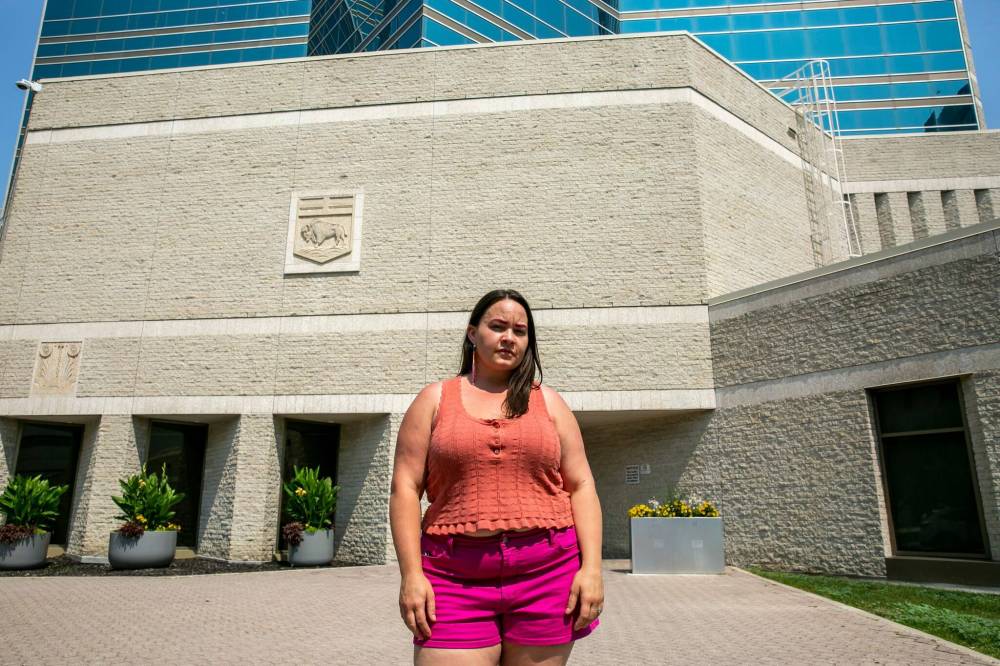
At one point when she was in prison, she heard that her cat had to be put down. She became hysterical with grief. Instead of sympathizing, prison staff threatened her with solitary confinement.
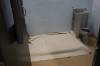
Nicknamed “the hole,” solitary confinement is a tiny room with a metal bed, a metal sink and a metal toilet. You live there for 23-and-a-half hours per day. The lights never go off. You’re allowed out for half an hour per day, if there are enough prison guards on duty. Often there aren’t.
You have no other interaction with humans. Your food arrives through a slot. You don’t get eating utensils because you might use them to harm yourself.
Bowden sees it as a form of psychological torture. “If I didn’t want to kill myself before, I do now,” one woman told her after coming out of solitary confinement.
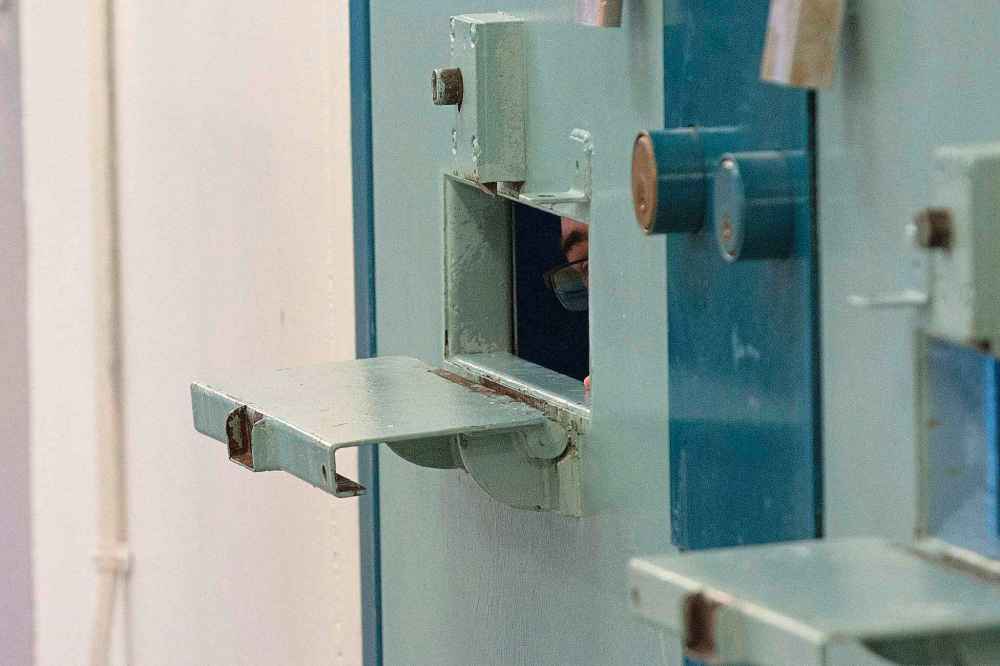
Women are more likely to self-harm than to harm others, says Ridd. “To isolate someone who is self-harming is to exacerbate feelings that lead to self-harm. We self-harm because we are feeling isolated and unworthy and disconnected. So it’s actually fuel on the fire.”
Bowden says the whole prison system is focused on punishment and control rather than rehabilitation and repair. She first learned about the concept of restorative justice by taking a university class Ridd was teaching at the Headingley jail.
Restorative justice helped her understand that real people had been harmed by her crimes.
Equipped with a new understanding of what justice could look like, she advocated for herself to get transferred to an Indigenous Healing Lodge in Saskatchewan run by Corrections Canada. There she was able to heal from her trauma while completing her sentence.
Bowden says restorative justice helped her deal with the issues that had triggered her downward spiral in the first place.
Her experience in prison did exactly the opposite: it worsened her trauma.
Mike Plett, who was imprisoned at the Winnipeg Remand Centre for six months, says the pre-trial detention facility is grossly overcrowded. Three or four people live in cells designed for one.
The institution has the capacity for 289 people, but Plett said when he worked in the kitchen, food trays were being distributed to around 500. He got beaten up twice, so badly he had to go to emergency. He says guards didn’t intervene.
“What happened to me in there was worse than anything I’ve ever done to anybody in my entire life.”
“What happened to me in there was worse than anything I’ve ever done to anybody in my entire life,” Plett says.
Most of the people in the remand centre are awaiting trial and haven’t been convicted of a crime, he says.
“The people that are in there, the majority of them want to change. If there were courses offered to them to go work in a mine or something, people would be taking that 100 per cent. They don’t offer any of that.”

At the Quakers’ national gathering in Winnipeg in July, Samson Fellows and Ridd led a workshop on alternatives to the prison system.
Among the examples were mutual aid, supervised consumption sites, mediation and Indigenous-led restorative justice programs. Alternative measures like these receive only a tiny fraction of the funding that goes into the prison system.
Ridd is under no illusion that she can upend Canada’s prison system using the small amount of leverage Quakers have. But that doesn’t stop her from trying.
A pamphlet published by the Quaker Friends Service Committee titled Being a Quaker, Being an Activist (PDF) describes faith as a way of setting aside the ego with its attachment to success.
Because success is far from guaranteed.
The transatlantic slave trade didn’t end because Quakers stopped putting sugar in their tea; ultimately it took a bloody uprising led by enslaved people themselves.
But Quakers played a part. They didn’t sit still and do nothing.
Except on Sunday mornings.
This story was produced in conjunction with Broadview, as part of a joint Religion in the News partnership covering issues of faith in Manitoba and nationally.
josiah.neufeld@winnipegfreepress.com
The Free Press is committed to covering faith in Manitoba through our Religion in the News project. This reporting continues because readers like you step forward to fund it.
Donate now to support our reporting on religion.
Your donation is eligible for a charitable tax receipt.
BECOME A FAITH JOURNALISM SUPPORTER

Josiah Neufeld
Religion reporter
Josiah Neufeld covers issues of faith in Manitoba and nationally for the Free Press and Broadview as part of a joint Religion in the News partnership. Read more about Josiah.
Every piece of reporting Josiah produces is reviewed by an editing team before it is posted online or published in print — part of the Free Press‘s tradition, since 1872, of producing reliable independent journalism. Read more about Free Press’s history and mandate, and learn how our newsroom operates.
Our newsroom depends on a growing audience of readers to power our journalism. If you are not a paid reader, please consider becoming a subscriber.
Our newsroom depends on its audience of readers to power our journalism. Thank you for your support.
Related Articles
$129-M segregation-lawsuit deal good for Manitoba: judge

History
Updated on Wednesday, August 12, 2026 11:42 AM CDT: Photo caption updated
The Free Press acknowledges the financial support it receives from members of the city’s faith community, which makes our coverage of religion possible.