Action needed to ensure groups aren’t unduly ‘de-banked’ over terror risks: report
Advertisement
Read this article for free:
or
Already have an account? Log in here »
To continue reading, please subscribe:

Digital Subscription
One year of digital access for only $205*
- Enjoy unlimited reading on winnipegfreepress.com
- Read the E-Edition, our digital replica newspaper
- Access News Break, our award-winning app
- Play interactive puzzles
*First annual payment billed as $205.00 + GST for one year. This annual subscription will automatically renew at $233.00 + GST every 52 weeks (10% off the regular annual price of $259.35). Offer available to new and qualified returning subscribers only. Cancel any time.
To continue reading, please subscribe:
Add Free Press access to your Brandon Sun subscription for only an additional
$1 for the first 4 weeks*
- Enjoy unlimited reading on winnipegfreepress.com
- Read the E-Edition, our digital replica newspaper
- Access News Break, our award-winning app
- Play interactive puzzles
*Your next Brandon Sun subscription payment will increase by $1.00 and you will be charged $17.95 plus GST for four weeks. After four weeks, your payment will increase to $24.95 plus GST every four weeks.
Read unlimited articles for free today:
or
Already have an account? Log in here »
OTTAWA – There’s “a near-total absence” of effective recourse for non-profit organizations and individuals whose banking services are cut off due to alleged ties to terrorist financing, a new report says.
The International Civil Liberties Monitoring Group report examines the phenomenon known as derisking or de-banking — ending or restricting access to financial services for clients or sectors in order to avoid perceived risks.
The Ottawa-based group includes dozens of non-governmental organizations, unions, professional associations, faith groups, environmental organizations, human rights and civil liberties advocates, and representatives of immigrant and refugee communities in Canada.
Its report says a lack of case-specific and evidence-based decision-making by banks has resulted in “unjustified and discriminatory decisions” that affect their clients, including non-profits and charities.
It argues that the derisking of organizations — particularly those active in Muslim communities or carrying out humanitarian activities abroad — is not a series of isolated commercial decisions by individual banks but a predictable outcome of Canada’s anti-money laundering and anti-terrorist financing framework.
Charities and advocacy organizations are reporting episodes of service denial that appear to be based on risk avoidance rather than case-by-case assessment, raising “serious questions of discrimination, profiling, disproportionate impact and unintended consequences,” the report says.
Tim McSorley, the monitoring group’s national co-ordinator, said that while “any financial crime, including terrorist financing, needs to be addressed,” organizations with no extremist involvement face “penalties and harm because of overly broad and opaque anti-terror financing laws.”
That means millions of dollars intended for life-saving aid and international development are being cut off, McSorley said.
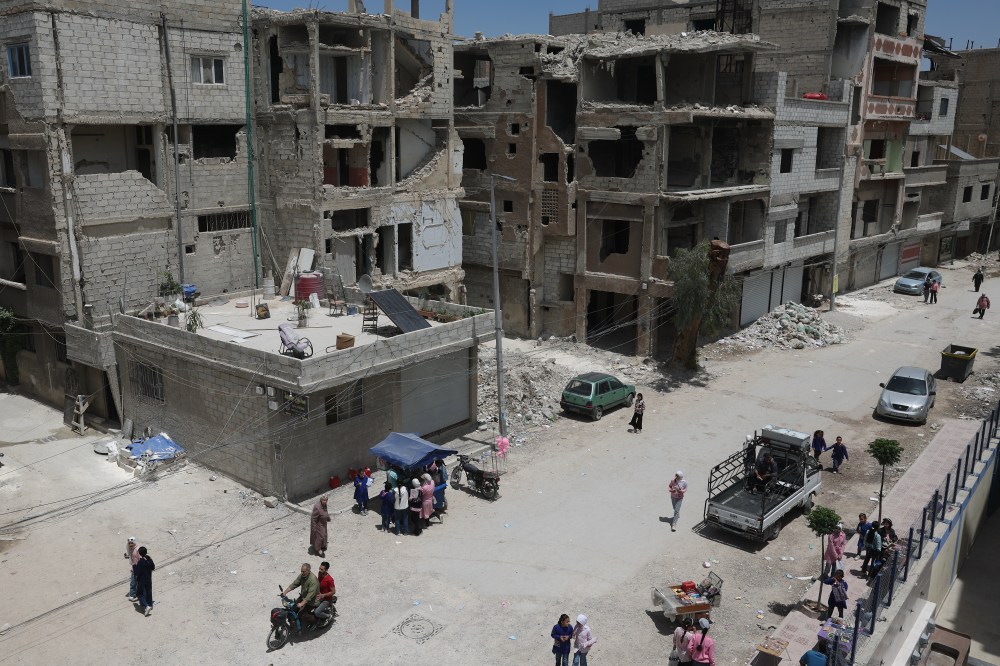
The organizations most affected by derisking include Muslim-led charities, international humanitarian and development NGOs and organizations linked to jurisdictions such as Syria, Palestine or Pakistan, the report says.
It says the consequences of derisking include abrupt account closures and service denials, exclusion from payment processors, disruption to humanitarian programs, individual derisking of employees, board members and their families, and lasting reputational harm.
In one case, a donation-processing platform notified a large, established humanitarian organization operating in Syria and other countries that it would be dropped within 15 to 30 days after the platform’s new banking partner made a derisking decision, the report says.
“No explanation of the underlying risk was given.”
In another case outlined in the report, a charity’s application for credit card services was welcomed by account managers, only for the account and associated donation processing to be suspended without warning a week later.
The report says financial institutions are not legally required to provide a specific reason for closing an account. It adds that no independent body in Canada has the mandate to review whether a derisking decision was reasonable, non-discriminatory or evidence-based, and no authority systematically collects data on the scale or nature of derisking in Canada.
“The result is a system in which life-altering financial decisions are made behind closed doors, based on undisclosed criteria, without meaningful appeal,” the report says.
The monitoring group’s report follows a study earlier this year by University of Toronto law and history professor Anver Emon. It found strict measures to prevent terrorism financing are prompting Muslim charities in Canada to withdraw humanitarian assistance from countries in need because they fear losing access to banking services.
The monitoring group’s report says derisking is embedded across the financial system — not confined to a single institution or sector — and cannot be addressed without structural reform, transparency requirements and meaningful accountability mechanisms.
The report makes a dozen recommendations to the federal government, supervisory bodies, financial institutions and payment processors.
It calls on the private sector to adopt due process standards for account closures, including clear reasons, a formal opportunity to respond and an independent internal review mechanism separate from the original decision-maker
The Canadian Bankers Association said Tuesday in a media statement that Canada has one of the most accessible banking systems in the world.
“Any decision to close an account is not taken lightly,” the association said. “Banks make these decisions independently, taking into consideration applicable laws, regulatory requirements and institution-specific factors.”

The Canada Revenue Agency does not comment on third-party reports. The Finance Department and Public Safety Canada had no immediate comment on the recommendations.
The Finance Department has said the federal government continues to engage with interested parties to ensure anti-terrorism financing measures remain effective, proportionate and responsive to emerging issues.
The monitoring group welcomes further engagement with the government but wants more than meetings and consultations, McSorley said.
“We need to see concrete policy changes.”
This report by The Canadian Press was first published Sept. 15, 2026.
The Free Press acknowledges the financial support it receives from members of the city’s faith community, which makes our coverage of religion possible.