More universities added Muslim chaplains post 9/11. Then came 10/7.
Advertisement
Read this article for free:
or
Already have an account? Log in here »
To continue reading, please subscribe:

Digital Subscription
One year of digital access for only $205*
- Enjoy unlimited reading on winnipegfreepress.com
- Read the E-Edition, our digital replica newspaper
- Access News Break, our award-winning app
- Play interactive puzzles
*First annual payment billed as $205.00 + GST for one year. This annual subscription will automatically renew at $233.00 + GST every 52 weeks (10% off the regular annual price of $259.35). Offer available to new and qualified returning subscribers only. Cancel any time.
To continue reading, please subscribe:
Add Free Press access to your Brandon Sun subscription for only an additional
$1 for the first 4 weeks*
- Enjoy unlimited reading on winnipegfreepress.com
- Read the E-Edition, our digital replica newspaper
- Access News Break, our award-winning app
- Play interactive puzzles
*Your next Brandon Sun subscription payment will increase by $1.00 and you will be charged $17.95 plus GST for four weeks. After four weeks, your payment will increase to $24.95 plus GST every four weeks.
Read unlimited articles for free today:
or
Already have an account? Log in here »
(RNS) — Saarah Abdul-Maajid chose to study at Rutgers University, in large part because she knew it had a Muslim chaplain and a Muslim center on campus where she would feel supported and valued.
A junior majoring in political science, she said she now spends at least part of each school day at the Center for Islamic Life at Rutgers University, located in the heart of the New Brunswick, New Jersey, campus. She takes a noncredit class on Islamic teachings with the chaplain there and usually finds a quiet nook to study. Many of her friends hang out there, and recently she has volunteered to be the center’s marketing intern.
“As Muslims, we’re very proud of our identities,” said Abdul-Maajid, 20. “Almost every other culture and religion seems to have their own spaces, and I can say we definitely have now, too.”
___
This content is written and produced by Religion News Service and distributed by The Associated Press. RNS and AP partner on some religion news content. RNS is solely responsible for this story.
___
Shortly after the Sept. 11, 2001, attacks, universities across the country began to reckon with Muslim students in their midst, and within a decade, dozens, including Rutgers and all eight Ivy League Schools, added full-time Muslim chaplains to care for Muslim students. There are now 80 full time Muslim chaplains on college campuses across the country, and some have designated spaces for Muslim prayers and programs, according to the Association of Muslim Chaplains. It’s a big change from 25 years ago when only a few colleges had Muslim chaplains, and nearly all of them were volunteer part-time posts, the association said.
But that growth has collided with a more hostile moment for American Muslim students amid an increase in anti-Muslim political rhetoric, and in the wake of Israel’s war
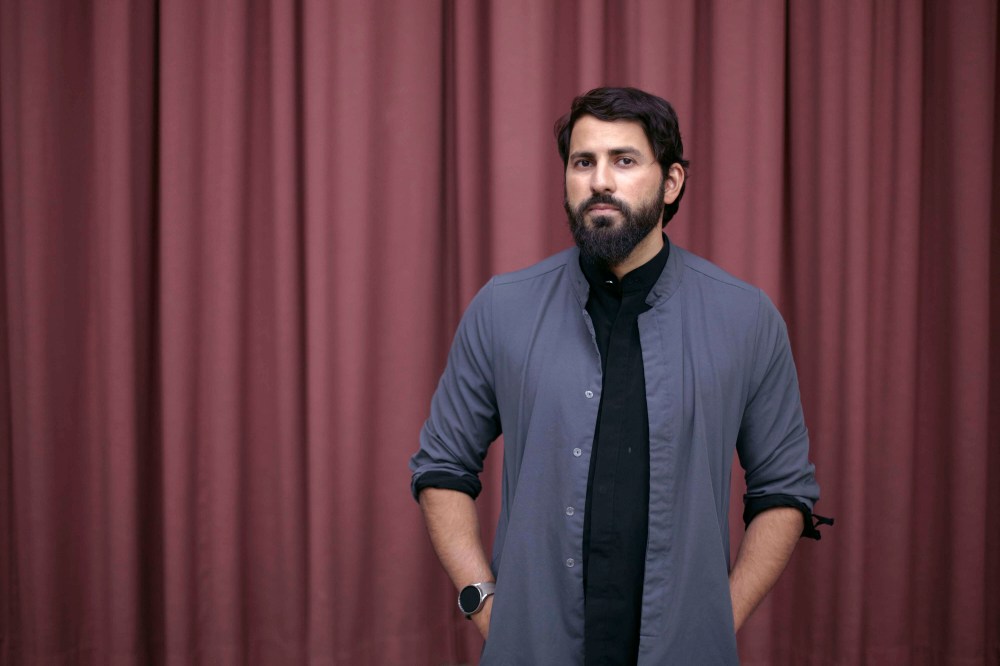
“Muslim students have to constantly tell people what they’re not,” said Kaiser Aslam, the chaplain at Rutgers’ Center for Islamic Life. “It’s good to have a space in which they can understand what they actually are. So that’s probably the first big bucket of what I do — provide emotional and spiritual support to individual students on campus.”
Rutgers was one of the first public universities to privately fund a full-time Muslim chaplain, beginning 15 years after 9/11. Unlike private universities, public universities funded by state and federal tax dollars cannot directly pay for faith-specific chaplains. They had to find a different way.
In 2010, students, alumni and New Jersey-based community leaders formed the Center for Islamic Life at Rutgers University (known as CILRU ) and by 2015 had raised enough money to hire a full-time chaplain independently of the university, but with its blessing.
The center hired Aslam, who had just graduated from Hartford International University for Religion and Peace, then called Hartford Seminary. The Connecticut-based school began offering a Masters in Chaplaincy with a specialization in Islamic chaplaincy in 2001 that is an equivalent to a Master of Divinity. (Today two more schools offer similar degrees: Bayan Islamic Graduate School, in Southern California and the American Islamic College in Chicago.)
A handful of other state universities — in Illinois, Michigan, New York, Texas and California — have copied Rutgers’ model with independently funded Muslim chaplains serving Muslim students, and in some cases, a dedicated center for Muslim students where Friday prayers, classes and social events can be held.
Of Rutgers’ 47,000 students, about 6,000 are Muslim. That makes it among the largest, if not the largest, Muslim student population on any U.S. campus. (Universities don’t ask students to identify their faith, so exact numbers are hard to come by.) The University of Michigan at Ann Arbor has about as many. It too has an independently paid Muslim chaplain.
Still, the number of Muslim chaplains among the U.S.’s 6,000 colleges and universities is small overall, and even smaller at state schools. And the challenges of attending to the emotional and spiritual lives of Muslim students is even harder in the current political environment, which has seen a significant uptick in anti-Muslim rhetoric and campaigns against “Sharia law,” in states like Texas.
“President Trump has unleashed and emboldened horrible forces of racism, of Islamophobia, of antisemitism, of xenophobia, of homophobia,” said Omer Bajwa, the Muslim chaplain at Yale. “It’s a poisonous atmosphere that is antithetical to what I see chaplaincy and pastoral caregiving and community caregiving to be about.”
Add to that the Gaza war protests of 2024 and the widespread wave of student-led encampments and demonstrations against U.S. military funding of Israel’s war, begun in response to the Hamas attack on Israel.
Chaplains say the three years since then have been even more defining than 9/11, both for themselves and for the students under their care.
“There are moments in which a spotlight is shined on your Muslim identity, and right now, for many of our students, that was the aftermath of Oct. 7, 2023, when suddenly there’s that minting moment we could call it, where they become acutely aware that — ‘Wow, my identity leads people reacting to me or what I believe is important, very differently than others,’” Aslam said.
As hard as it has been for students, it has also been a challenge for the chaplains themselves, caught between university administrators, students and parents with conflicting demands about Israel and Palestine. Chaplains have received threats and experienced doxxing, harassment and vandalism, often with support from the institutions employing them, said Jaye Starr, a hospital chaplain and secretary of the Association of Muslim Chaplains.

“It’s just a lot to always be seen as a threat,” said Joshua Salaam, the chaplain at Duke University and the president of the Association of Muslim Chaplains. “It does something to the Muslim psyche, like ‘Oh, this is how you think of us,’ and the university won’t allow a conversation or the mention of the word Palestine. It’s a hard world to live in, and it’s hard to communicate that to someone else who doesn’t have that lived experience.”
Still, for students like Abdul-Maajid, who began her studies at Rutgers in 2024 during the height of the student demonstrations, the past year has also brought some hope, especially in the election of New York’s first Muslim mayor — Zohran Mamdani and others who may be elected in the November midterms. (New Jersey’s 12th congressional district, for example, is likely to elect Adam Hamawy, an Egyptian-born physician and a former U.S. Army combat surgeon who is Muslim.)
“We’re in a time where I think a lot of people my age are getting more politically active and we’re making our stances known,” she said.
Her confidence in herself and in her faith, she said, has grown in large part because of the support she has received at the Center for Islamic Life at Rutgers University.
“We’re very keen on knowing what our rights are, standing up for ourselves and supporting Muslims running,” said Abdul-Maajid, who is considering law school after she graduates. “We’ve seen what we can actually do.”
The Free Press acknowledges the financial support it receives from members of the city’s faith community, which makes our coverage of religion possible.