A century of faith and fate
City church, born at the end of the Spanish Flu, turns 100 in the midst of another pandemic

Advertisement
Read this article for free:
or
Already have an account? Log in here »
To continue reading, please subscribe:

Digital Subscription
One year of digital access for only $205*
- Enjoy unlimited reading on winnipegfreepress.com
- Read the E-Edition, our digital replica newspaper
- Access News Break, our award-winning app
- Play interactive puzzles
*First annual payment billed as $205.00 + GST for one year. This annual subscription will automatically renew at $233.00 + GST every 52 weeks (10% off the regular annual price of $259.35). Offer available to new and qualified returning subscribers only. Cancel any time.
To continue reading, please subscribe:
Add Free Press access to your Brandon Sun subscription for only an additional
$1 for the first 4 weeks*
- Enjoy unlimited reading on winnipegfreepress.com
- Read the E-Edition, our digital replica newspaper
- Access News Break, our award-winning app
- Play interactive puzzles
*Your next Brandon Sun subscription payment will increase by $1.00 and you will be charged $17.95 plus GST for four weeks. After four weeks, your payment will increase to $24.95 plus GST every four weeks.
Read unlimited articles for free today:
or
Already have an account? Log in here »
Hey there, time traveller!
This article was published 06/12/2020 (2134 days ago), so information in it may no longer be current.
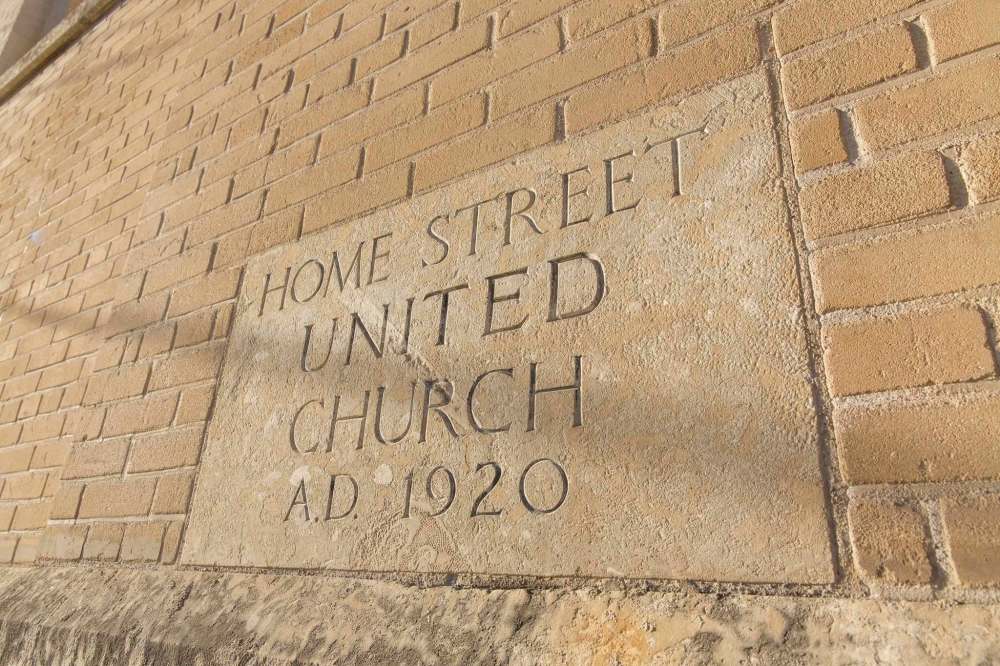
Nearly a century ago, in a flurry of Sunday morning services, special evening concerts and prayer meetings, the people of Home Street Presbyterian Church celebrated the grand opening of their new church on the corner of Home Street and Portage Avenue.
They probably felt in need of some big parties, after weathering a global pandemic and the end of a war just a couple of years earlier.
This fall, in the middle of another global pandemic, the current occupants of that brick and limestone structure at 318 Home St. celebrated a hundred years of nearly continuous worship and community service without physically being in the building.
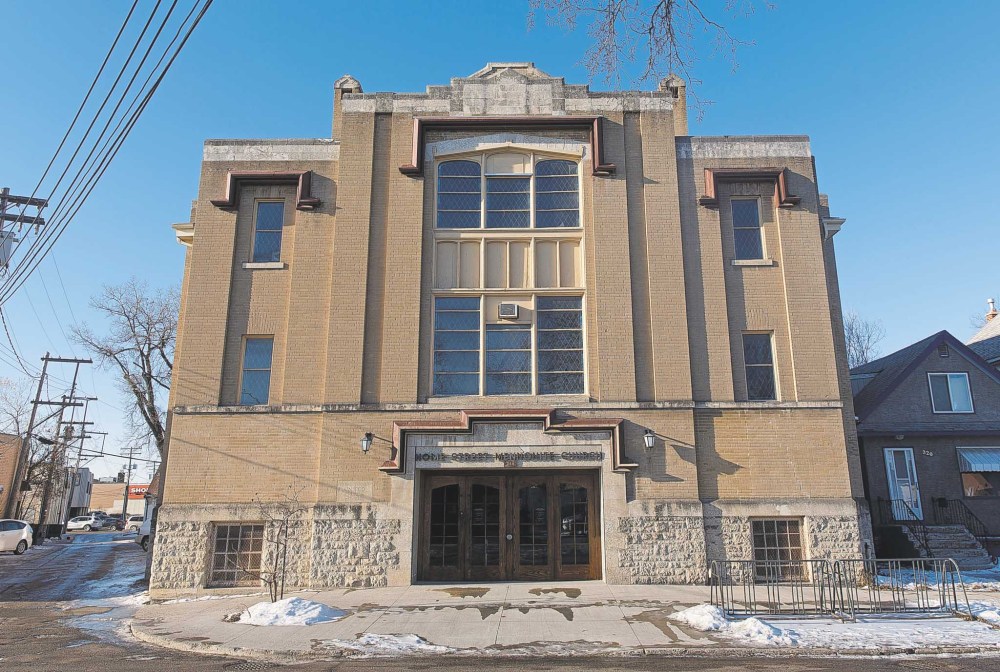
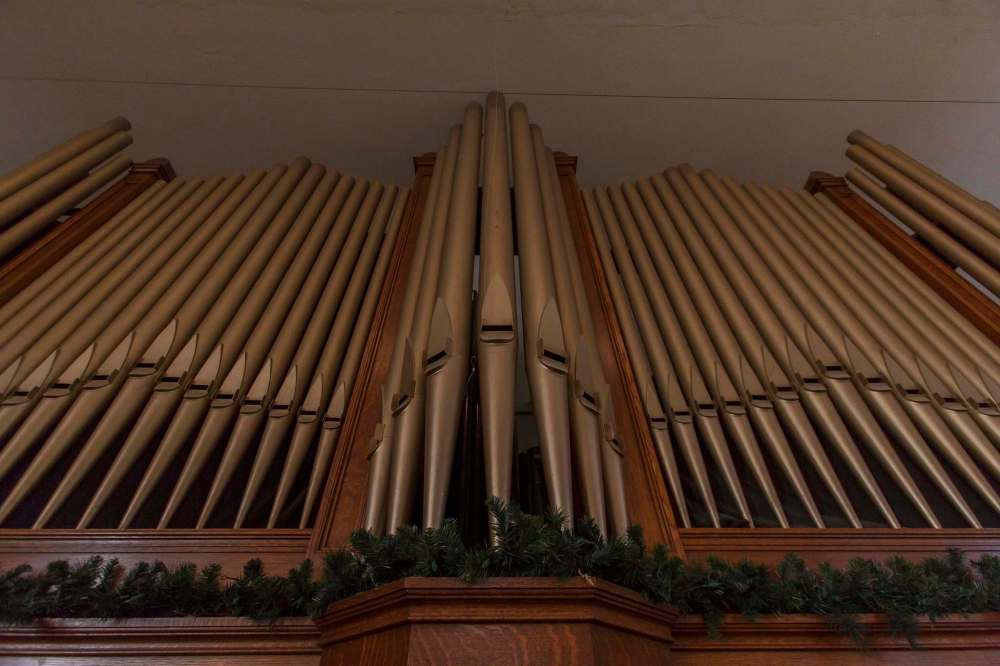
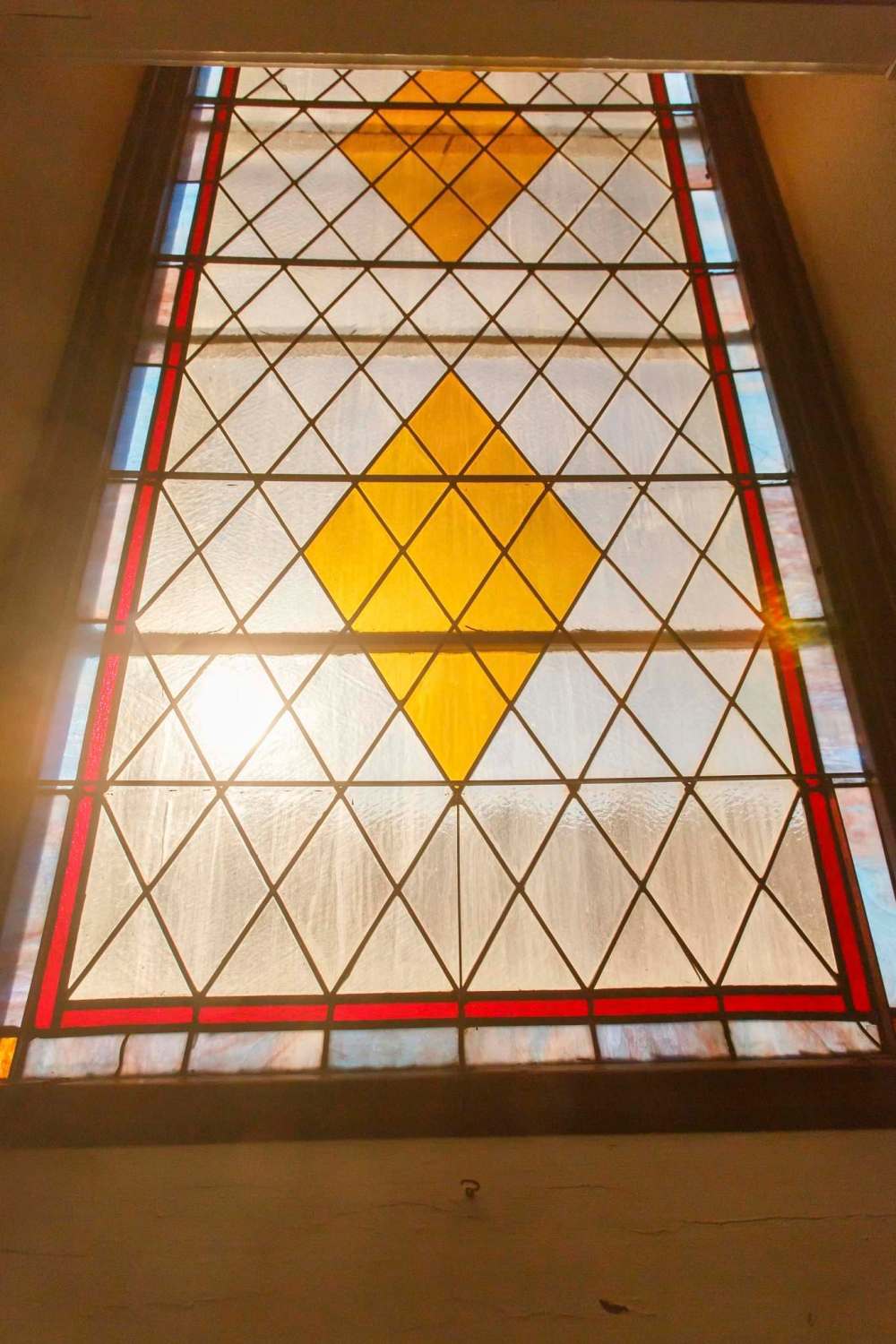
The people of Home Street Mennonite Church admired the wood trim and tall stained glass windows virtually and listened to the swell of the century-old pipe organ through their electronic devices, forced to worship and celebrate at home due to provincial health restrictions on gathering.
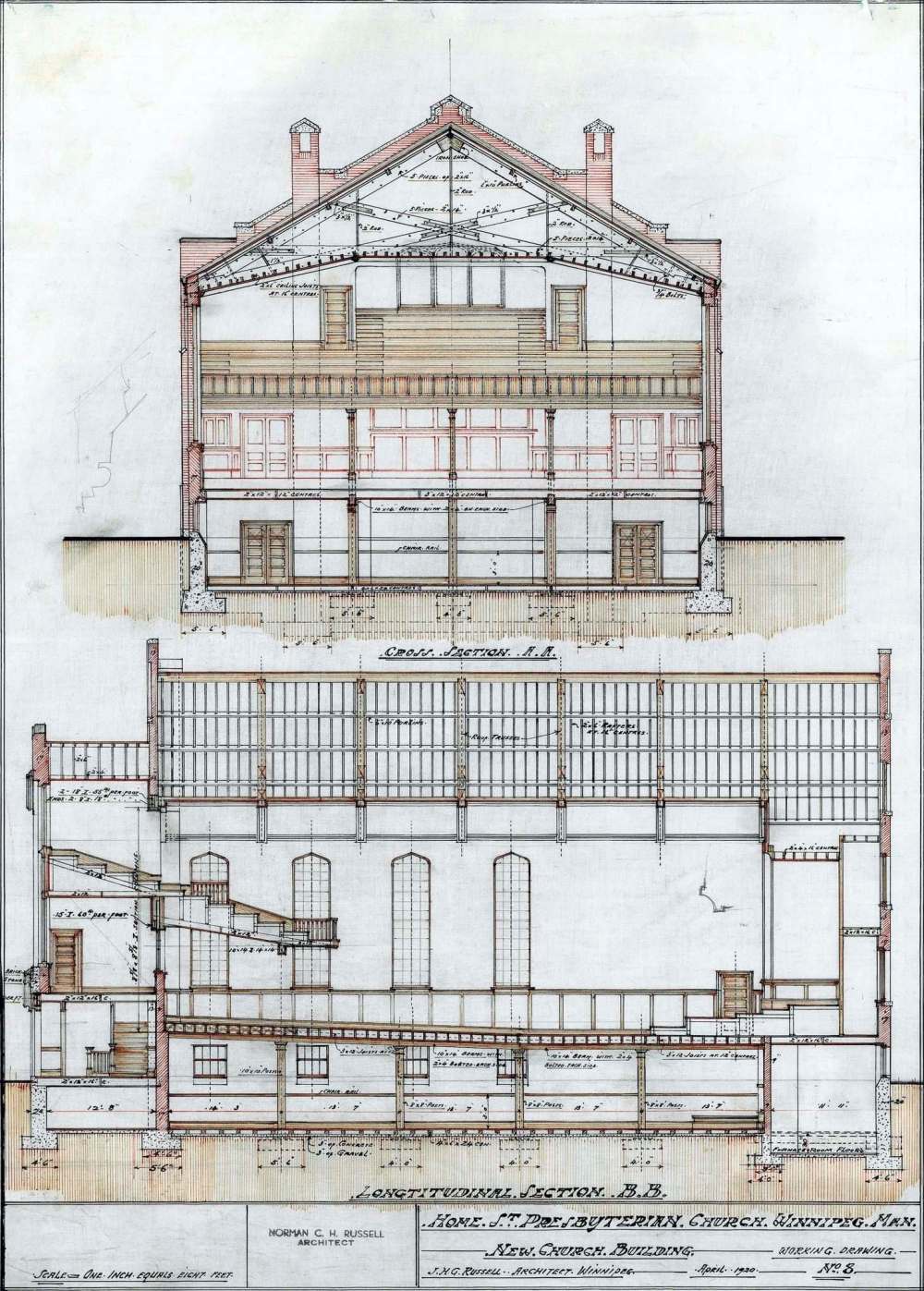
They also saw their building in a new way through slideshows comparing the original architectural plans to the current state of the building.
The third congregation to own the 100-year-old brick and limestone building, it is surprising that the original plans dated April 1920, drawn up by prominent Winnipeg architect John Hamilton Gordon Russell stayed with the church as owners changed, said Murray Peterson, heritage officer for the City of Winnipeg.
“It’s the best document or the most trusted document to (attest) to what was originally planned,” he says, adding the city has an earlier copy dated January 1920 in its files.
Inked on linen paper, and lying forgotten for years in the church safety deposit box, the set of eight drawings show how Russell adapted and modified the plans to fit on an irregular lot in a West End residential neighbourhood, said Peterson.
“Architecturally it’s unusual, and even for Russell it’s unusual,” he said of the relatively plain facade of church, which butts right up against the front sidewalk.
“It’s a lot more square and boxier than he would usually design.”
Completed in late 1920 at a cost of $50,000, there’s little else other than tall arched stained-glass windows and the sign above the front doors to indicate the yellow brick building is a place of Christian worship.
A staunch Presbyterian, Russell figured out how to make a beautiful building with elaborate details fit on the double residential lot previously occupied by a smaller wood frame church, said Peterson, referring to the well-appointed interior, which features curved pews, a pipe organ located under a gentle arch, and lots of dark wood.
“That’s one of his skills — to be able to design over 100 buildings and have them be a little unique and a little different,” said Peterson of Russell’s impressive architectural achievements in Winnipeg, including several large United Church of Canada buildings such as Knox, Westminster, Augustine and Crescent-Fort Rouge.
Unlike any of those grand structures, Peterson said Russell designed the Home Street church to blend in rather than stand out in the neighbourhood, with a street level entrance and squared-off entrance hall.
“It certainly makes it have more of a residential look than an ecclesiastical look,” he said.
That residential-style exterior also reflects the ethos of the current worshipping group, explains Wolseley resident Esther Epp-Tiessen, chair of the congregation, which changed its name to Home Street Mennonite after purchasing the building in 1973.
“I think it demonstrated a commitment to that neighbourhood and how we are rooted in that neighbourhood,” she said of the congregation of about 200.
“We care about the neighbourhood because we live nearby.”
Despite the plain exterior, the linen drawings demonstrate how much care and effort Russell and his drafting team spent on designing a neighbourhood church, long before the advent of copiers and computer-aided design, said Mark Ager, the architect who worked on a 2014 renovation to add an elevator to the building.
“These drawings say to me the building is fairly simple, but you can tell someone has taken time,” said Ager, now an architect at the University of Manitoba.
“Time is what you need to let a design evolve materially and beautifully, in my opinion.”
For instance, the rendering of the limestone basement shows close-up details of the window jambs, angled off to let in the maximum amount of light, said Ager, and drawn in a way to show masons exactly how to lay the bricks.
The cross-section drawings also accentuate the balance of the design, something appreciated a century ago but not in architectural fashion currently, said Ager.
“In this era, they gravitated toward symmetry,” he said of early 20th century design.
“The whole building is almost completely symmetrical in every way.”
Most of all, the drawings emphasize the main purpose of the structure was to gather the congregation for worship, with most of the above grade space dedicated to the sanctuary.
“I think in any church the sanctuary is the heart and soul because that’s where you gather as a community,” said Ager, who also designed a renovation of Selkirk United Church with his former architectural partner Gail Little, and worked on Springs Church on Lagimodiere Avenue.
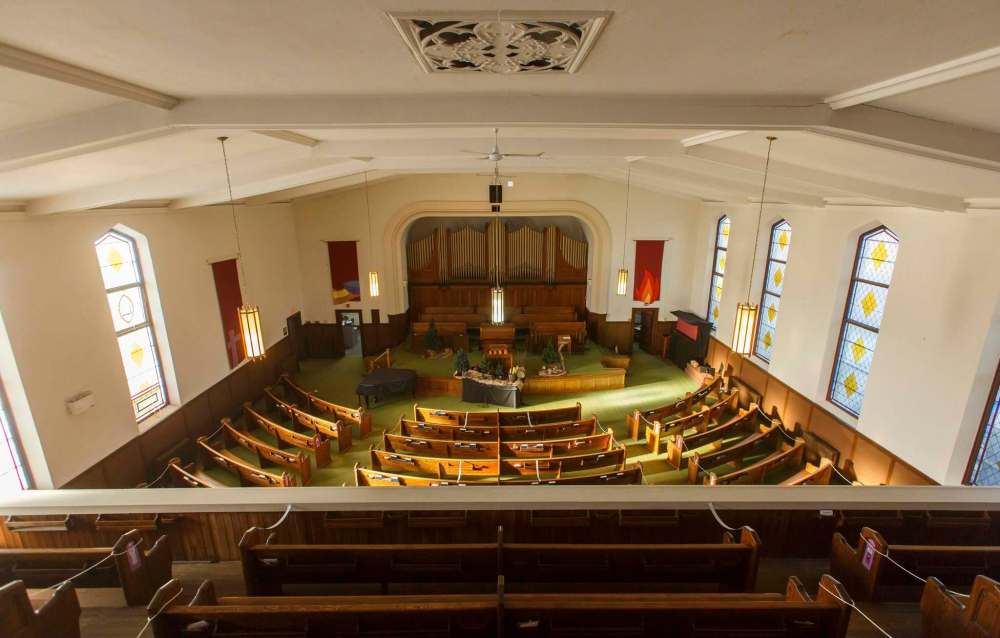
“I think of this building as two rooms: the sacred space on the main floor and the basement for other activities.”
Although in-person worship is paused until restrictions ease, and other activities have been curtailed, Epp-Tiessen said the congregation is eager to come back in smaller numbers to continue being a good neighbour on Home Street.
Those activities include hosting community groups, offering Sunday morning coffee and conversation to anyone stopping by and continuing to host a regular food bank through Harvest Manitoba, formerly Winnipeg Harvest.

“We are committed to contributing to the food security of the neighbourhood,” she said.
So while the lights are dimmed, and the worship remains virtual, it’s important to recognize that a building designed in another time and context still has a long life ahead, said Ager.
“I think I would celebrate the longevity of the experience. Even 100 years later, it’s such a beautiful way to gather, listen, learn, sing, and celebrate,” he said of the century-old architecture.
“I think it’s amazing that three or four congregations have come through and it’s still useful for them.”
brenda@suderman.com
The Free Press is committed to covering faith in Manitoba through our Religion in the News project. This reporting continues because readers like you step forward to fund it.
Donate now to support our reporting on religion.
Your donation is eligible for a charitable tax receipt.
BECOME A FAITH JOURNALISM SUPPORTER
Brenda Suderman has been a columnist in the Saturday paper since 2000, first writing about family entertainment, and about faith and religion since 2006.
Our newsroom depends on a growing audience of readers to power our journalism. If you are not a paid reader, please consider becoming a subscriber.
Our newsroom depends on its audience of readers to power our journalism. Thank you for your support.
The Places We (Don’t) Meet
For the past two years, I have been writing stories in this space about the places we meet. I’m interested in how we build community in Winnipeg, how we connect and where our lives intersect. But that’s a task that’s getting more difficult during code red restrictions designed to limit face-to-face human interaction beyond our households.
So today I’m pivoting to feature some of the places where we can’t meet right now. Winnipeg has thousands of community centres, public venues, and religious institutions where the lights are dimmed as we stay home to stop the spread of COVID-19. I’m opening this (hopefully brief) series with the church at 318 Home St., where I have worshipped for more than two decades. During this code red period, people connected to Home Street Mennonite Church celebrated the 100th anniversary of the building without actually being in the building, constructed in 1920 for Presbyterians, and then in 1925 becoming the property of Home Street United Church. Other than an addition on the south side in 1967, the building remained largely true to its original plans.
The Free Press is committed to covering faith in Manitoba through our Religion in the News project. This reporting continues because readers like you step forward to fund it.
Donate now to support our reporting on religion.
Your donation is eligible for a charitable tax receipt.
BECOME A FAITH JOURNALISM SUPPORTER
Brenda Suderman has been a columnist in the Saturday paper since 2000, first writing about family entertainment, and about faith and religion since 2006.
Our newsroom depends on a growing audience of readers to power our journalism. If you are not a paid reader, please consider becoming a subscriber.
Our newsroom depends on its audience of readers to power our journalism. Thank you for your support.
Advertisement Advertise With Us
Advertisement Advertise With Us
The Free Press acknowledges the financial support it receives from members of the city’s faith community, which makes our coverage of religion possible.