A look at the residential-school system in Canada
Advertisement
Read this article for free:
or
Already have an account? Log in here »
To continue reading, please subscribe:

Digital Subscription
One year of digital access for only $205*
- Enjoy unlimited reading on winnipegfreepress.com
- Read the E-Edition, our digital replica newspaper
- Access News Break, our award-winning app
- Play interactive puzzles
*First annual payment billed as $205.00 + GST for one year. This annual subscription will automatically renew at $233.00 + GST every 52 weeks (10% off the regular annual price of $259.35). Offer available to new and qualified returning subscribers only. Cancel any time.
To continue reading, please subscribe:
Add Free Press access to your Brandon Sun subscription for only an additional
$1 for the first 4 weeks*
- Enjoy unlimited reading on winnipegfreepress.com
- Read the E-Edition, our digital replica newspaper
- Access News Break, our award-winning app
- Play interactive puzzles
*Your next Brandon Sun subscription payment will increase by $1.00 and you will be charged $17.95 plus GST for four weeks. After four weeks, your payment will increase to $24.95 plus GST every four weeks.
Read unlimited articles for free today:
or
Already have an account? Log in here »
Hey there, time traveller!
This article was published 03/06/2021 (1942 days ago), so information in it may no longer be current.
KAMLOOPS, B.C. – The Tk’emlups te Secwepemc First Nation announced last week that ground-penetrating radar had located what are believed to be the remains of 215 children in an unmarked burial site on the grounds of a former residential school in Kamloops, B.C.
The Truth and Reconciliation Commission’s report on Canada’s residential-school system detailed the harsh mistreatment of Indigenous children at the government-funded, church-operated institutions, where ongoing research says at least 4,100 children died amid neglect.
An estimated 150,000 First Nations, Inuit and Métis children attended the schools between the 1860s and 1996. The commission documented stories from survivors and families and issued a report in 2015.
Here is a look at some of its findings:
How many children died at Canada’s residential schools?
The commission identified 3,200 deaths in its report, which says the names of about a third of those students were not recorded by the federal government or the schools.
The report says that as late as 1942, a principal of a residential school in Saskatchewan was not aware of any responsibility to report a death to provincial vital statistics officials.
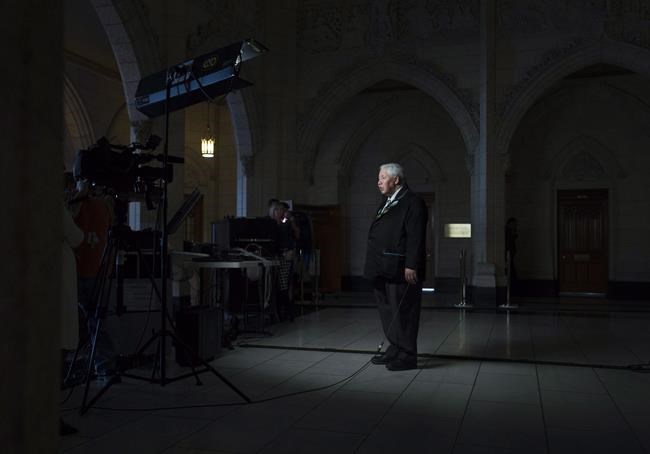
Murray Sinclair, a former senator who chaired the commission, told a House of Commons committee on Thursday that an independent investigation is needed to examine all burial sites near former residential schools. He said the investigation should not be run by the federal government, but should be overseen by a parliamentary committee that would ensure it is done in a proper way.
What types of documents did the commission have access to?
The commission’s report says access to documents was limited. Those that were collected from churches and provided by the government in 2011 involved a database that was not designed to collect information related to deaths at the schools. It says that in some cases, the poor digitization of documents made them illegible.
Relevant documents held by Library and Archives Canada were withheld. Some were later provided, but not in time to be included in the report.
Other documents held by the government and churches have not been provided.
The Supreme Court of Canada ruled in 2017 that thousands of records pertaining to abuses at residential schools are confidential and should be destroyed because survivors who provided personal accounts of abuse as part of a settlement agreement with the federal government believed the information would be kept confidential.
The decision says the 38,000 accounts should be retained for 15 years but survivors can choose to have their records preserved.
How did the children die at the residential schools?
The commission heard testimony from survivors recounting illnesses such as tuberculosis, physical and sexual abuse leading to suicide, drownings, infants fathered by priests being killed, and children who ran away going missing.
Survivors also testified they witnessed children being buried in mass burial sites.
The report says poorly built and maintained buildings were fire traps. Nineteen boys died in a fire that destroyed a school in Beauval, Sask., in 1927, for example.
For about half the deaths that the commission identified, there is no known cause of death and for many children, the cause would have been determined by someone without medical training.
“Throughout the history of Canada’s residential school system, there was no organized effort to record the number of students who died in residence each year.”
What information were parents given when their children died at school?
Parents were often not told of their children’s sickness and death. The children were buried in long-neglected graves, away from their families. In many cases, no one recorded their deaths or where they were buried.
Did the commission investigate accounts of deaths relayed by survivors?
The commission used archival documents and oral testimony to identify potential locations of gravesites.
Visits were made to cemeteries and 20 unmarked graves in the Northwest Territories, British Columbia, Alberta, Saskatchewan, Nova Scotia, and Ontario. Satellite imagery was also used to document the location and condition of school sites and cemeteries on maps.
The commission called for a national program in consultation with First Nations to complete the task of identifying many unmarked cemeteries and gravesites across the country.
What should happen now?

Sinclair says what’s happening in Kamloops highlights the need for churches and the federal government to release records that could provide answers to how many children died across Canada.
The commission’s proposal for federal funding to carry on its work was denied. Sinclair says what has been found in Kamloops is likely to turn up at similar sites at other residential schools.
“We need to begin to prepare ourselves for that,” Sinclair said in a statement this week.
The Indian Residential Schools Resolution Health Support Program has a hotline to help residential school survivors and their relatives suffering with trauma invoked by the recall of past abuse. The number is 1-866-925-4419.
This report by The Canadian Press was first published June 3, 2021.
Related Articles
Revisiting cold cases critical part of MMIWG action plan, advocates say

Advertisement Advertise With Us
Advertisement Advertise With Us
The Free Press acknowledges the financial support it receives from members of the city’s faith community, which makes our coverage of religion possible.