‘A personal journey’: People travelling great distances to see Pope Francis
Advertisement
Read this article for free:
or
Already have an account? Log in here »
To continue reading, please subscribe:

Digital Subscription
One year of digital access for only $205*
- Enjoy unlimited reading on winnipegfreepress.com
- Read the E-Edition, our digital replica newspaper
- Access News Break, our award-winning app
- Play interactive puzzles
*First annual payment billed as $205.00 + GST for one year. This annual subscription will automatically renew at $233.00 + GST every 52 weeks (10% off the regular annual price of $259.35). Offer available to new and qualified returning subscribers only. Cancel any time.
To continue reading, please subscribe:
Add Free Press access to your Brandon Sun subscription for only an additional
$1 for the first 4 weeks*
- Enjoy unlimited reading on winnipegfreepress.com
- Read the E-Edition, our digital replica newspaper
- Access News Break, our award-winning app
- Play interactive puzzles
*Your next Brandon Sun subscription payment will increase by $1.00 and you will be charged $17.95 plus GST for four weeks. After four weeks, your payment will increase to $24.95 plus GST every four weeks.
Read unlimited articles for free today:
or
Already have an account? Log in here »
Hey there, time traveller!
This article was published 21/07/2022 (1510 days ago), so information in it may no longer be current.
Susan Enge will be thinking of her mother’s time in a residential school during the long journey south from the Northwest Territories to see Pope Francis in Alberta.
Her thoughts will linger on that legacy and the complexities of being Indigenous and Catholic during the eight-hour drive from her home in Fort Smith to Yellowknife, where she is to join a flight to Edmonton on Sunday.
“Being a strong Catholic, I think it’s important to forgive people for their wrongdoings,” she says.
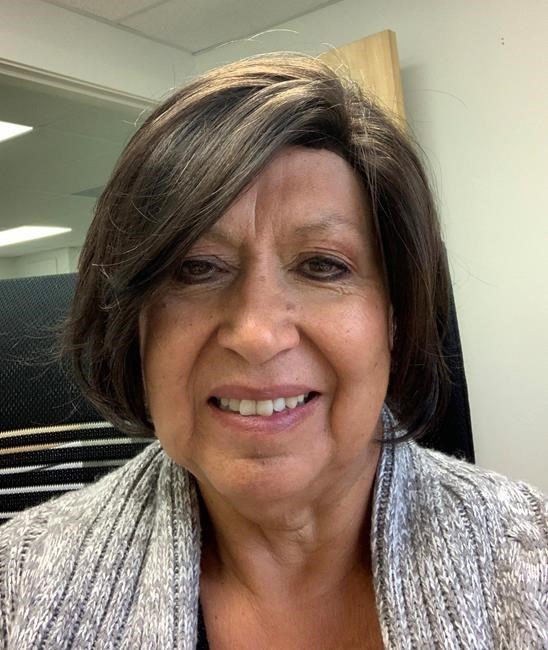
“It’s a personal choice and a personal journey for everyone who is seeking healing from the Pope’s messaging.”
Enge is going with her 24-year-old daughter in a group of about 40 people organized through the diocese of Mackenzie-Fort Smith.
Thousands of people are to travel by bus, plane and even boat in the coming days to attend events during the historic papal visit. Pope Francis is set to land in Edmonton on Sunday before going to Quebec City on Wednesday and Iqaluit on Friday.
It’s expected Francis will deliver an apology for the Roman Catholic Church’s role in residential schools at the site of the former Ermineskin Indian Residential School in the community of Maskwacis, Alta.
An estimated 150,000 Indigenous children were forced to attend residential schools over a century, and the Catholic Church ran about 60 per cent of the institutions.
Fern Hendersen says he was confused about who he was after suffering emotional, spiritual and physical abuse at a residential school in Manitoba as a child. For much of his life, he believed it was his fault and never felt that he belonged anywhere.
He says hearing from Pope Francis will be an acknowledgment of that truth and pain.
“I am finally going to hear the words, ‘I am sorry’ … sorry for taking my identity, sorry for taking my language, sorry for taking my culture and family away from me,” Hendersen says as he chokes back tears.
He is attending the events with his sister and a group from Sagkeeng First Nation. He expects a lot of painful memories to surface during the long drive. But, he says, it’s important to go for all his family members who didn’t live to see the day the leader of the Catholic Church recognized the harm that was done.
He is also going for his children and grandchildren “so they can go forward in a positive way.”
Organizing travel hasn’t been easy, as plans and funds recently began to materialize for Indigenous organizations and communities. Many Indigenous people, including Hendersen, learned just this week whether they can take part in the events.
Chief Bobby Cameron of the Federation of Sovereign Indigenous Nations has said he was deeply concerned by the lack of co-ordination. Many survivors don’t have the money or technology to attend the Pope’s visit, he said.
“The survivors had zero choice as children, and now some await approval from the very systems that tore them from their families, homes, culture and identity as children is absolutely ludicrous,” he said in a recent news release.
The federal government is putting up $30.5 million for community-led activities, ceremonies and travel for survivors during the visit.
Despite logistical challenges, the importance of the trip has pushed many forward to attend.
A large group organized by the Manitoba Métis Federation has rented buses to drive over two days to Alberta.
Andrew Carrier, who is a day school survivor, says he felt silenced for years after he was sexually abused by a priest. His father was also abused, Carrier says. It’s a legacy that will weigh heavy on his heart as he rides the highways across the vast Prairies.
“It’s really important as part of the healing journey to be heard and to be recognized by the Pope,” Carrier says.
Carrier, like many Manitoba Métis citizens, is Catholic. He says the papal visit will be crucial to their healing and to forge pathways forward with the church.
“It’s an opportunity for closure,” he says.
Sol Mamakwa, deputy leader of Ontario’s opposition New Democrats, says he spoke with survivors and spiritual leaders before deciding to participate in the papal tour stops in Alberta. He also attended a residential school.
“I chose to go … because there needs to be more voice for the people in the fly-in First Nations that I represent,” says Mamakwa, who represents the northern Ontario riding of Kiiwetinoong.

Manitoba Keewatinowi Okimakanak Grand Chief Garrison Settee, who represents northern First Nations in Manitoba, says while he hopes to hear a sincere apology from Francis, the acknowledgment won’t make a difference to everyone.
“Healing happens differently for all of us,” Settee said in a recent news release.
“There is no right way to heal from the generational trauma that has been inflicted upon our people due to the residential school system.”
This report by The Canadian Press was first published July 21, 2022.
— With files from Holly McKenzie-Sutter in Toronto
The Free Press acknowledges the financial support it receives from members of the city’s faith community, which makes our coverage of religion possible.